
Original briefings. Zero spin.
Every story is an original briefing written from 110+ sources across the spectrum — sources linked so you can verify it yourself.
 energy
Major Story (8/10)
Event date: August 25, 2026
energy
Major Story (8/10)
Event date: August 25, 2026
Gulf Oil Exports Climb to Two-Thirds of Pre-War Levels via Bypass Routes as LNG Prices Hit Four-Year Highs
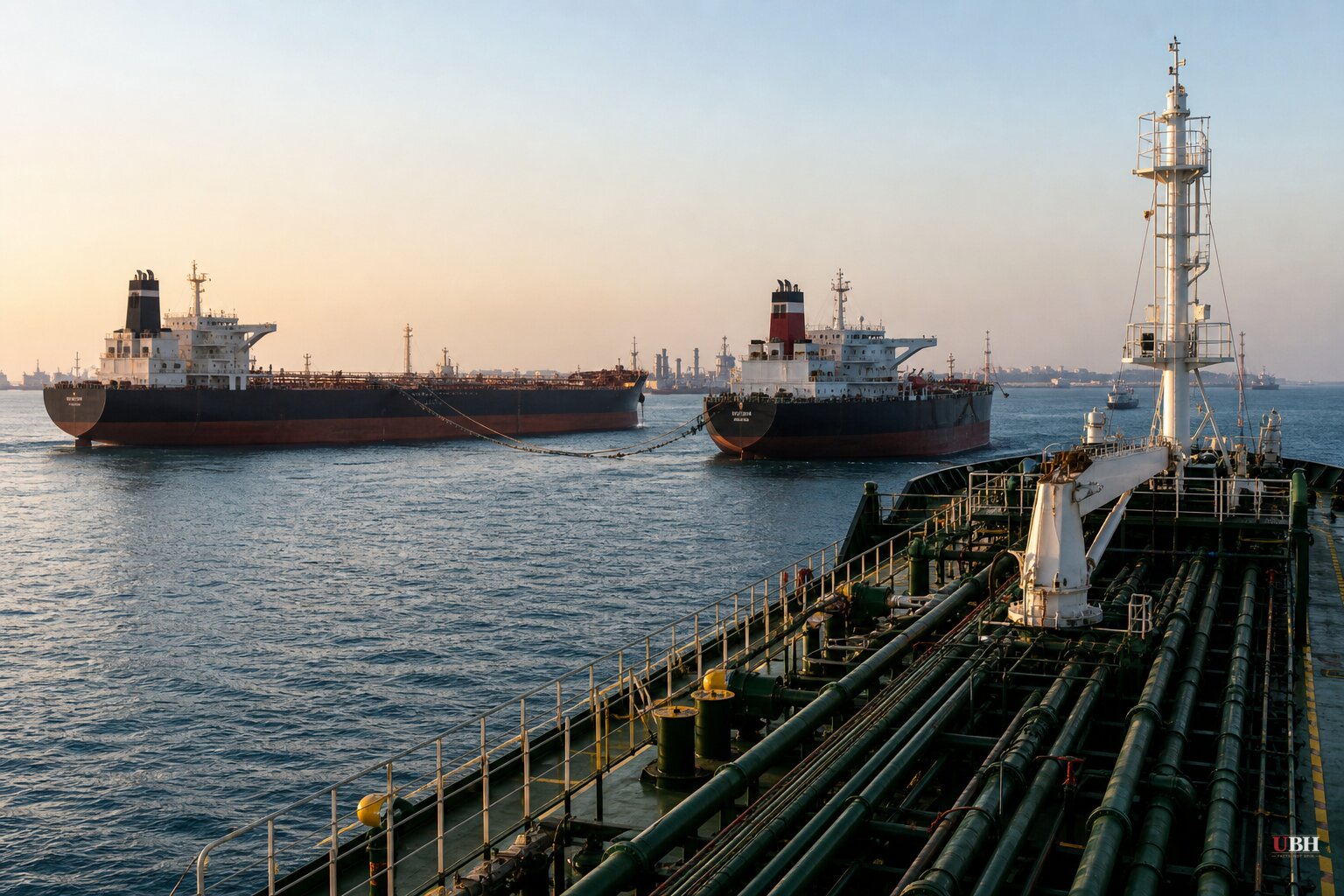
The oil workaround is working, mostly
Six months into the war, and a day after CENTCOM said it had cleared Iranian mines from Hormuz shipping lanes, new data show the bypass strategy Gulf producers built to route around the Strait is doing real work.
Goldman Sachs estimates cited by Gulf News show total Arabian Gulf crude and product exports have climbed from a March low of 5-6 million barrels per day to 15-16 million bpd now, roughly two-thirds of pre-war levels. Of that total, only 8-10 million bpd is actually transiting the Strait itself, according to the same estimates. The rest moves through Saudi Arabia's East-West pipeline to the Red Sea, smaller tankers hugging the Omani coastline, and ship-to-ship transfers that keep visible vessel counts from telling the full story.
Oil & Gas Journal reported separately, in an August 28 analysis by Tom Seng, that bypass tactics alone may be pushing as much as 7-8 million bpd out of the Gulf, roughly half of pre-war levels. Crude prices fell on the week as a result. WTI's October contract hit a Monday high of $84.70 a barrel before sliding to a Wednesday low of $78.55 on a small inventory build. Brent followed the same pattern, from $93.80 down to $85.40. New U.S. sanctions on Iran and its counterparties, Seng noted, had no visible effect on either price. Peace talks that showed early-week promise had stalled again by Friday.
LNG can't take the same shortcuts
Oil bypasses the Strait relatively easily. Liquefied natural gas does not.
According to gasoutlook, LNG prices have surged to their most expensive point in four years for this time of year. Northwest Europe's TTF benchmark has moved above $23 per million British thermal units, and Asia's JKM is nearing $24, both roughly double pre-war levels. Shipping tracker Kpler reported on August 19 that LNG carrier traffic halted for nearly three weeks before resuming in late July, running dark.
Bloomberg reported at least two LNG tankers conducted ship-to-ship transfers outside the Strait, an operation gasoutlook says may be the first time a tanker loaded inside Hormuz has offloaded cargo to another vessel waiting outside it. The volumes involved are still a fraction of pre-war flows. Rystad Energy analyst Jan-Eric Fahnrich said in an August 13 note that European and Asian gas markets are stuck in "yet another hope-disillusionment cycle." By late August the firm had shifted its base case to a protracted stalemate, with Hormuz traffic staying near current depressed levels before any gradual recovery.
The bigger problem may be underground, not on the water
Petroleum geologist Art Berman told Fox News Digital that the more consequential story isn't which tankers get through Hormuz. It's whether the oil exists to fill them.
"The bigger story and the more important one long term is that 8 million barrels of Persian Gulf production is currently shut in and world production is down about 10 million barrels a day," Berman said, calling the shut-in wells "potentially a kind of a world-changing event, even if we resolve the political issues."
The International Energy Agency's August 12 Oil Market Report backs up the scale of the problem, if not the exact number: Gulf production rose 2.5 million bpd in July to 23.9 million bpd but remains 8.3 million bpd below pre-war levels, with global supply still 6.3 million bpd below a year earlier. The U.S. Energy Information Administration puts July's shut-in average lower, at 5.5 million bpd, but says it's raising its August forecast because of continuing Hormuz constraints. EIA expects trade patterns to broadly normalize in early 2027, but cautions some Gulf producers may never fully regain their pre-war output within its forecast window. A White House official, speaking on background to Fox News, pointed instead to falling oil prices since the June memorandum of understanding as proof the Strait is open and the U.S. naval blockade is holding.
Iran's leverage is fading, and its options are getting worse
Gulf News reports Iran's Supreme National Security Council secretary Mohsen Rezaei has threatened that "not a single drop of oil" will leave the Arabian Gulf if Washington continues its economic pressure campaign. That's a real threat: the Islamic Revolutionary Guard Corps still has mines, drones, and speedboats.
It's also a threat that runs into recent events. Breitbart reported the UAE's state oil company ADNOC said one of its vessels was attacked, with Abu Dhabi's foreign ministry blaming Iran's Revolutionary Guard for "piracy," days after two other ADNOC-linked ships were hit. Such attacks are exactly what collapsed an April ceasefire, and a repeat risks provoking the kind of U.S. response that further degrades Iran's own sensor and strike network in the Strait, a process Epoch Times detailed as "draining the swamp" of the mobile radars and passive cameras Iran relies on to find targets.
Iran's own list of conditions for actually reopening the waterway, laid out by official Mohammad Bagher Zolghadr and reported by Breitbart, hasn't moved: an end to the war and to what Tehran calls aggression against its allies in Lebanon, Yemen, and Iraq, an end to sanctions, release of frozen assets, and compensation for wartime damage. Those are the kind of terms a country negotiates from strength, not desperation, and Tehran's public position is that the Strait was never lost. Iranian Deputy Foreign Minister Kazem Gharibabadi put it bluntly on X after President Trump joked at a Friday rally about declaring Hormuz U.S. territory: "The Strait of Hormuz has been Iranian, is Iranian, and will remain Iranian." A White House official later told the Wall Street Journal Trump's remark was a joke. Iran's response was not.
The open question heading into September is whether Tehran, facing a zero-export economy and a bypass network that's clearly working around it, escalates against ADNOC-style targets to prove Hormuz still isn't safe, or holds its conditions and waits out a U.S. administration under its own pressure to bring gas prices down before November's midterms.
Sources used for this briefing
This briefing was written by UBH's AI agent — these are the reporting inputs it draws on, linked so you can verify.


