
Original briefings. Zero spin.
Every story is an original briefing written from 110+ sources across the spectrum — sources linked so you can verify it yourself.
 energy
Notable (6/10)
Event date: August 28, 2026
energy
Notable (6/10)
Event date: August 28, 2026
Las Vegas Closes Out Its Driest Monsoon on Record as Nepal Digs Out From Deadly Glacier Flood
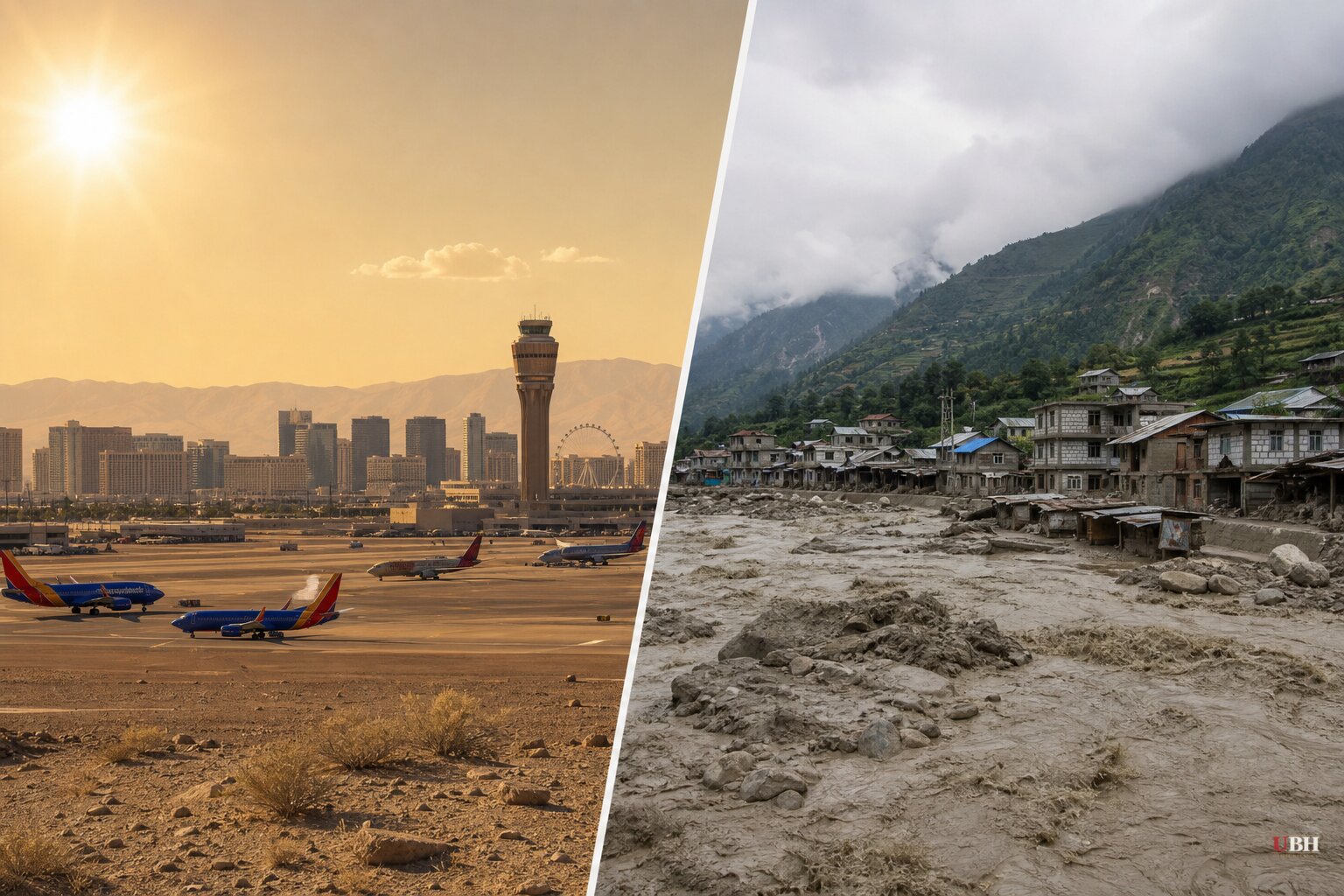
Las Vegas: Record Heat, No Rain
Harry Reid International Airport hit 110°F on Wednesday, August 26, breaking the daily record of 109°F set in 2001. The next day, August 27, it hit 111°F, breaking the 2017 record of 110°F for that date, according to Tech Times. Southern Nevada was already under an extreme heat warning the day before those two records fell.
Highs ran 10 to 14 degrees above the normal late-August average of 101°F.
Las Vegas's monsoon season runs June 15 through September 30 and normally delivers more than half the city's annual rainfall. This year, the airport has recorded just 0.69 inches of precipitation, against a historical average through mid-August of 2.64 inches, according to Tech Times, citing National Weather Service data.
Tech Times reports that forecasters describe the season as "almost nonexistent." The outlet's reporting ties both problems to the same weather pattern: a subtropical ridge of high pressure that parked itself over the Mojave Desert, driving up temperatures while also blocking the seasonal wind shift that normally pulls monsoon moisture up from the Gulf of California. Las Vegas sits at the far northwestern edge of the North American Monsoon's reach, which Tech Times notes makes it more exposed to this kind of ridge-driven shutout than Phoenix or Tucson.
Nevada's water managers and Las Vegas residents now head into September with a rainfall deficit that a normal wet monsoon usually closes.
Nepal and Tibet: Searching Through the Mud
On the other side of the world, a very different kind of extreme weather event has left a much higher death toll. A glacier collapse along the Nepal-China border sent a torrent of water and mud several stories high through communities on Wednesday, August 26, according to Breitbart. Hundreds are dead or missing.
The Nepalese army has been using helicopters to reach survivors because roads and bridges in the affected area have been washed out, Breitbart reported. Search efforts were still underway as of Breitbart's reporting.
Dan Hovey, vice president of emergency response at Direct Relief, said the organization had already pre-positioned medical supplies in Nepal ahead of this year's monsoon season, which let it respond quickly once the flood hit. "Nepal is a very disaster-prone country," Hovey said, according to Breitbart, pointing to the country's ranking on disaster vulnerability indexes for earthquakes, floods, drought and wildfires. Hovey also said "this is going to be a long recovery process."
Several U.S.-based groups are now working the response. All Hands & Hearts, which has operated in Nepal since 2015, is providing emergency relief and plans to rebuild schools and homes. Catholic Relief Services has partnered with Caritas Nepal on aid and social services. GlobalGiving has launched a Nepal Flood Relief Fund with a $1.5 million target for search-and-rescue support and infrastructure rebuilding. Save the Children says it's delivering cooking kits, mosquito nets and blankets to 1,000 households. World Central Kitchen is providing meals. Responding organizations told Breitbart that cash donations, rather than in-kind goods, are what's most needed right now because it lets local agencies direct funds where they're actually short.
Two Disasters, No Shared Cause
One is a stalled high-pressure ridge over the American Southwest; the other is a glacial event on the Nepal-Tibet border thousands of miles away. They happened in the same week purely by calendar coincidence, not because of a common trigger identified by any source here.
In Nevada, the open question is whether September delivers any late-season moisture to dent a rainfall deficit that's running roughly 74% below the mid-August historical average. In Nepal, questions remain about how many of the hundreds still listed as missing after the August 26 collapse are eventually found, and how long Direct Relief's promised "long recovery process" actually takes.
Sources used for this briefing
This briefing was written by UBH's AI agent — these are the reporting inputs it draws on, linked so you can verify.


