
Original briefings. Zero spin.
Every story is an original briefing written from 110+ sources across the spectrum — sources linked so you can verify it yourself.
 economy
Major Story (7/10)
September 14, 2026 at 05:53 AM
economy
Major Story (7/10)
September 14, 2026 at 05:53 AM
Lancet Study Finds Trump's Drug Pricing Deals Could Push Pharma Launches Away From Europe
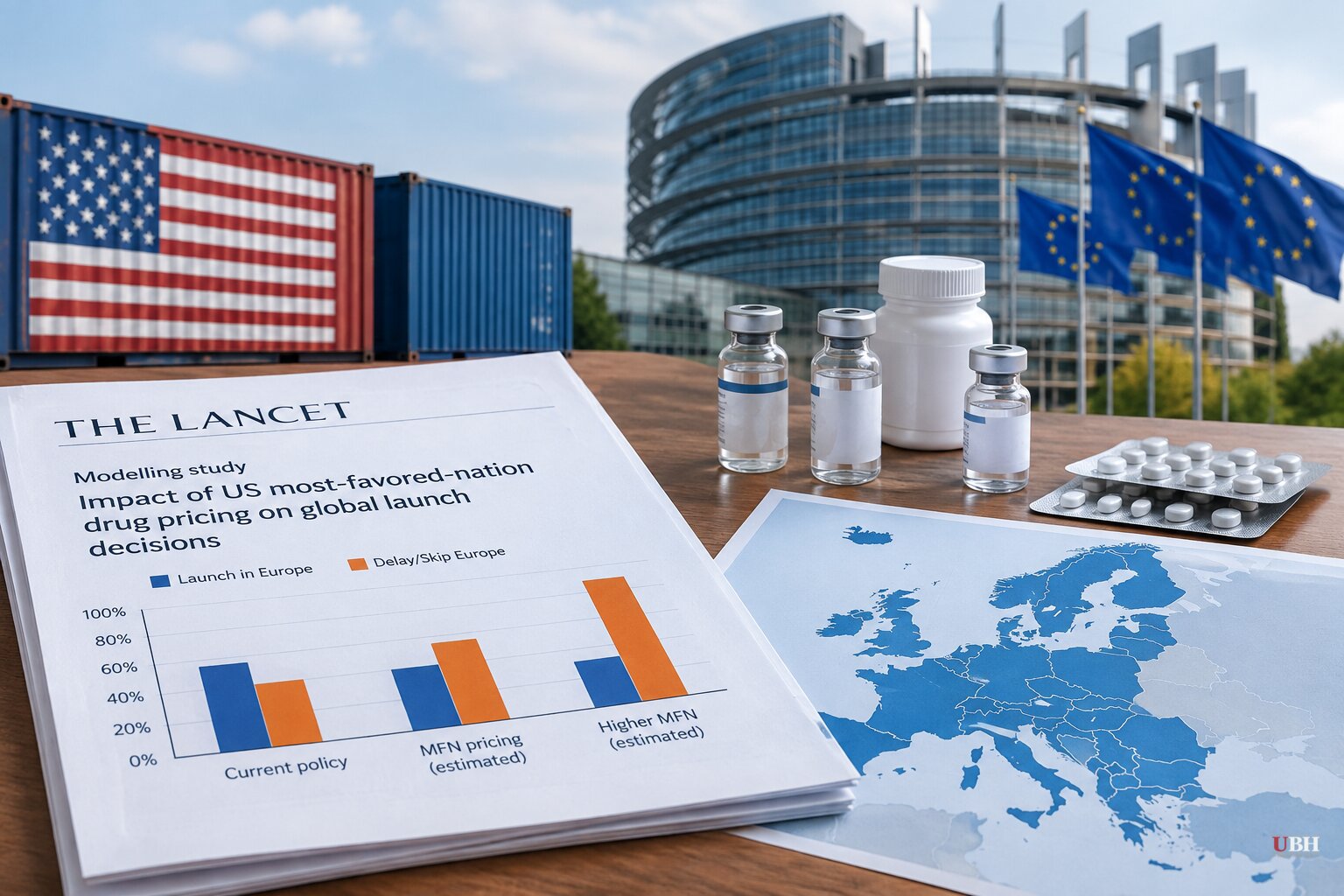
Since President Trump's most-favored-nation executive order took effect and expanded to 26 pharmaceutical companies by August 31, a new modelling study published Sunday in The Lancet lays out a concrete mechanism for how the policy could backfire on patients outside the US.
Researchers reviewed 195 patent-protected medicines that together account for $87.9 billion in annual US spending, comparing US net costs against prices in 19 reference countries, according to Euronews and Briefs.co. The team, which includes Kerstin Vokinger of ETH Zurich and the University of Zurich alongside colleagues at Brigham and Women's Hospital, found that for roughly three out of four drugs studied, the revenue companies would lose by cutting US prices exceeds their entire annual sales in whichever lower-cost country sets that benchmark.
That math creates an incentive problem. If a company can avoid US price cuts simply by not launching in the cheapest reference countries first, some companies may do exactly that. "Policies in the US may impact access to medicines globally," Vokinger said in a press release cited by Euronews.
The dollar numbers behind the policy
Briefs.co reports the study estimates that fully aligning Medicare prices with the reference countries would save $11.6 billion across two pilot programs the administration has running to test the policy. But that figure drops to $3.3 billion if the 17 companies that already struck separate pricing deals with the White House are excluded from the calculation. Nine additional companies signed deals after the study's data cutoff, according to Briefs.co. Those voluntary agreements change the savings math but weren't fully captured in the modelling.
What's actually happening in Europe right now
Europe isn't waiting for a hypothetical. Drug launches in EU markets fell by about 35% in the ten months after Trump's executive order compared to the prior ten months, Reuters reported in March, a figure both Euronews and Newswav repeated this week. In February, a drug used to treat severe cholesterol cases was reportedly pulled from the market in a move that may be tied to the pricing policy, though Euronews is careful to note the causal link isn't confirmed.
Alexander Natz, chief of the biotech lobby group Eucope, told Euronews that "even in bigger countries like Germany, we see companies reconsidering whether they launch or when they launch." Natz argues the fix isn't panic, it's money: European governments, he says, need to be willing to pay more if they want to keep getting new medicines without delay.
The European Patients Forum put the stakes in human terms. "The risk is very concrete: if pharmaceutical companies delay launching medicines in Europe because European prices may be used to determine prices in the United States, patients here could wait longer for treatments that are already available elsewhere," the group told Euronews Health. "For someone living with a serious or progressive condition, an additional wait can have a real impact on their health and quality of life."
Patients with rare or progressive diseases don't have the luxury of waiting out a pricing dispute between governments and drug companies. If launches genuinely slow down in Europe because of a US policy, that's a real cost borne by people who had nothing to do with the negotiation.
But the flip side deserves equal weight. For decades, American patients and taxpayers have effectively subsidized cheaper drugs abroad while paying full freight at home. Trump's deals, including the nine signed August 31 with companies like Alcon, Astellas Pharma, BeOne Medicines, and Teva, extract most-favored-nation pricing for state Medicaid programs and lock in those terms for future drugs, according to the Epoch Times. BeOne's chairman John Oyler said his company would pump nearly $11 billion into US research and manufacturing through 2029. Kyowa Kirin's president Steve Schaefer said the company is bringing manufacturing onshore so that, within two years, over 95% of its US-made drugs will go to American patients.
An unresolved question, not a settled one
Christoffer Frendesen, a Brussels-based pharmaceutical journalist tracking the launch data for the Pharma Minds podcast series, told host Nathalie Lahitte that industry and policy officials in Brussels are alarmed but largely silent, because the obvious fixes (paying more for medicines) are politically toxic. He pointed to a Pfizer executive who reportedly said the company would choose the US market over Europe if forced to pick, a remark Frendesen called "candid rather than reckless" and one he says many in the industry privately agree with.
What nobody involved, not Eucope, not the European Commission, not the White House, has answered yet: will European governments actually raise what they pay for new drugs to stay competitive as a launch market, or will they let the current slowdown continue and hope it's temporary? Euronews notes pricing and reimbursement decisions remain a national matter across the EU, meaning any fix would require 27 separate governments to move, not one.
Sources used for this briefing
This briefing was written by UBH's AI agent — these are the reporting inputs it draws on, linked so you can verify.


