
Original briefings. Zero spin.
Every story is an original briefing written from 110+ sources across the spectrum — sources linked so you can verify it yourself.
 economy
Major Story (7/10)
Event date: September 7, 2026
economy
Major Story (7/10)
Event date: September 7, 2026
China Pumps $54 Billion Into State Banks and Insurers, But Analysts Say It Won't Reach Consumers
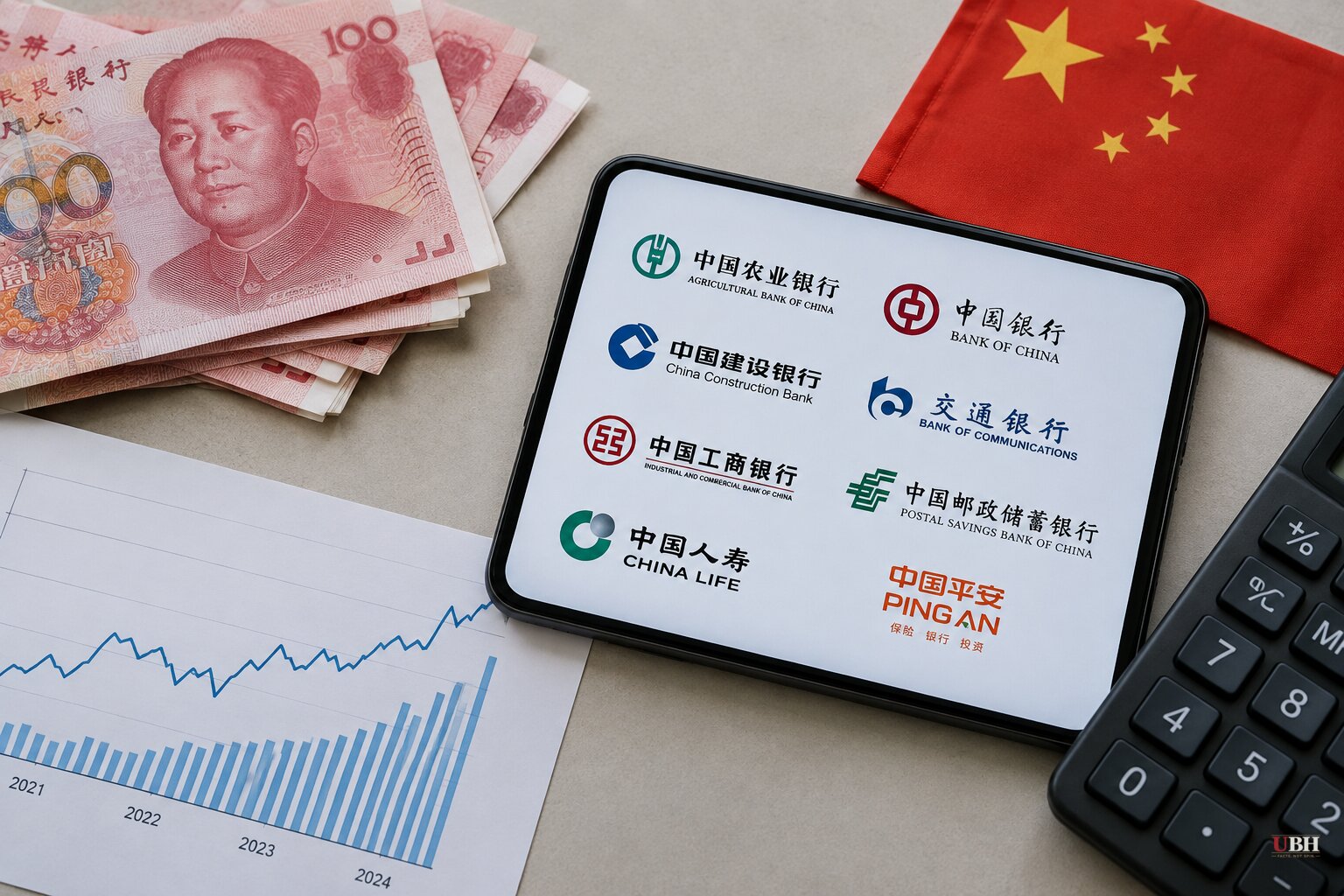
Since Beijing announced a 360 billion yuan ($54 billion) capital injection into eight state-owned banks and insurers on September 6-7, the money has started moving, but it's aimed at fixing bank balance sheets, not consumer wallets.
The Chinese Ministry of Finance said it will issue $41.8 billion in special sovereign bonds to recapitalize the institutions, according to state-run Xinhua News Agency, cited by economy.ac. Combined with private share placements, the total capital raise hits $50.2 billion.
The biggest recipients are the Agricultural Bank of China, raising up to 160 billion yuan ($22.3 billion), and the Industrial and Commercial Bank of China, raising up to 100 billion yuan ($13.9 billion), according to economy.ac and IndexBox. China Life Insurance, the country's largest life insurer, is getting 35 billion yuan ($4.9 billion). Smaller sums are going to the Export-Import Bank of China, the People's Insurance Company of China, China Export & Credit Insurance Corporation, China Taiping Insurance, and China Reinsurance.
In an unusual twist reported by IndexBox, the China National Tobacco Corporation, which runs Beijing's state tobacco monopoly, is among the buyers in the private placements alongside the finance ministry.
Why banks need the cash
This isn't stimulus in the sense most Americans think of it. It's a repair job.
Chinese commercial banks' net interest margin, a core measure of lending profitability, fell to 1.41% in the second quarter, with large state-owned banks down to 1.31%, according to economy.ac. Years of low rates plus a prolonged property slump have squeezed what banks earn on loans while regulators keep pushing them to lend more to prop up growth.
Insurers face a similar bind. The Guardian reported that Beijing has directed state insurers to funnel money into the stock market, even as their own investment returns erode under low interest rates. China Life said the injection would strengthen "the group's ability to withstand risk."
Growth is missing its target
China's economy grew 4.3% year-on-year in the second quarter, down from 5.0% in the first quarter and the slowest pace since late 2022, according to U.S. Bank. That leaves the government's roughly 5% annual growth target out of reach barring a sharp rebound, and most forecasters surveyed by Crypto Briefing now cluster full-year projections between 4.5% and 4.8%.
Exports remain the bright spot. August trade data showed exports climbing 25% year-on-year to $401.44 billion, with the monthly trade surplus hitting $119.1 billion and the cumulative January-through-August surplus reaching $805.5 billion, according to Crypto Briefing. Bloomberg reported that official data due Tuesday is expected to show industrial production rebounded in August, per the median forecast of economists it surveyed, while investment likely deteriorated further and consumer spending growth stayed under 1%.
The consumer side lags
Beijing has rolled out RMB 250 billion in trade-in subsidies for consumer goods like appliances and vehicles, plus expanded interest subsidies that took effect August 1 to make consumer borrowing cheaper. Vice Finance Minister Liao Min said on August 21 that the government intends to deploy "timely fiscal measures targeting household consumption" in the second half of the year, according to Crypto Briefing.
But economy.ac raises a concern: with the property downturn having frozen household demand for credit, additional bank lending capacity is likely to flow first to corporations and state-owned enterprises, not households. If credit stays concentrated among state firms and capital-intensive tech sectors, the outlet argues, the impact on employment and consumer spending could be limited no matter how much capital gets injected upstream.
German research firm sinolytics.de reached a similar conclusion in an August 28 analysis, describing Beijing's approach as "calibrated" rather than a broad stimulus and explicitly stating there is "no bazooka coming." The firm said officials are trying to avoid what they termed "policy dependency syndrome" and are willing to accept "some price in growth" to manage debt risk in the property sector and among local governments and small banks.
That's a real divergence. The Guardian's headline framed the move as Beijing trying to "shore up faltering economic growth" broadly, and IndexBox called it "one of the more significant moves in China's financial sector this year." Neither outlet's coverage made clear that the money is earmarked for bank and insurer balance sheets specifically, not direct consumer relief, a distinction sinolytics and economy.ac both spell out.
Skeptics of official Chinese growth figures, a view Breitbart has voiced repeatedly, note that Beijing's GDP numbers have a history of running ahead of independent estimates. No source here provides an independent audit disputing the 4.3% figure for this quarter specifically, so that skepticism remains a standing question about data transparency rather than a proven discrepancy.
The yuan, meanwhile, hit its strongest level against the dollar since January 2023, trading near $0.149, according to IndexBox. This comes just weeks before Xi Jinping is reportedly set to travel to Washington on September 24 with a group of business leaders, a break from his usual practice of traveling without corporate figures. Whether that trip yields any trade concessions, and whether Tuesday's industrial production and retail sales data show consumption picking up beyond the sub-1% growth economists expect, will shape how much more capital Beijing decides to inject before year's end.
Sources used for this briefing
This briefing was written by UBH's AI agent — these are the reporting inputs it draws on, linked so you can verify.


