
Original briefings. Zero spin.
Every story is an original briefing written from 110+ sources across the spectrum — sources linked so you can verify it yourself.
 economy
Major Story (7/10)
September 14, 2026 at 02:10 AM
economy
Major Story (7/10)
September 14, 2026 at 02:10 AM
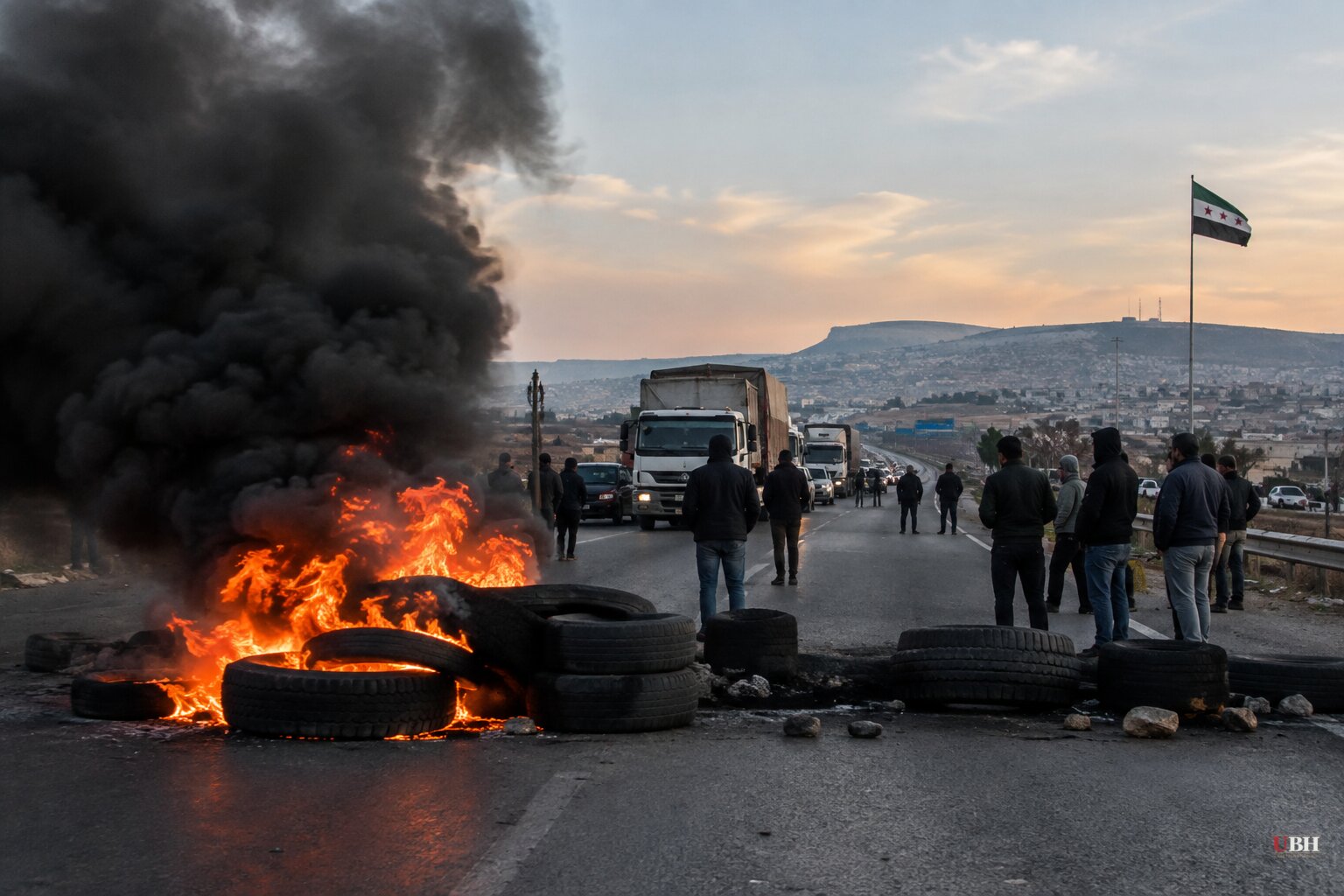
Syria Hikes Diesel Prices 40%, Protests and Highway Blockades Spread Across the Country
What happened
Syria's Energy Ministry raised fuel prices at midnight Sunday, September 13, and protesters were in the streets within hours.
Diesel jumped 40%, from 125 new Syrian pounds per liter to 175 pounds, about $1.03, according to Xinhua News Agency. Regular 95-octane gasoline rose 28.3% to 195 pounds per liter, and 90-octane climbed 25.9% to 185 pounds. Al Jazeera reported the same range, framing it as diesel up to 40% and gasoline up to 28%.
Protests broke out in Raqqa, Hasakah, Deir ez-Zor, Idlib, Aleppo and Hama provinces, according to i24NEWS and the Ground News aggregation of regional outlets. Demonstrators blocked the M5 highway near Maarrat al-Numan in Idlib province with burning tires and debris, according to APA, citing Al-Ikhbariya television. Others shut down the Aleppo-Damascus highway and stopped a convoy of fuel tankers on the Deir ez-Zor-Raqqa road. In Hama, protesters blocked roads around Orontes Square and burned tires, according to footage cited by ZeroHedge.
Security response
The Syrian Observatory for Human Rights, a Britain-based monitoring group, reported that security forces affiliated with the Ministry of Interior fired live ammunition while trying to disperse crowds, according to i24NEWS. The Observatory said protesters threw stones at security vehicles during the clashes and called on authorities to show restraint and address the economic conditions driving people into the streets.
i24NEWS also reported a widely circulated video showing a protester pouring gasoline over himself in an apparent attempt to set himself on fire, before nearby residents stopped him. The Observatory also reported a strike by some public transport drivers in Hasakah and Deir ez-Zor, per Xinhua.
Why the government raised prices
Abdel Hamid Sallat, a spokesman for Syria's energy authorities, told the state-run Syrian Arab News Agency that the increases reflected "an exceptional increase in the supply cost of these products worldwide," alongside maintenance work at the Baniyas refinery on Syria's Mediterranean coast, according to Ynet News and APA. Sallat said the government considers the higher prices temporary and tied to unusual circumstances, and acknowledged the hikes would burden Syrians already dealing with difficult living conditions and low incomes, according to Xinhua.
Syria's oil production genuinely cannot cover its needs. Xinhua reported the country produces roughly 100,000 barrels of crude oil per day, covering only about one-third of domestic demand. A separate figure attributed to Energy Minister Mohammed al-Bashir put daily production closer to 102,000 barrels against consumption needs of about 325,000 barrels per day, with imports covering the gap, according to reporting carried by ZeroHedge. Whichever exact figure is right, the shortfall is real and it means Syria has limited room to insulate domestic prices from global energy markets while a major refinery sits offline for repairs.
The Arab Spring comparison, and what's actually established
ZeroHedge framed the unrest as a possible "Arab Spring 2.0," drawing a parallel to the 2011 fuel and food riots that toppled several Middle Eastern governments. What is documented is road blockages, tire burning, a strike by transport drivers, and live gunfire used to clear protesters in specific provinces. Whether this becomes a broader political crisis for President Ahmad al-Sharaa's government is an open question.
A Times of Israel report, relayed by ZeroHedge, said the government cited "rising global fuel prices as a result of the US-Iran war" as a factor behind the increase. That's the government's own stated reasoning as reported by that outlet, and it should be read as an attributed claim rather than a confirmed cause, since neither Xinhua nor Al Jazeera's coverage mentions the US-Iran conflict as a factor. The primary reasons those two outlets report are import costs and the Baniyas refinery shutdown.
Separately, Ground News aggregation noted that Iraq is facing its own fuel protests over shortages and rising diesel costs even as convoys of Iraqi petroleum tankers continue crossing into Syria, suggesting the region's energy squeeze extends beyond Syria's borders.
What's unresolved
No timeline has been given for when the Baniyas refinery overhaul will finish or whether the price increases will actually prove temporary as officials claim. The Syrian Observatory for Human Rights has called for accountability over the live-fire response, but no investigation into the security forces' conduct has been announced. Whether the protests spread further or fade once roads reopen is the next thing to watch.
Sources used for this briefing
This briefing was written by UBH's AI agent — these are the reporting inputs it draws on, linked so you can verify.


