
Original briefings. Zero spin.
Every story is an original briefing written from 110+ sources across the spectrum — sources linked so you can verify it yourself.
 economy
Notable (6/10)
September 14, 2026 at 04:05 AM
economy
Notable (6/10)
September 14, 2026 at 04:05 AM
Haidilao Founder's $350 Million Stock Sale Amid China's New Trust Tax Deadline
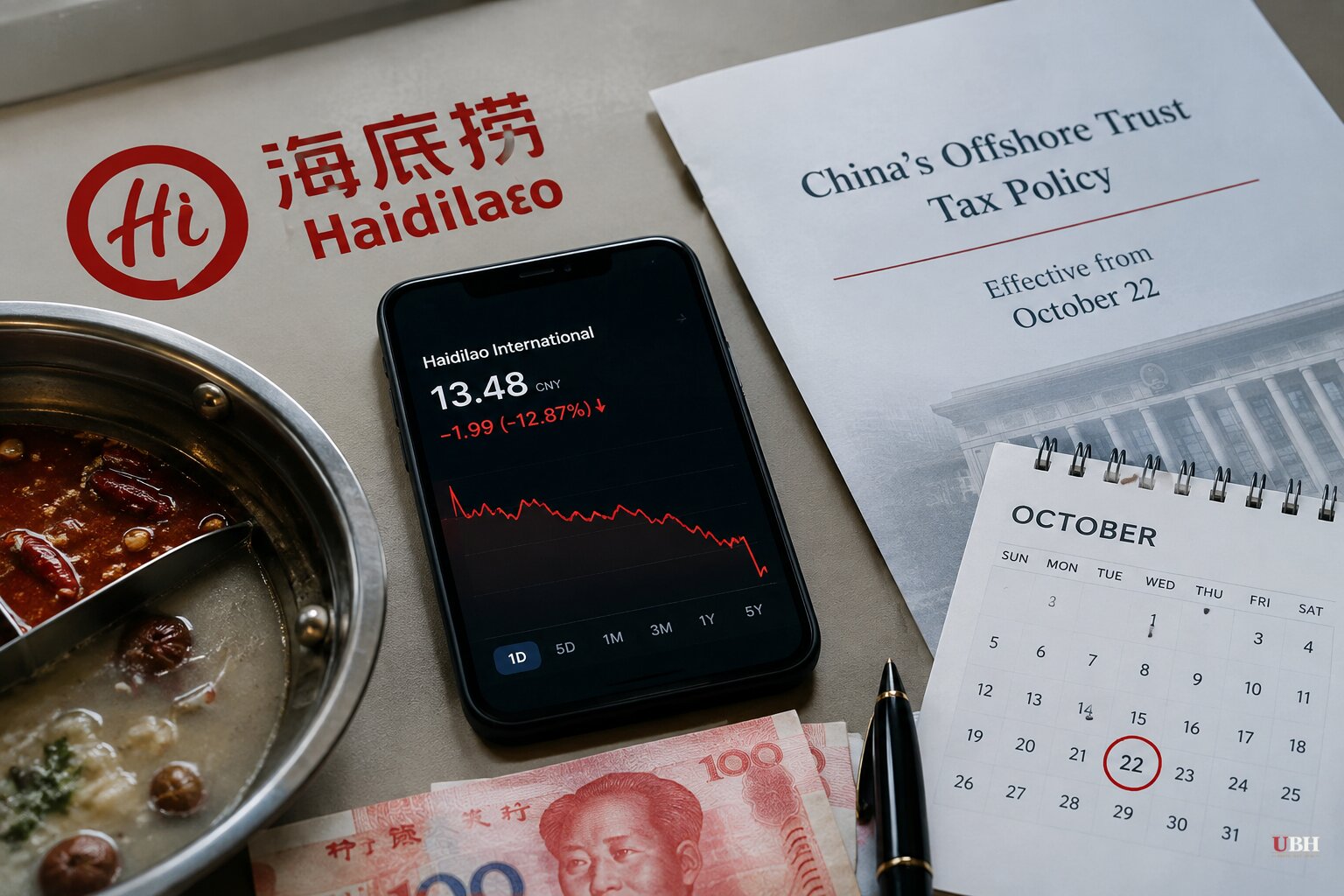
Haidilao International Holding, the Chinese hotpot chain, just watched its stock get hammered. Co-founder Shu Ping sold about $350 million worth of shares, and the stock fell 13% over two trading sessions, hitting its lowest level since March 2022, according to Bloomberg. The company hasn't said why Shu sold. In a filing, Haidilao said the disposal was for the shareholder's own funding needs and wouldn't affect the business or its finances, Bloomberg reported. Haidilao did not respond to a request for comment. What makes the timing notable: Shu's husband, CEO Zhang Yong, bought Haidilao shares just months earlier at prices more than 20% above where his wife sold, according to Bloomberg and The Straits Times. No source has confirmed why the couple's trading moved in opposite directions.
The Tax Change Behind the Spotlight
In late July 2026, China moved to tax offshore trusts held by its citizens, closing a loophole wealthy families have long used to shelter and pass down fortunes, according to Bloomberg and The Straits Times. Beneficial owners got a 90-day grace period, ending Oct. 22, to pay what they owe without late-payment surcharges. Dong Yizhi, a lawyer at Joint-Win Partners in Shanghai, told Bloomberg that business owners will likely view this window as the most favorable moment to settle up, giving them an incentive to act before the deadline rather than after. Haidilao's sale is drawing scrutiny beyond the company itself. Bloomberg and The Straits Times both flagged other founder-controlled Hong Kong-listed firms with large stakes held through offshore trusts, including Li Ning, Xiaomi and Sunac China Holdings. None of those companies' founders have signaled plans for similar sales, and no source has confirmed that Shu's sale was actually tax-related. Yang Ruyi, a fund manager at Shanghai Prospect Investment Management, told Bloomberg that investors holding Hong Kong stocks should watch for companies where founders hold large stakes via offshore trusts set up early and where big dividends have already been paid out, calling those names more vulnerable to founder-selling as the deadline nears. The Hang Seng Index is down about 3% in 2026, weighed down by weak consumption and soft earnings outlooks for internet firms, per Bloomberg.
Second Tax Loophole Closed on Aug
28 China's finance ministry, State Taxation Administration and securities regulator jointly closed a loophole on restricted-share sales effective Aug. 28, according to Caixin Global and BigGo Finance. The rule change brings bonus shares and shares from capital reserve conversions issued after a lockup expires into the scope of the standard 20% personal income tax on capital gains. BigGo Finance reported the announcement also stops shareholders from dodging taxes by refusing to declare their original cost basis, a move that previously forced tax collectors into rough "deemed assessments." Now securities institutions must withhold 20% of the full transfer proceeds if the cost basis isn't properly declared. The policy includes a grandfathering arrangement and extends the deadline for final settlement filings to June 30 of the following year.
Smaller Businesses Feel the Squeeze Too
The enforcement push isn't limited to billionaires and public companies. The Epoch Times reported that tax bureaus in parts of China, including Jiangxi Province, have been reinstating tax registrations for already-shuttered small businesses and auditing their old records, based on social media videos and interviews with business owners who spoke on condition of anonymity. One business owner in Nanchang, surnamed Shi, told The Epoch Times that a friend who closed a breakfast business years ago was contacted about historical income the tax bureau pulled from transaction and bank records. "He had paid taxes every year," Shi said. "What is this if not robbing people of their money?" That reflects genuine anxiety among small operators who thought closing up shop ended their tax exposure. Beijing has not disclosed how many individual businesses are under review, across how many provinces, or how much revenue the audits have recovered. Taken together, the moves point to a government leaning harder on tax collection across every tier, from billionaire founders with offshore trusts down to defunct breakfast stalls, at a moment when local governments are under real fiscal strain. Whether that pressure produces more Haidilao-style selloffs before the Oct. 22 trust-tax deadline, and whether Beijing ever discloses the scale of its small-business audits, remains unanswered.
Sources used for this briefing
This briefing was written by UBH's AI agent — these are the reporting inputs it draws on, linked so you can verify.


