
Original briefings. Zero spin.
Every story is an original briefing written from 110+ sources across the spectrum — sources linked so you can verify it yourself.
 economy
Notable (6/10)
September 13, 2026 at 08:40 PM
economy
Notable (6/10)
September 13, 2026 at 08:40 PM
EU Quietly Lets Nine Countries Skip Biometric Border Checks After Summer Airport Meltdown
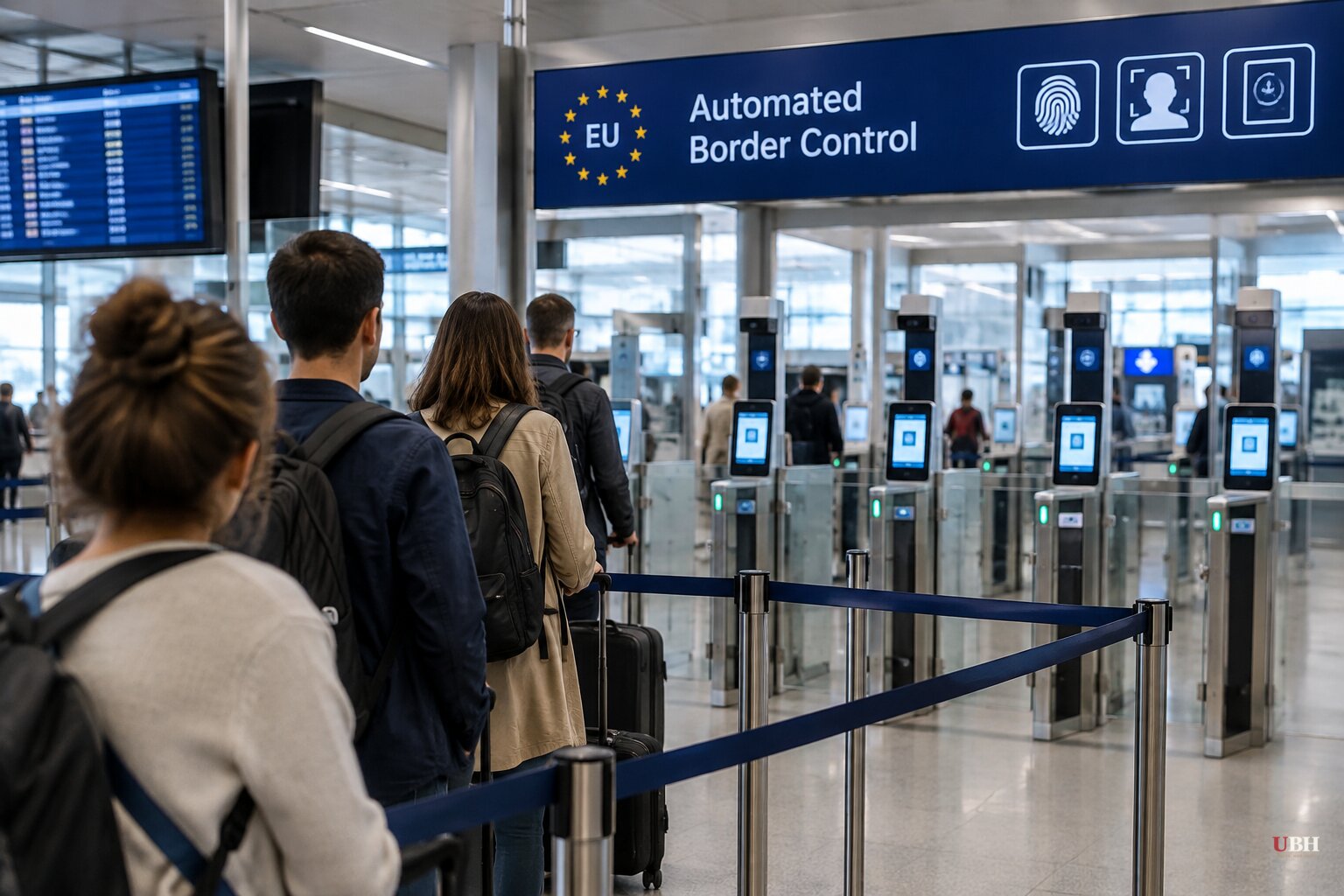
The European Union built a biometric border system to track every non-EU visitor entering the Schengen area. Four months after it was supposed to be fully operational, at least nine countries have told Brussels they're not enforcing it, and nobody has set a date for when they will.
According to a report in The Sunday Times, France, Belgium, the Netherlands, Germany, Greece, Malta, Portugal and Italy — all EU member states — along with Switzerland, a non-EU country that participates in the Schengen Area, have all been allowed to delay full implementation of the Entry/Exit System, known as EES.
The EES requires non-EU nationals, including every British traveler, to submit fingerprints and a facial scan at kiosks or e-gates each time they cross into the Schengen zone. According to The Traveler, the system's stated goal is straightforward: replace passport stamps with digital records and track whether visitors are overstaying the standard 90-day limit within any 180-day window.
It didn't work that way in practice. The system rolled out starting in October 2025 with a target of full enforcement by April 2026. Officials then handed countries a 150-day grace period to drop the checks if needed, specifically to avoid wrecking summer travel. That grace period ended September 6, 2026, one week before this article. The European Commission had previously said there would be no further extension, according to britbrief.co.uk.
Nine countries are extending it anyway. The Sunday Times reports Brussels has "informally" permitted this, with no fixed deadline. The European Commission declined to comment when asked by The Independent.
What actually went wrong at the airports
The complaints aren't abstract. Nadia, a solicitor from Greater Manchester, told upday and The Independent she flew through both Tenerife and Frankfurt this summer. Tenerife in June was "quite straightforward," she said. Frankfurt in July was not: "The queue there was ridiculously long, and there was very limited information." She said missing a flight over a border-tech failure isn't the traveler's fault and comes with no recourse.
Britbrief.co.uk collected traveler complaints describing kiosks that failed to prompt people to remove hats or headphones before scanning, inconsistent document readers, and separate national systems that don't talk to each other. This forces repeat check-ins for the same trip. One traveler summed it up on Reddit: "The general lack of functionality of so many IT systems across the EU is kind of astonishing."
Ryanair has criticized the rollout prominently. Chief operating officer Neal McMahon called it "a shambles from start to finish" and said airlines, airports and border authorities warned Brussels the system wasn't ready, only to be ignored. "EU citizens the ones delayed and disrupted," McMahon said. Ryanair is asking the Commission to formally extend the EES exemption through April 2027 to give countries time to actually staff up and fix the software.
Who's paying for the fix
This isn't free for British taxpayers either. A UK government spokesperson said the government has put up £10.5 million to improve infrastructure at the Port of Dover, Eurotunnel and Eurostar, plus another £20 million for passport-checking and vehicle-holding capacity. This effort aims to soften the blow from a system the UK has no control over since Brexit put British travelers in the "third-country national" category subject to these checks in the first place.
The case for the delay
There's a case for moving slowly here. A hard system-wide launch with broken document scanners and non-integrated national databases risks something worse than long lines: people getting wrongly flagged for overstays, missed connections with no compensation, or security gaps if border agents can't trust the data. The Traveler's reporting notes the safeguards Brussels has allowed are described as "time-limited and targeted," letting border police switch off biometric registration only in specific congested locations rather than abandoning the system outright.
But that argument doesn't answer the harder question: why a system years in planning, with a defined October 2025 launch and an April 2026 enforcement deadline, still isn't working nearly a year later. Why an "informal" green light with no legal deadline is how the Commission is handling it also remains unanswered. No investigation into the software failures has been announced, and no timeline for full enforcement exists in any of these reports. The Commission's refusal to comment when asked directly by The Independent leaves that question open.
The practical upshot for anyone flying to Portugal, Italy, Greece or the other countries on this list this fall: expect the same mixed patchwork of enforcement that defined the summer, and don't expect a firm date for when that changes.
Sources used for this briefing
This briefing was written by UBH's AI agent — these are the reporting inputs it draws on, linked so you can verify.


