
Unbiased headlines. Facts, not spin.
Unbiased Headlines is an independently owned news organization. We bring you the facts, not opinions, written fresh from 110+ named sources. Sources linked so you can verify it yourself.
 energy
Major Story (7/10)
Lake Powell Rises More Than 20 Feet Since September After Southwest Floods, Still Only a Quarter Full
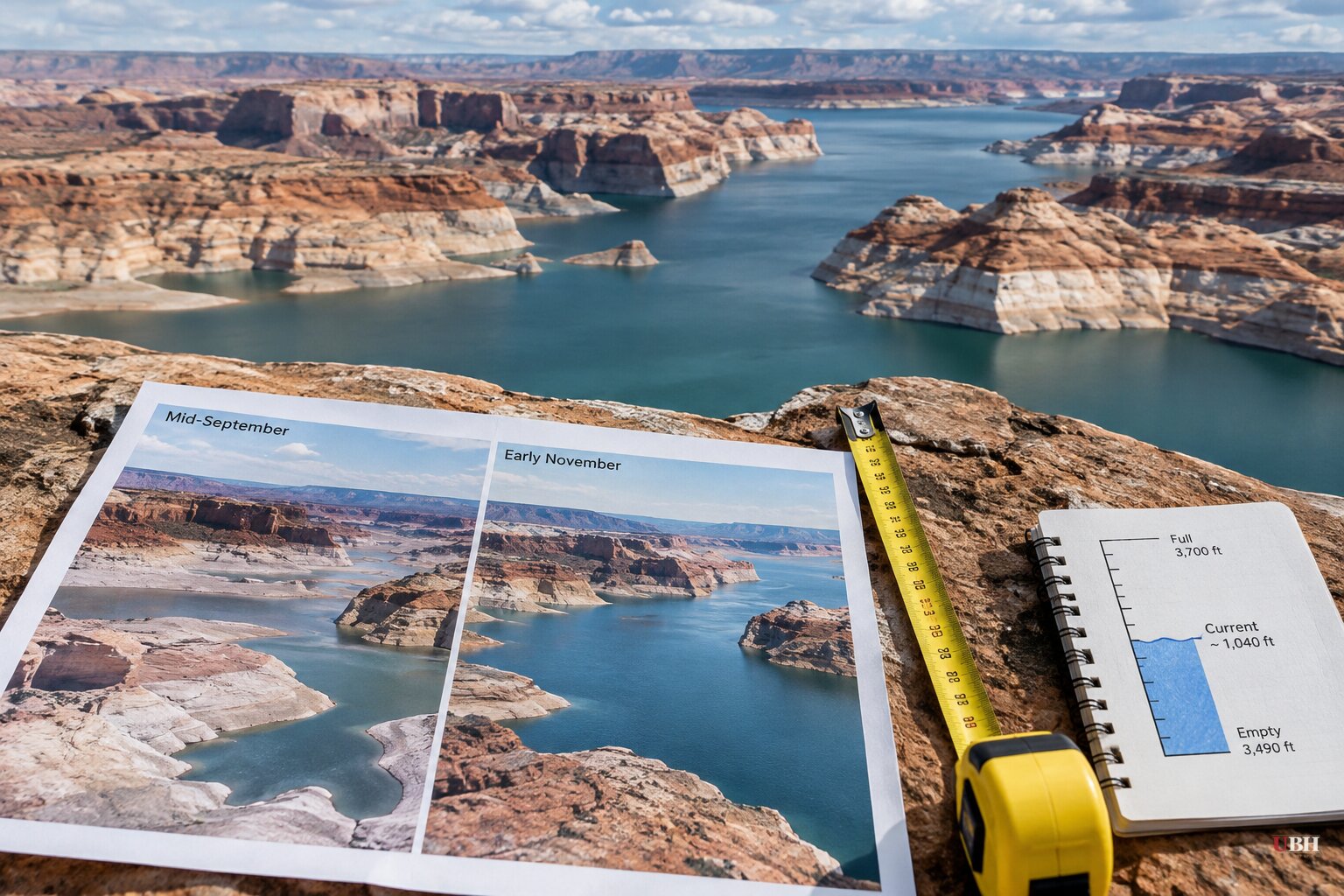
The same storms that forced evacuations across the Southwest are now refilling some of its driest reservoirs.
Lake Powell, the second-largest reservoir in the U.S., has risen more than 20 feet (6.1 meters) from its mid-September low, according to Martin Hoerling, a climate scientist and hydrologist at the University of Colorado, Boulder. That rise dwarfs what this year's snowmelt added, Hoerling said.
It is a real gain. It is also a small one against the hole the lake is in.
Still just over a quarter full
Powell remained just over a quarter full, and 15 of its 17 boat launches were still unusable as of Friday, Nov. 6. The lake sits on the Arizona-Utah border.
Hoerling estimated that floodwater and additional rain could lift the lake further, for a total of more than 1.2 million acre-feet. That is enough to supply about 4 million average families for a year, by his estimate.
"That's somewhat of an unexpected boost from Mother Nature," Hoerling said.
The boost was needed. Last winter's weak snowfall did little to recharge reservoirs when it melted this spring and summer, the period when they normally get their biggest gain of the year.
The storms behind the rise
The rain came in waves. Heavy rain and flash flooding hit the region on Sunday, Nov. 1, as a series of Pacific storm systems moved through. The National Weather Service had flood watches posted for nearly all of Arizona and parts of southern Utah, southwestern Colorado, western New Mexico and southern Nevada.
"We are getting two or three months of rain in a span of a couple of days," said Aaron Hardin, a National Weather Service meteorologist in Tucson. Tucson saw flash floods, river flooding and swift boat rescues.
In Sedona, officials ordered residents near Oak Creek to leave immediately as floodwaters trapped multiple people in their homes. Camp Verde issued similar orders for areas along the Verde River, West Clear Creek and Wet Beaver Creek. Gila County ordered the total evacuation of Gisela, a community of several hundred people along Tonto Creek.
In Flagstaff, police said Nov. 1 that they were searching for a man who slipped into fast-moving floodwaters and was not seen resurfacing.
Pagosa Springs braced for a record
In southwestern Colorado, the town of Pagosa Springs faced a forecast of "potentially catastrophic flooding." The San Juan River was projected to crest at more than 19 to 20 feet, depending on the forecast. The Archuleta County Sheriff's Office noted that the devastating 1911 flood, which wiped out most of the town at the time, crested at about 17.8 feet.
By sundown on Nov. 1 the river had reached about 14 feet, county spokesperson Vicky Schaffer said. Roads in and out of town were closed.
The storms dumped about 7 inches (17.78 centimeters) of rain around Pagosa Springs in October. More than 10,000 people in the town and surrounding communities had been under water restrictions before the storms, and restaurants had been encouraged to serve water only on request, town manager David Harris said. Those restrictions are now lifted.
"While the storm was destructive, I think there is a silver lining," Harris said. "You're getting a good start to the winter snowpack in the higher elevations."
Flagstaff's buffer
Flagstaff gets up to 40% of its water from Upper Lake Mary, which captures spring snowmelt. The reservoir has taken in more than 3 billion gallons since early October, said Brian Huntzinger, the city's water production manager.
Last weekend's storms alone put the equivalent of more than two years of water into the town's surface supply, Huntzinger said. That gives a cushion to a system that leans heavily on underground aquifers.
"We might be overflowing at this rate before we see any snow fly," he said.
In central Arizona, floodwaters that trapped people in their homes poured into streams feeding the Verde River. Water officials responded by releasing water from two nearly full reservoirs.
What comes next
Hoerling said most of the flood runoff will end up feeding depleted lakes and underground aquifers rather than simply running off. Experts say El Niño, which has intensified the heavy rain and flooding, will keep affecting the region for several more months. That could add to supplies across the West, where water is stored mainly in lakes, aquifers and snowpack.
The open question is the snowpack. Harris pointed to a solid start at higher elevations in Colorado. Whether El Niño delivers a winter big enough to push Powell well beyond a quarter full will be clear only when the spring melt arrives.
Sources used for this briefing
7 links from 7 independent newsrooms (syndicated copies of the same report count once)
These are the sources it draws on, linked so you can verify.


