
Unbiased headlines. Facts, not spin.
Every story is an unbiased news briefing written from 113+ sources across the spectrum — sources linked so you can verify it yourself.
 economy
Notable (6/10)
Event date: July 24, 2026
economy
Notable (6/10)
Event date: July 24, 2026
Labor Department Watchdog Says He Has 'Handcuffs Ready' for H-1B Fraud, Stops Well Short of Predicting Shutdown
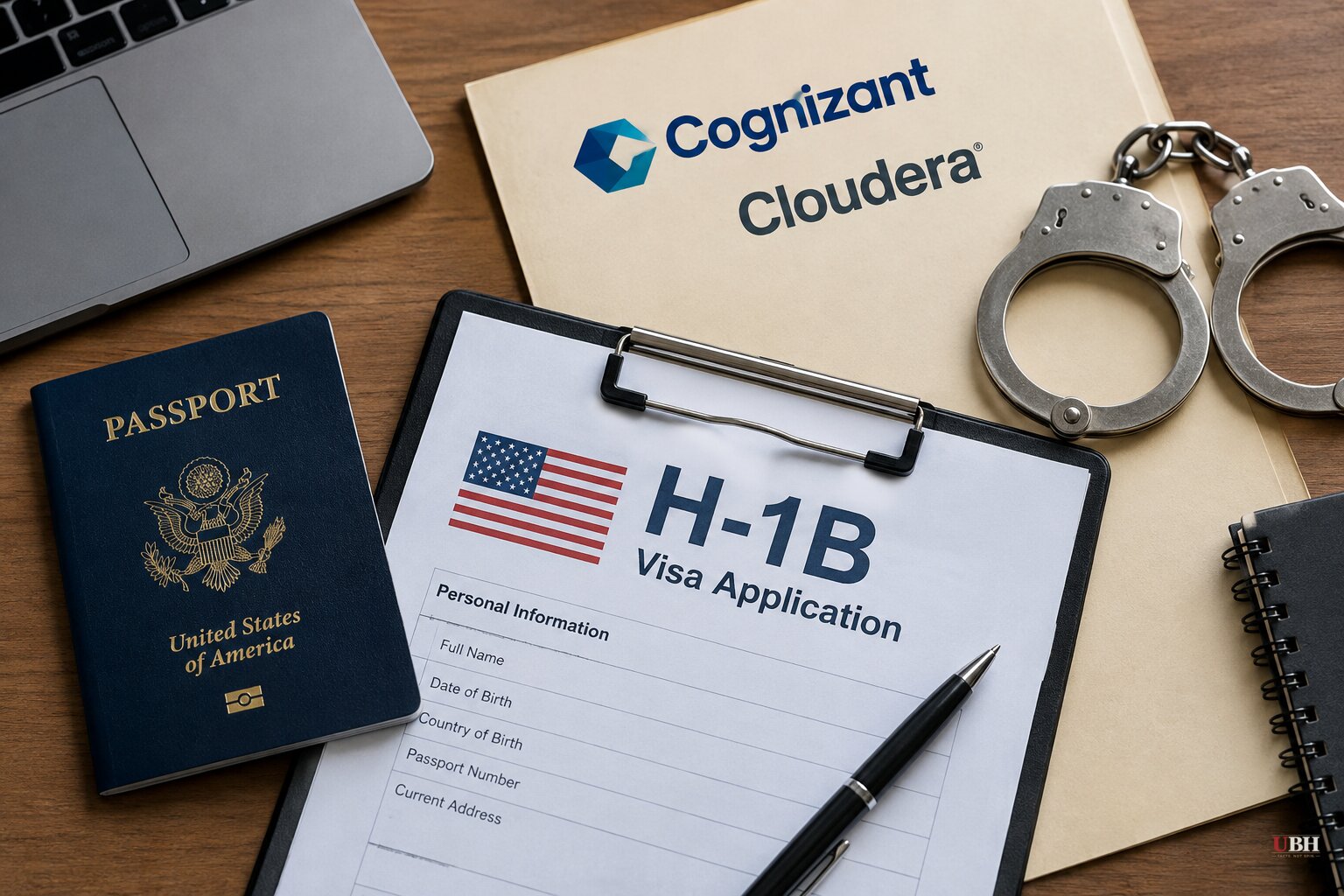
Department of Labor Inspector General Anthony D'Esposito sat down with commentator Benny Johnson on September 24 and said something that immigration lawyers, tech companies, and Indian media outlets are still parsing four days later.
"We have handcuffs ready," D'Esposito said. "We are building a case... I think that the foreign labor visa program is going to look very different 365 days from now than it does today."
D'Esposito did not say the H-1B program is getting shut down entirely. He said it will look different.
What headlines got right, and what they added
Times of India and News18 both ran headlines declaring the Labor Department had signaled a "total shutdown" of H-1B. The Hans India followed with similar framing. D'Esposito's actual words discuss building a case, having handcuffs ready, and the program looking "very different" in a year. Nowhere does he say the program ends.
Hindustan Times caught this distinction directly, writing that "D'Esposito did not announce that the H-1B program would be abolished" and that his remarks "instead point to continued investigations, company-level enforcement and possible rule changes."
What's actually happening on the ground
There's real enforcement activity here. According to a September 18 Labor Department statement cited by Hindustan Times, investigators have issued dozens of subpoenas and executed search warrants tied to a nationwide probe into alleged fraud, worker exploitation, and potential human trafficking connected to foreign-labor visa programs.
The department also confirmed that visa applications involving Cognizant and Cloudera have been suspended pending criminal investigation. No indictments or criminal charges against either company have been announced in these reports. This is an active investigation, not a resolved case.
The enforcement push runs through an initiative called Project Firewall, launched in September 2025 to protect "the rights, wages, and job opportunities of highly skilled American workers," according to an official Labor Department statement reported by The Hans India. Under Project Firewall, the Secretary of Labor can personally direct investigations of employers suspected of misusing H-1B.
The executive order and the layoff test
Separate from the fraud probe, President Trump signed an executive order on September 18 directing the Departments of State, Labor, and Homeland Security to weigh whether an H-1B-sponsoring employer conducted layoffs in the past year, or plans future ones, that hurt "similarly situated" U.S. workers, according to a client alert from law firm Gibson Dunn and reporting from immigration site Boundless.
The order does not ban companies from laying off American workers and later sponsoring H-1B hires. It just guarantees that sequence draws government scrutiny, per Gibson Dunn's analysis. Within 30 days of the order, the Wage and Hour Division must review previously filed labor condition applications to flag employers for further action, which puts that deadline around October 18, 2026.
Exactly how agencies will define "similarly situated" workers remains undefined, Boundless noted, and the administration has not issued implementation guidance yet.
The $100,000 fee fight isn't over
Layered on top of the enforcement push is a separate and contested policy: a $100,000 payment required for certain H-1B workers outside the U.S. before they can begin employment, first imposed by proclamation in September 2025 and extended on September 18, 2026 through September 21, 2027, according to a Conference Board policy backgrounder.
That fee is currently tied up in litigation. The U.S. Court of Appeals for the First Circuit declined on July 24, 2026 to stay a lower court ruling that the fee is an unauthorized tax exceeding presidential authority. In response, U.S. Citizenship and Immigration Services confirmed it will not collect the payment for now, the Conference Board reported. That conflicts with an earlier district court ruling that upheld the fee. The U.S. Chamber of Commerce and the Association of American Universities have appealed that earlier ruling to the D.C. Circuit, meaning the fee's ultimate legal fate is still unresolved.
DHS has separately proposed a $103,265 fee specifically for new cap-subject H-1B petitions, according to Gibson Dunn, a distinct proposal from the $100,000 entry restriction.
The White House's own numbers, and the employer-side concern
The administration says the earlier $100,000 restriction produced a 92% decline in H-1B registrations from the largest IT outsourcing firms, per figures cited by Hindustan Times. Those are administration-reported figures, not independently audited numbers, and no outside verification of that percentage appears in available reporting.
Business groups including the Chamber of Commerce argue the fee itself has already been found legally deficient once. Companies that rely on specialized H-1B talent, not outsourcing shops, say layering new layoff scrutiny and unresolved fee litigation on top of an active fraud investigation creates real uncertainty for legitimate hiring decisions. For any employer trying to plan a hiring pipeline around a program whose rules keep shifting mid-litigation, that presents substantial challenges.
The program itself remains capped by law at 65,000 new visas a year plus 20,000 for advanced-degree holders from U.S. institutions, a limit set by Congress that no executive order changes.
What happens next is concrete and dated. The Wage and Hour Division's 30-day LCA review clock runs out around October 18, and the D.C. Circuit has yet to rule on the Chamber of Commerce's appeal over the $100,000 fee. Until either lands, Cognizant, Cloudera, and any other company under Labor Department scrutiny remain under investigation, not under indictment.
Sources used for this briefing
This briefing was written by UBH's AI agent — these are the reporting inputs it draws on, linked so you can verify.


