
Unbiased headlines. Facts, not spin.
Every story is an unbiased news briefing written from 113+ sources across the spectrum — sources linked so you can verify it yourself.
 economy
Notable (6/10)
September 27, 2026 at 09:42 PM
economy
Notable (6/10)
September 27, 2026 at 09:42 PM
Hochul Health Department Expands Deloitte Medicaid Contract to $1.1 Billion Without New Bidding
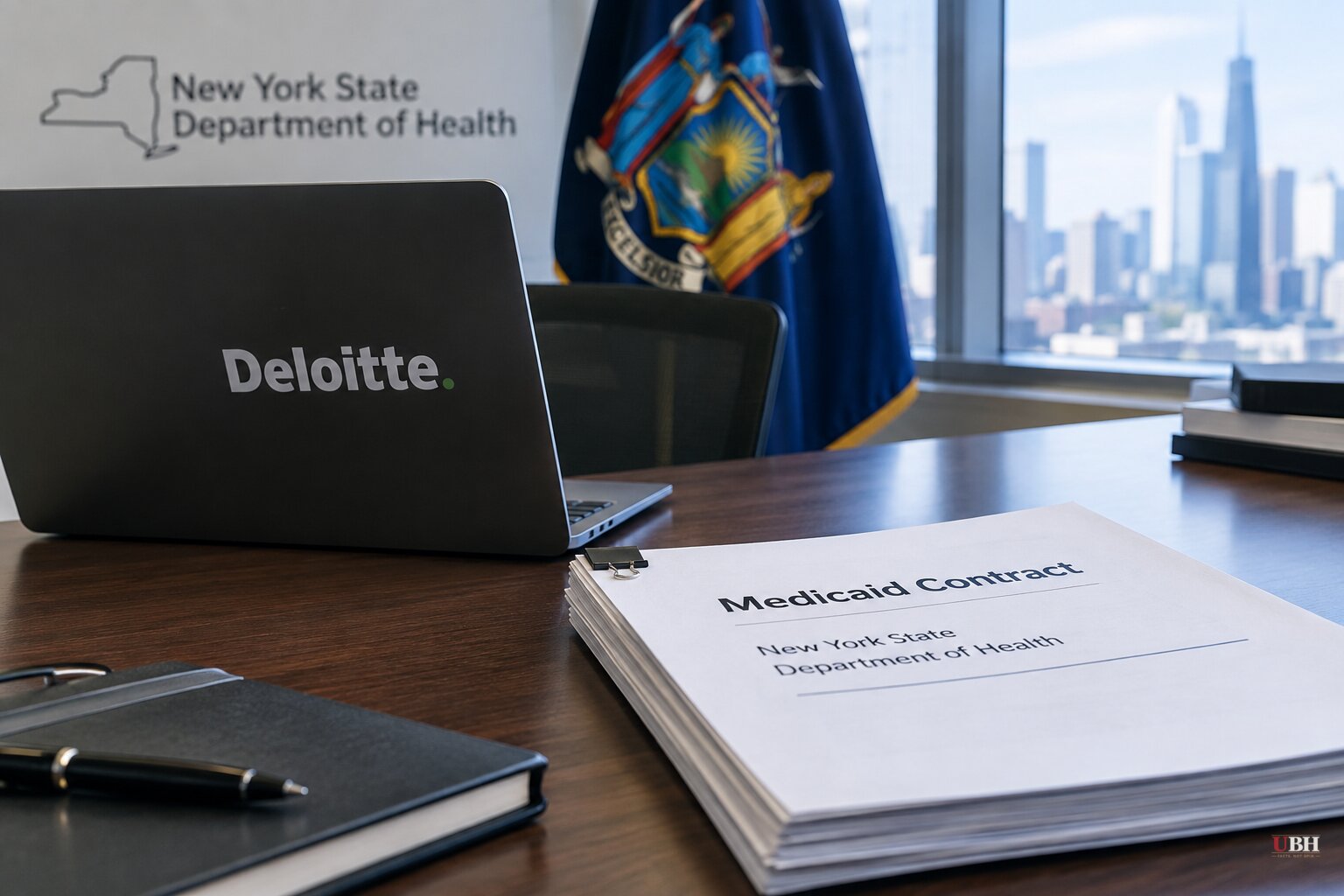
New York's Department of Health has expanded a Medicaid IT contract with Deloitte Consulting from $177 million to roughly $1.1 billion through a series of amendments, the largest of which added $866 million in August, without putting the expanded work out for competitive bid.
The original 2023 contract covered the "Medicaid Eligibility and Client Management" system, an effort to centralize Medicaid application processing that had been handled county by county into a single statewide portal. That contract grew through earlier amendments to $317 million before the August increase, according to the New York Post, which first reported the expansion.
Comptroller's office records show the state has actually paid out just over $200 million so far. Under the original contract pace, the state was spending roughly $9 million a month. After the August amendment, that rate is set to jump to about $25 million a month.
Watchdogs question the size of the jump
Bill Hammond, a health policy expert at the Manhattan Institute, told the Post the scale of the change is the problem. "For a contract expansion of this size it seems like they should be rebidding it," Hammond said.
Rachael Fauss, senior policy adviser at the good-government group Reinvent Albany, made a similar point. "In this case, the amendment is more than four times the original price," Fauss said. "This certainly deserves scrutiny to ensure taxpayers are getting the best deal for the services being provided."
New York procurement law generally requires state agencies to seek competitive bids and select the lowest responsible bidder, with carve-outs for emergencies and for amendments to existing contracts. Whether a nearly 350% cost increase still qualifies as a routine amendment, rather than a de facto new contract requiring its own bidding process, is the exact question Hammond and Fauss are raising. No state audit, inspector general review, or formal investigation into the Deloitte amendment has been announced.
The state's defense
Department of Health spokesperson Cadence Aquaviva defended the deal, saying it followed the law and was necessary for "sunsetting an outdated, error-prone system." Aquaviva said the new platform would ultimately save taxpayers money. "Once it is complete, this platform will save state taxpayers hundreds of millions of dollars while allowing us to strengthen the program and reduce the potential for waste, fraud and abuse," the spokesperson said.
Legacy Medicaid eligibility systems across many states are genuinely old, fragmented across counties, and prone to processing errors that can delay benefits or let ineligible claims through. If the current county-by-county setup is producing costly errors, a unified statewide portal could plausibly cut long-term administrative waste, even if the upfront IT bill is large.
Aquaviva also noted that the federal Centers for Medicare and Medicaid Services is covering 90% of the design and implementation costs and 75% of ongoing operations costs. That matters for the math: if those federal cost-share percentages hold, New York State's own taxpayers are on the hook for a meaningfully smaller slice of the $1.1 billion than the headline number suggests, even though federal funding is itself taxpayer money collected nationally.
Deloitte did not respond to a request for comment from the Post.
A repeat player with a mixed record in Albany
This is not Deloitte's first large, no-bid-adjacent state IT project. The firm also built New York's COVID-era "Excelsior Pass," a digital vaccine and testing record app that cost taxpayers more than $60 million and saw limited actual use once pandemic restrictions eased. That history doesn't prove the Medicaid portal will follow the same path, but it's a relevant data point for anyone assessing whether the state got a good deal.
What's proven here: the contract amendment happened, its size ($866 million on top of $317 million), and that it did not go through new competitive bidding. What's alleged but not established: whether the state overpaid relative to what a competitive process would have produced, or whether the amendment was structured specifically to avoid rebidding rules. Reinvent Albany and the Manhattan Institute are calling for scrutiny, not alleging fraud.
The unresolved question is whether the Legislature, the state comptroller, or an independent auditor will formally examine whether an amendment of this size should have gone back out to bid, and whether Deloitte's pricing reflects fair market value for a system that has consumed roughly $200 million in actual spending against a total authorized ceiling of $1.1 billion.
Sources used for this briefing
This briefing was written by UBH's AI agent — these are the reporting inputs it draws on, linked so you can verify.


