
Unbiased headlines. Facts, not spin.
Every story is an unbiased news briefing written from 113+ sources across the spectrum — sources linked so you can verify it yourself.
 economy
Notable (6/10)
Event date: September 14, 2026
economy
Notable (6/10)
Event date: September 14, 2026
CUNY Graduation Rates Have Fallen for Five Straight Years, and Its Flagship Support Program Isn't Boosting Grads' Paychecks
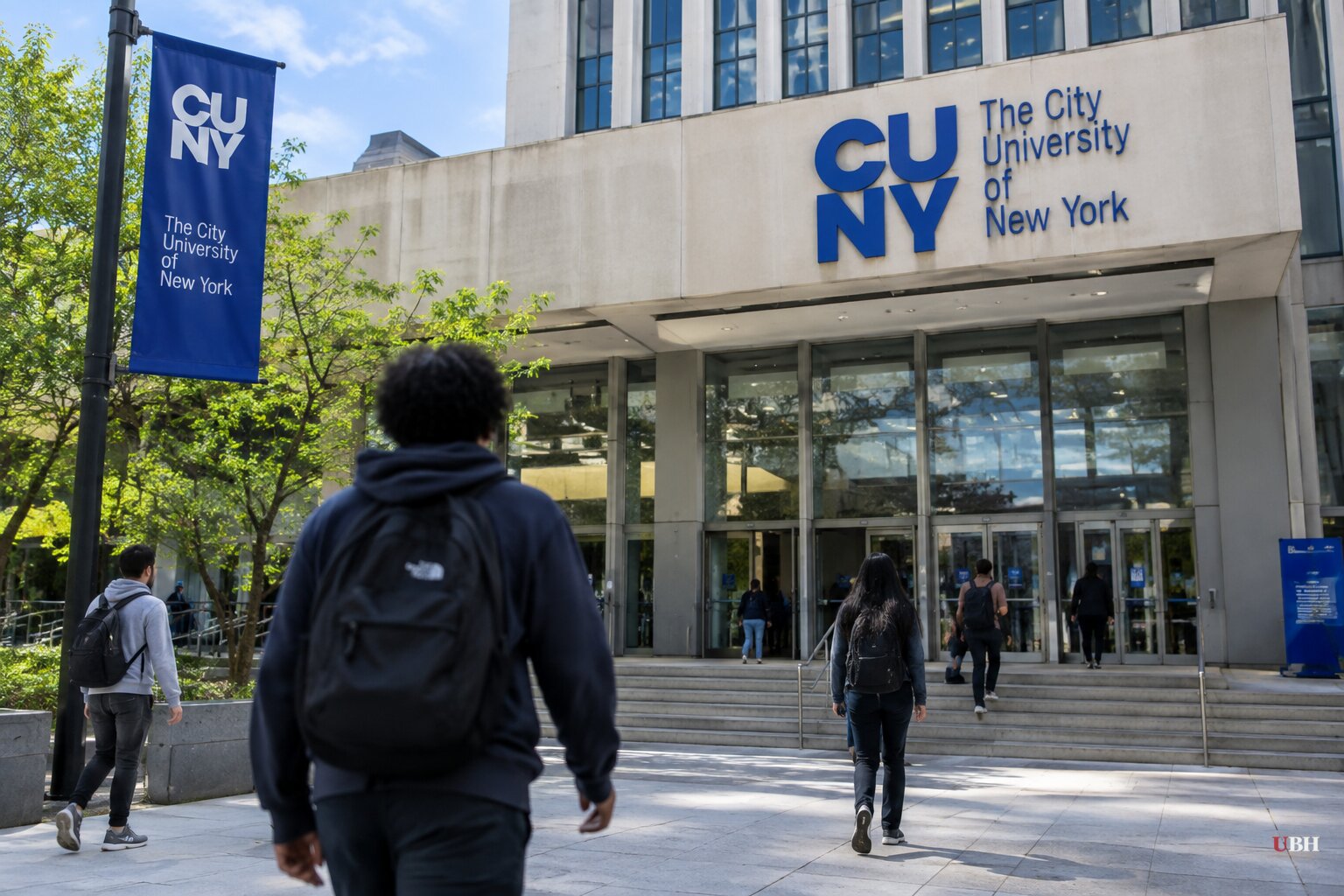
City University of New York's own numbers tell an ugly story. Graduation rates have fallen across nearly every category of the 26-institution system over the past five years, according to data CUNY provided in the Mayor's Management Report.
Associate degree completion at CUNY's community colleges dropped from 38.9% in 2022 to 35.5% in 2026. Four-year college graduation rates fell harder, from 62% to 55.6% over the same stretch. The steepest drop hit CUNY's celebrated Accelerated Study in Associate Programs, known as ASAP, which fell from 44% to 34.5%, a decline of nearly 22%.
A Two-Pronged Problem, One Former Trustee Says
Jeffrey Wiesenfeld, a former CUNY trustee, told the New York Post the decline reflects two failures stacking on top of each other. He said New York City public school standards, which feed most CUNY students, have dropped dramatically. He also argued CUNY itself has relaxed academic standards that were raised during the Giuliani, Bloomberg and Pataki years.
CUNY offers a different explanation. CUNY told the Post the graduation-rate declines are still tied to COVID-19 pandemic disruption and to changes in the composition of incoming freshman classes. A CUNY spokesman noted that graduation rates today remain higher than a decade ago, and pointed to the freshman class that started in 2019, which endured the worst of pandemic-era disruption. CUNY says retention in later classes has improved, and the system has expanded academic advising, made credit transfers between two- and four-year colleges easier, and used more data to flag struggling students earlier.
If the 2019 freshman cohort was the one hit hardest by COVID, that shock should be working its way out of the data by 2026, five academic years later, not continuing to drag rates down year after year. CUNY's own numbers show the slide has been steady and ongoing, not a one-time dip that's recovering.
CUNY also points out that ASAP's graduation-rate decline is partly a math artifact of its own success. The program expanded from serving roughly 12% of full-time associate-degree freshmen to 40% over three years. Rapid expansion typically pulls in students who don't match the profile of the original, smaller cohort, which can drag down completion percentages even if the program still works. CUNY says ASAP students still graduate at double the rate of non-ASAP students.
Meanwhile, Full-Time Faculty Numbers Are Slipping Too
The share of CUNY students taught by full-time professors also dropped in the past year, from 40.9% to 39.7% at four-year colleges and from 60.5% to 58.9% at community colleges. More students are being taught by part-time adjuncts, a trend that typically tracks with lower per-student support and less faculty availability outside class.
The Bigger Problem: Degrees Aren't Turning Into Paychecks
Separate from CUNY's yearly management data, a 14-year study by MDRC, an independent nonprofit research organization, tracked what happened to the actual people who went through ASAP. This is a different dataset than the Post's numbers. It follows roughly 900 low-income students who enrolled in three CUNY community colleges starting in 2010, half randomly assigned to ASAP and half to the standard CUNY track, a randomized controlled trial considered the gold standard for evaluating education programs.
The early results, three years in, were dramatic. Forty percent of ASAP students earned a degree versus 22% in the control group, an 18-point gap replicated in later studies of similar programs in Ohio and Westchester County. That success is why more than 90 colleges across 11 states now run ASAP-style programs.
But the newest MDRC follow-up, released last month and tracking students through 2024, found the degree gap has narrowed to 58% versus 50% as more non-ASAP students eventually caught up. The earnings advantage vanished entirely. ASAP participants, graduates and dropouts combined, earned roughly the same average income as the control group, about $37,000 a year, according to New York state employment data cited by the Hechinger Report. That average includes people counted as earning zero because they're unemployed or working outside New York.
MDRC says a future study is expected to include out-of-state earnings, which could change the picture if ASAP graduates disproportionately left New York for better-paying work elsewhere. Until that data lands, the core question stands: CUNY has spent nearly two decades and expanded a nationally copied program on the premise that more degrees mean better lives, and the longest study available says that premise hasn't held up in the paycheck data yet.
Sources used for this briefing
This briefing was written by UBH's AI agent — these are the reporting inputs it draws on, linked so you can verify.


