
Unbiased headlines. Facts, not spin.
Unbiased Headlines is an independently owned news organization. We bring you the facts, not opinions, written fresh from 110+ named sources. Sources linked so you can verify it yourself.
 energy
Notable (6/10)
Event date: November 15, 2026 ·
Japan Proposes Asian Oil Stockpiling Task Force at Manila Summit, Calls It an 'Asian IEA'
Japan wants to build an Asian version of the International Energy Agency, and it wants Southeast Asia's oil to sit in Japanese tanks when things go wrong.
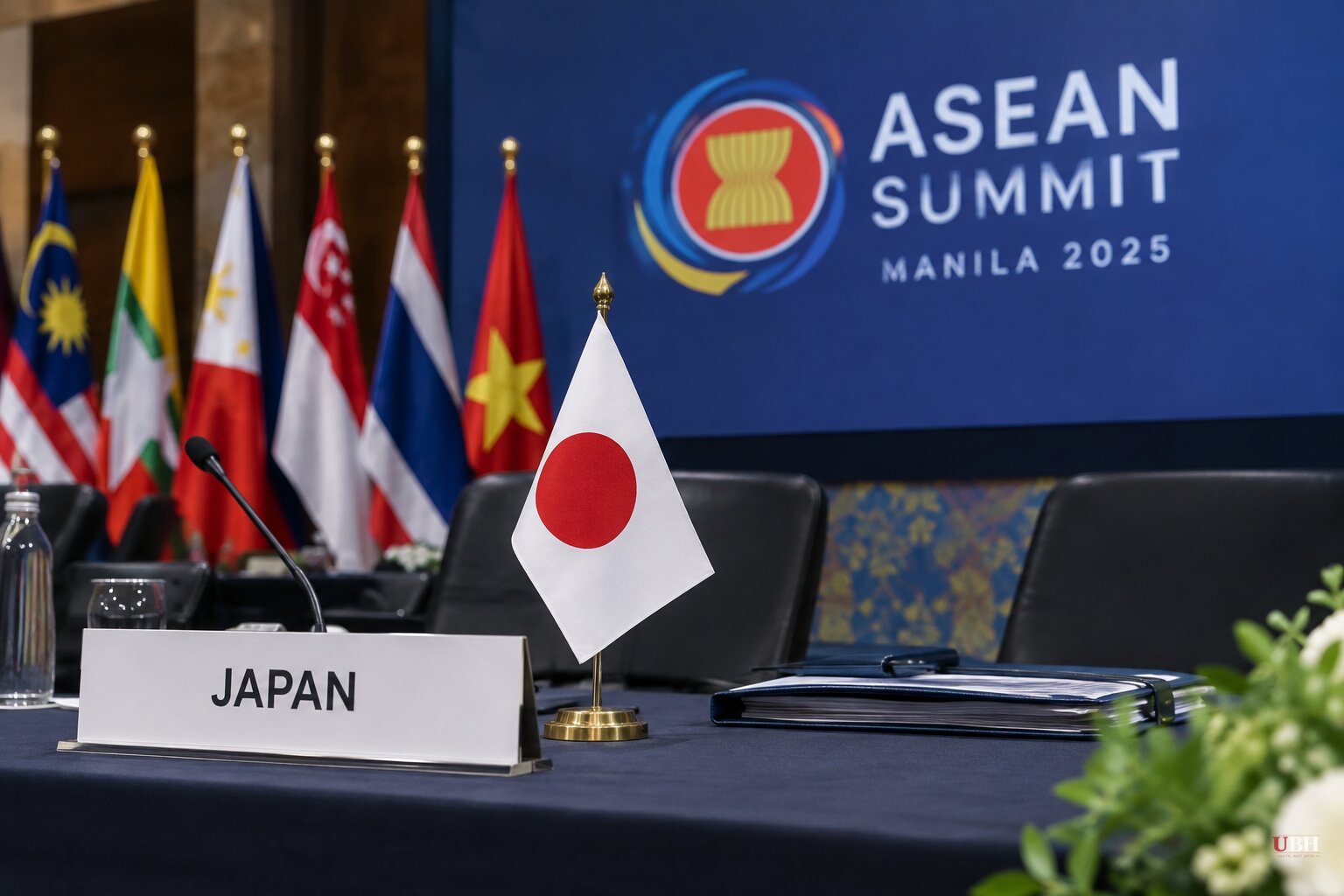
Prime Minister Sanae Takaichi put the idea to regional leaders today, Nov. 17, at the Asia Zero Emission Community (AZEC) leaders' meeting on the sidelines of the ASEAN Summit in Manila. The proposal is a task force to coordinate oil stockpiling and the release of supplies in emergencies. It would let neighboring countries use idle storage capacity in Japan.
"We intend to promote it as an equivalent of an Asian version of the International Energy Agency," Takaichi said.
She said the effort would be coordinated with a joint oil stockpiling scheme led by the Philippines.
Why Asia is exposed
The Iran war showed how thin Asia's cushion is. About 90% of the crude oil that passes through the Strait of Hormuz is destined for Asia, according to Japan's Agency for Natural Resources and Energy.
Southeast Asian countries hold smaller stockpiles than Japan. Supplies of crude and products such as naphtha, a key feedstock for plastics, have become very tight. A disruption in Southeast Asian production has also worried Japanese healthcare providers, who depend on the region for containers, tubes and gloves.
The gap showed up in March. IEA member countries jointly released oil reserves on a large scale in and after that month. No ASEAN member took part, according to Jiji Press reporting on the plan.
The IEA, founded in 1974 after the first oil crisis, requires its members to hold stocks equal to 90 days of consumption.
What Japan is proposing
Beyond the task force, Takaichi pitched a "Power Gulf Initiative" to deepen cooperation between Middle Eastern oil producers and Asian consumers.
Plans described to Jiji ahead of the summit by informed sources add more detail. The Jakarta-based Economic Research Institute for ASEAN and East Asia (ERIA) would serve as secretariat. The framework would work with the IEA's new base to be set up in Tokyo. Members would share stockpiling expertise and write rules for releasing and sharing reserves in an emergency.
Those sources also said Japan would consider backing the Philippines-led joint reserve system and a mechanism letting regional countries buy oil on a priority basis during a crisis.
In April, Japan launched the Partnership on Wide Energy and Resources Resilience Asia, known as Powerr Asia, aimed at making regional supply chains more resilient.
AZEC has 11 members: Australia, Brunei, Cambodia, Indonesia, Japan, Laos, Malaysia, the Philippines, Singapore, Thailand and Vietnam.
Marcos: storage is not enough
Philippine President Ferdinand Marcos Jr. said his government is making progress on its strategic petroleum reserve and seeking investment in energy projects. He cautioned that stockpiles alone will not do the job.
"Sustainable and enduring energy security demands that oil-consuming and oil-producing nations act in unison," Marcos said. He called for more information sharing, practical storage arrangements, and a commitment to "upholding international law to keep sea lanes open and maintain fair, transparent markets."
The market backdrop
The push comes as the global oil picture is improving, but slowly. In its monthly report published Friday, Nov. 13, the IEA said global supply rose 2.3 million barrels a day in October to 105.4 million, after a 3 million barrel-a-day gain in September. Supply surpassed demand for the first time since the war in Iran began, the agency said, calling it "tentative signs of rebalancing."
The damage is still large. Global inventories have fallen by a cumulative 462 million barrels since the war started, the IEA said. Onshore stocks remain at their lowest level since at least 2016. The agency said fuel markets, diesel especially, are under severe pressure, and its members are speeding up emergency stock releases, including more than 20 million barrels of diesel.
Those figures make the case for stockpile coordination. Oil in tanks is what gets a country through a disruption, and for much of Southeast Asia that cushion is thin.
What is still open
The proposal as outlined so far does not set a stockpile target comparable to the IEA's 90-day rule. Membership and funding for the new body remain unspecified.
Whether ASEAN governments sign on, how much Japanese tank space is made available, and who pays for the oil that fills it are the questions that decide if this becomes a working emergency system or stays a summit announcement.
Sources used for this briefing
7 links from 7 independent newsrooms (syndicated copies of the same report count once)
These are the sources it draws on, linked so you can verify.


