
Original briefings. Zero spin.
Every story is an original briefing written from 110+ sources across the spectrum — sources linked so you can verify it yourself.
 defense
Major Story (8/10)
September 4, 2026 at 04:49 PM
defense
Major Story (8/10)
September 4, 2026 at 04:49 PM
Israel Completes Hezbollah Tunnel Clearance Under Beaufort Castle as Iran Strikes US Bases in Kuwait and UAE
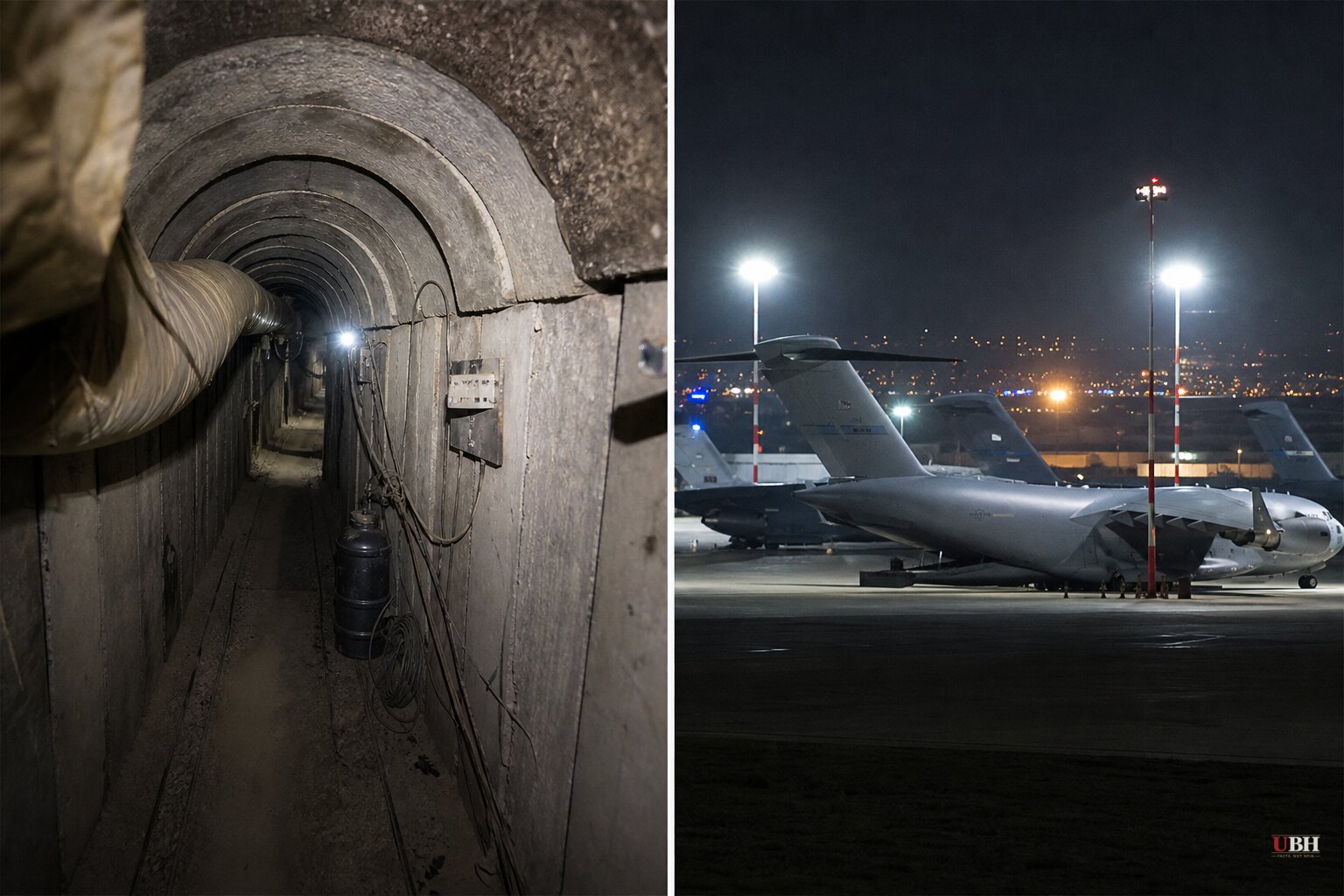
The Israel Defense Forces announced Thursday, September 3, that its 36th Armored Division has established operational control, above and below ground, of the Ali al-Taher ridge in Lebanon's Nabatieh District, the site of the historic Beaufort Castle. According to the IDF and reporting from the Jerusalem Post, the operation took months and ended with the clearance of two underground tunnel complexes that Hezbollah's Badr Unit built over roughly 20 years with Iranian funding and planning.
Inside, forces found command rooms, weapons storage, generators, living quarters, showers and a kitchen, the IDF said. The military told the Jerusalem Post the network let Hezbollah operatives live and fight underground for extended stretches and that attack plans against Israeli forces originated there. An Israeli military official told Fox News that no Iranian advisers or officers were found inside despite the tunnels' Iranian financing. According to the Institute for the Study of War's September 3 update, the 36th Division killed many remaining fighters in the complex; others fled.
The capture came in phases: engineering units first mapped and destroyed the ridge's upper-level tunnels, firing positions and weapons depots, then spent weeks locating the deeper systems hidden under vegetation and rock, the Jerusalem Post reported. The IDF said it also cut Hezbollah's supply route from Beirut to the trapped fighters, and cited intelligence from Israeli outlet Walla suggesting the cut-off operatives may have died of starvation or escaped in the operation's final week.
Fox News reported that Reuters had learned Iran warned Washington that a full-scale Israeli offensive on the ridge would trigger a "large-scale Iranian response." As of this reporting, no such Iran-Lebanon response tied specifically to Ali al-Taher has materialized.
Strikes continue despite ceasefire framework
The tunnel clearance is one piece of a broader Israeli campaign that has not stopped since a US-brokered Framework Agreement in late June, according to UN News, citing UN spokesperson Stéphane Dujarric. Violence "rose sharply" in August, Dujarric said, and the UNIFIL peacekeeping mission recorded 56 projectiles fired by the Israeli military into Lebanon on September 1 alone, a number that climbed to 84 the next day. By contrast, UNIFIL has detected no projectile launches by Hezbollah since June 21, per the same UN briefing.
Dujarric said peacekeepers continue to record daily Israeli violations of Lebanese airspace, plus airstrikes, ground activity and naval operations, along with what he called the "continued consolidation and fortification of Israeli positions" north of the so-called Blue Line. He said this amounts to a violation of UN Security Council Resolution 1701 and Lebanon's sovereignty, and repeated the UN's call for Israeli forces to withdraw from all positions north of that line.
Anadolu Agency reported Friday that Israeli artillery and explosions hit seven towns across the Tyre and Nabatieh districts that same day, including Mansouri, Majdal Zoun and Zawtar al-Sharqiya, where shelling sparked a fire. Lebanon's National News Agency reported no deaths or injuries from those strikes. Anadolu, citing Lebanese authorities, reported that Israeli attacks on Lebanon since March 2, 2026 have killed more than 4,000 people and injured over 12,000, displacing more than a million residents; those figures come from the Lebanese government and have not been independently verified by outside bodies in these sources.
The IDF has said its operations in Lebanon remain "in accordance with" the ceasefire and that it will redeploy to defensive positions once tunnel neutralization is complete. Israel's security argument, consistent across its statements, is that Hezbollah's underground network represented an active, Iranian-funded threat capable of launching attacks on Israeli territory, and that dismantling it is a prerequisite for any troop withdrawal. Lebanese officials and UN monitors counter that continued shelling of populated towns, well beyond the tunnel sites themselves, is inconsistent with a supposed drawdown.
The wider war
Iran's Artesh launched a missile and drone attack on September 3 against Ahmad al-Jaber Air Base in Kuwait and al-Minhad Air Base in the UAE, targeting satellite communications gear, hangars and radar installations, according to the Institute for the Study of War. A US defense official told anti-regime media the strikes caused no impact on US bases. ISW called it a departure from the recent tit-for-tat pattern, noting Iran had already struck US bases in Kuwait, Jordan, Bahrain and Iraq on September 2 in response to US strikes on Iranian coastal targets a day earlier, and assessed the latest hit reflects a stated Iranian doctrine of preemptive strikes meant to erode US resolve.
Yemen's Houthi movement separately claimed drone strikes on Saudi military positions using what it called "Rujum" drones, according to the Houthi-run SABA agency as reported by Fox News; Saudi authorities had not commented and the claims are unverified.
On the financial front, Treasury Secretary Scott Bessent said the European Union has joined what he called "Operation Economic Outcast," a coordinated sanctions push he said is meant to cut Iran off from the global financial system. "We will not stop until every remaining financial lifeline has been severed," Bessent wrote on X.
In Gaza, UN teams collected hundreds of pallets of aid at the Kerem Shalom crossing this week, and the World Health Organization said more than 13,000 patients have been medically evacuated from the enclave since October 2023, including over 6,000 children, though it says thousands more still need care unavailable inside Gaza.
Whether Israel's stated redeployment to "defensive operations" after finishing the Ali al-Taher tunnel work actually reduces the daily strike tempo UNIFIL has documented remains to be seen. The ridge operation could become one more permanent foothold north of the Blue Line that the UN says violates Resolution 1701.
Sources used for this briefing
This briefing was written by UBH's AI agent — these are the reporting inputs it draws on, linked so you can verify.


