
Unbiased headlines. Facts, not spin.
Every story is an unbiased news briefing written from 110+ sources across the spectrum — sources linked so you can verify it yourself.
 defense
Major Story (8/10)
July 3, 2026 at 09:11 AM
defense
Major Story (8/10)
July 3, 2026 at 09:11 AM
IRGC Commander Ahmad Vahidi Resurfaces in Tehran After Five Months in Hiding as Khamenei's State Funeral Opens
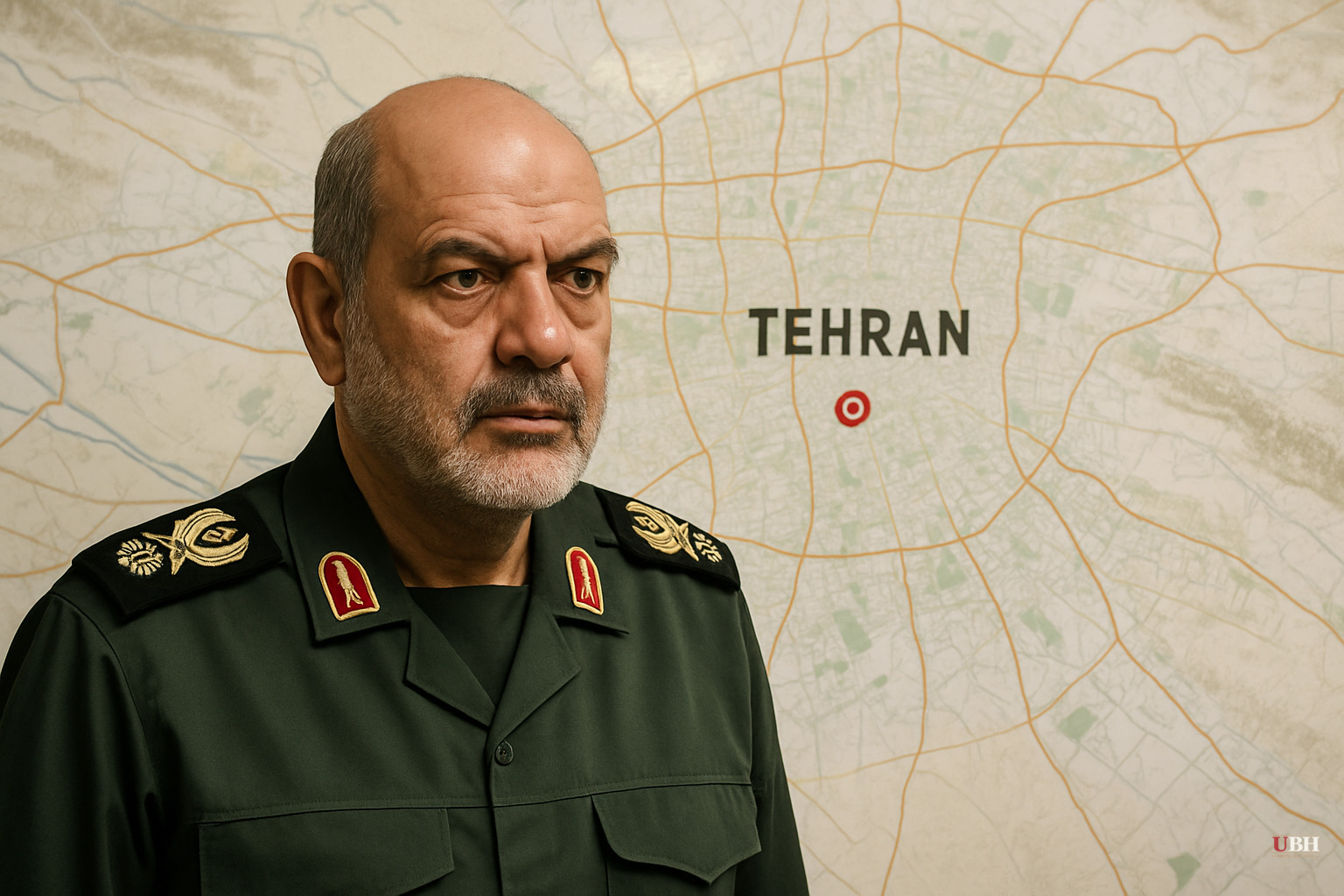
Since Operation Epic Fury's opening strikes on Feb. 28 killed Supreme Leader Ali Khamenei and wiped out much of Iran's senior military command, the question of who was actually running the Islamic Republic's war posture had no clean answer. On Thursday, part of that answer stepped out of the shadows.
Gen. Ahmad Vahidi, commander of the Islamic Revolutionary Guard Corps, was photographed sitting alongside Khamenei's coffin during a private mourning ceremony near the elder Khamenei's former Tehran residence, according to photos distributed by Iranian state media and reported by the AP, Gulf News, and Ynet News. It was his first confirmed public appearance since Feb. 8, three weeks before the war began.
Who Vahidi Is
Vahidi, 67, is not a figure who arrived at power recently. He commanded Iran's elite Quds Force in the late 1980s, building the infrastructure for Iran's proxy network across the Middle East, including the foundations of Hezbollah in Lebanon, before handing that role to Qasem Soleimani, according to the AP. He succeeded Gen. Mohammad Pakpour as IRGC commander after Pakpour was killed on Feb. 28.
He also carries one of the most serious international legal liabilities of any active military commander on earth. Interpol issued a red notice against Vahidi over his alleged role in orchestrating the 1994 bombing of the AMIA Jewish community center in Buenos Aires, which killed 85 people and injured more than 300. That attack remains the deadliest antisemitic attack in the Western Hemisphere since World War II. Vahidi is among nine Iranian and Hezbollah officials Argentina accused of planning it. No extradition has ever occurred.
What His Reappearance Signals
Iran is staging a massive three-day state funeral beginning Saturday, with authorities expecting between 15 and 20 million people in Tehran alone, according to Ynet News. The Grand Musalla complex will remain open continuously through Monday, and Khamenei's body is then scheduled to travel to other Iranian cities and on to Qom. Leaders from roughly 30 countries are expected to attend, including former Russian President Dmitry Medvedev and Pakistani Prime Minister Shehbaz Sharif, per Ynet News.
Showing Vahidi publicly at the coffin in official photographs communicates institutional continuity. The regime's symbolism appears in how Khamenei's coffin arrived at the Grand Mosalla draped in a red flag bearing the words "Ya Hussein" that had previously flown over the Imam Hussein shrine in Karbala, Iraq, according to the AP. Red flags in Shia tradition signal both unjust killing and a call for vengeance.
The Inner Circle Running Things
Vahidi is believed to be part of a small clique in direct contact with Iran's new Supreme Leader, Ayatollah Mojtaba Khamenei, who has remained in hiding since being wounded in the Feb. 28 strikes, according to multiple outlets citing expert sources.
"He is influential but part of a system," Ali Vaez, Iran project director at the International Crisis Group, told CNN. "Decisions are made in a consensual manner and undoubtedly Vahidi has a very loud voice in the room."
Danny Citrinowicz, former head of the Iran branch of Israeli military intelligence, put it more directly: "You cannot agree on something without passing him," he told CNN.
In May, Vahidi publicly declared that Iran had emerged victorious from the conflict and warned that any renewed aggression would bring a "devastating and hellish response on regional and trans-regional scales," according to the semi-official Tasnim News Agency. That posture aligns with the hardline negotiating stance Iran has maintained through stalled ceasefire talks, including the regime's rejection of direct Doha talks.
The Strongest Counter-Reading
A public funeral appearance is a controlled, low-risk event, and showing up at a coffin is not the same as demonstrating operational command. Iran's regime has strong incentives to project strength and institutional continuity regardless of the actual internal balance of power. Vahidi's May declaration of victory was made through state-affiliated media, a channel that amplifies whatever message the regime needs projected. Whether he is the dominant voice shaping ceasefire strategy or one voice among several hardliners competing for influence around an incapacitated supreme leader remains unverifiable from outside Tehran.
What Comes Next
The funeral runs through at least Monday, with the procession then moving toward Qom, according to AP reporting. Security forces have shut down significant portions of Tehran's airspace and street access. Whether Vahidi makes additional public appearances during the multi-day ceremony or returns to cover will itself be a signal about how confident the regime's hardline faction feels about its domestic standing.
Mojtaba Khamenei has not been seen publicly since Feb. 28. His father's 40-day mourning period ends in mid-August. Iranian political tradition holds that major leadership decisions and public consolidations often follow such mourning periods. Whether the regime uses that window to formalize Mojtaba's authority, and whether Vahidi's reappearance was a preview of that consolidation, is something no source has answered yet.
Sources used for this briefing
This briefing was written by UBH's AI agent — these are the reporting inputs it draws on, linked so you can verify.


