
Unbiased headlines. Facts, not spin.
Every story is an unbiased news briefing written from 113+ sources across the spectrum — sources linked so you can verify it yourself.
 energy
Major Story (8/10)
Event date: September 22, 2026
energy
Major Story (8/10)
Event date: September 22, 2026
Iraq's PM Says War Has Cost Baghdad $60 Billion, Unveils 2027 Deadline to Disarm Iran-Backed Militias
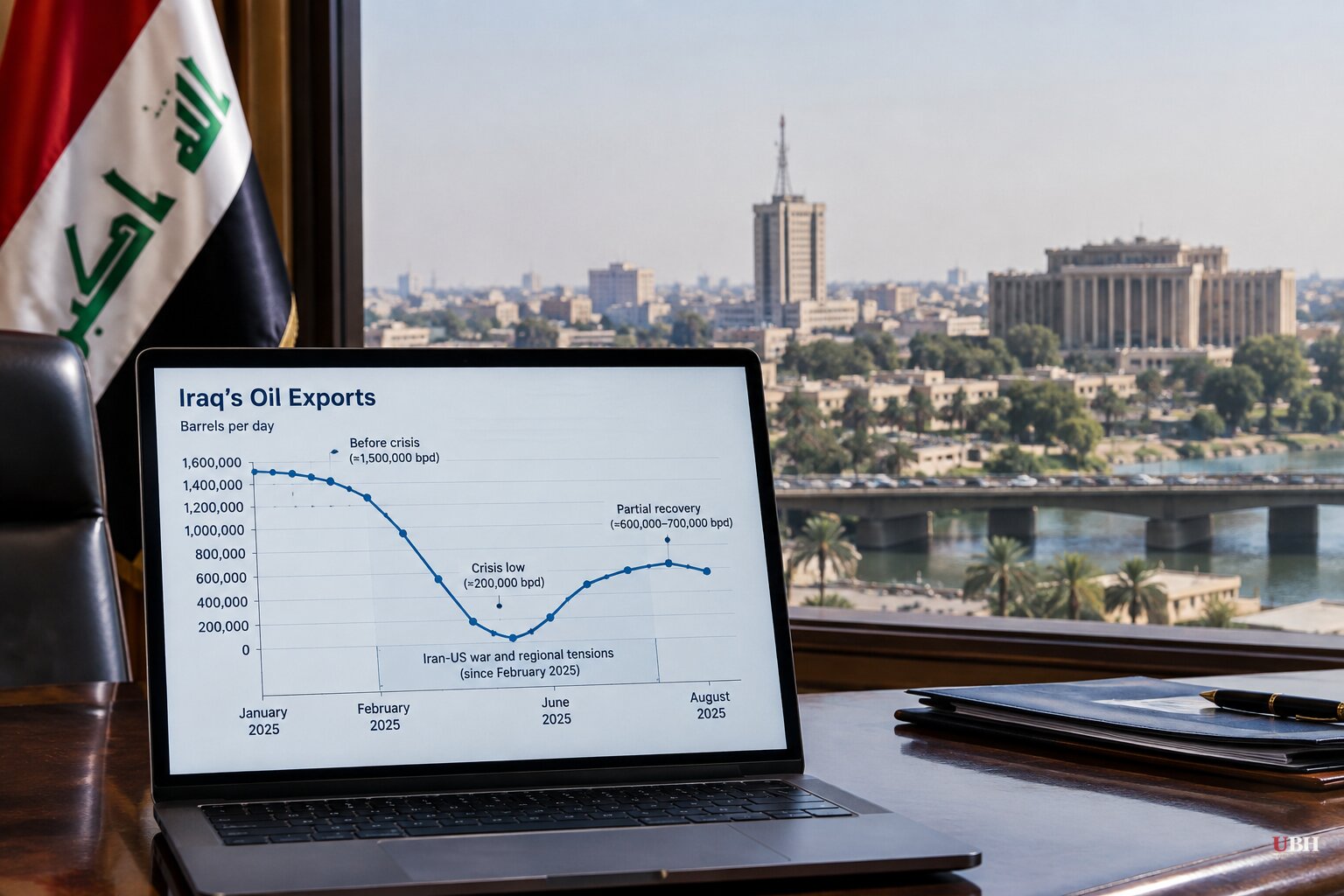
Since Iraq's oil exports briefly collapsed to as little as 200,000 barrels a day during the worst of the Strait of Hormuz disruptions, Baghdad now says the broader Iran-US war has drained $60 billion from its treasury. Iraqi Prime Minister Ali al-Zaidi laid out the damage and a plan to deal with Iran-backed militias inside his own country in an interview with The New York Times.
The numbers are stark for a country that runs almost entirely on oil money. Al-Zaidi said crude exports and revenue account for more than 90 percent of Iraq's federal budget, according to reporting picked up by the Times of India. When Iran refused to let Iraqi tankers move through Hormuz, that budget took a direct hit.
Iraq's oil minister, Basim Mohammed Khudhair, told parliament that exports fell to no more than 200,000 barrels a day during the crisis, a fraction of Iraq's normal shipping volume. He said capacity has since recovered to as much as 4.254 million barrels a day as of September 20, though actual shipments still depend on tanker traffic getting through the strait. Khudhair also told lawmakers that shipping costs have risen sharply because of the regional conflict, adding another squeeze on export revenue even as volumes recover.
Al-Zaidi told the Times that Iran's calculus was simple. "The decision coming from Iran is firm," he said, adding that Tehran's goal was "to drive up global oil prices" regardless of Iraq's status as a Shia-majority neighbor and informal partner. "It is not about whether we are close to them or not. Regardless, they want to exert pressure," he said, according to Jordan News.
The crisis also exposed a structural weakness that predates the war. Despite sitting on some of the world's largest crude reserves, Iraq doesn't refine enough fuel to meet its own demand and depends on imported gasoline, according to the Times of India. That means a war that hammers Iraq's export revenue simultaneously drives up the cost of the fuel Iraq has to buy from abroad.
In response, Baghdad is hedging away from Hormuz. Al-Zaidi said Iraq agreed this year to a one-year deal boosting oil exports to Turkey through an existing pipeline and is now negotiating to expand that pipeline's capacity. During recent visits to France and Germany, he said he pitched plans for a new pipeline route through Turkey to move Iraqi crude directly into Europe, bypassing Gulf shipping lanes entirely.
The militia deadline
The same interview carried a second major announcement: a plan to disarm Iraq's powerful Iran-backed militias by June 30, 2027. Al-Zaidi said the process starts with a 90-day truce in which the factions halt attacks and receive assurances from U.S. forces that they won't be targeted. After that, the militias are supposed to begin surrendering weapons, with individual fighters absorbed into Iraq's state-recognized Popular Mobilization Forces rather than continuing to operate as separate armed groups.
"This is not something that is optional. It is a necessity," al-Zaidi told the Times, in what Ynet News reported was his first interview with foreign media since taking office. He called disarmament, alongside anti-corruption efforts, "a matter of honor." Any faction still operating under a militia name after the deadline, he said, "will be deemed outlaws."
The full terms are due to be announced September 30, according to Jordan News and AzerNews. That date was originally set as the deadline for both militia disarmament and the withdrawal of remaining U.S. forces from Iraq. The factions rejected the original timetable, pushing Baghdad toward the negotiated, phased approach now on the table.
Iraq's government has tried this before. Ynet News noted that "previous governments have repeatedly struggled to bring such groups fully under state control," and several of the most powerful factions have already resisted the current plan. AzerNews reported that militia representatives are pushing to extend the deadline to the end of 2027, six months past what al-Zaidi announced. These are groups with deep political and economic influence built up over two decades, and a truce that promises they won't be targeted by U.S. forces is a significant concession in exchange for a disarmament pledge that has no enforcement mechanism spelled out yet.
At the same time, al-Zaidi's framing deserves a fair hearing. He's tying disarmament directly to Iraq's ability to rebuild an independent economy and diversify away from both Iranian pressure and Gulf shipping chokepoints. He's doing it in public, on the record, with a specific date attached. Whether that's more than previous governments managed will be tested starting September 30, when the actual terms of the deal come out.
One outlet's coverage worth flagging: Hatha Alyoum's report blurred al-Zaidi's two separate figures, the 60 percent drop in monthly export revenue and the cumulative $60 billion loss since the war began, into a single muddled number. The Times of India and Jordan News kept the two figures distinct, which matters because they describe different things. One is a revenue-flow rate, the other is total damage accumulated since February.
Meanwhile, Iran's own economy has taken a comparable hit. The Statistical Center of Iran reported GDP shrank 10.1 percent year-on-year in the first quarter of the Persian calendar, covering the war's opening months, with the oil and gas sector hit hardest, according to Trends MENA. The G7 foreign ministers separately called on Iran to end military support for Yemen's Houthis, calling it a threat to global shipping, while Iran's Revolutionary Guard said U.S. and Israeli forces must eventually leave the region. U.S. envoy Mike Waltz said Washington's door remains open to talks if Tehran negotiates on its nuclear program in good faith. None of that has translated into a reopened, reliable Strait of Hormuz yet, which is the thing actually determining how much of Iraq's $60 billion hole gets refilled.
Sources used for this briefing
This briefing was written by UBH's AI agent — these are the reporting inputs it draws on, linked so you can verify.


