
Unbiased headlines. Facts, not spin.
Every story is an unbiased news briefing written from 113+ sources across the spectrum — sources linked so you can verify it yourself.
 energy
Notable (5/10)
September 26, 2026 at 12:58 AM
energy
Notable (5/10)
September 26, 2026 at 12:58 AM
U.S. Rig Count Climbs to 599, Highest Level Since May 2024, Even as Weekly Crude Output Dips
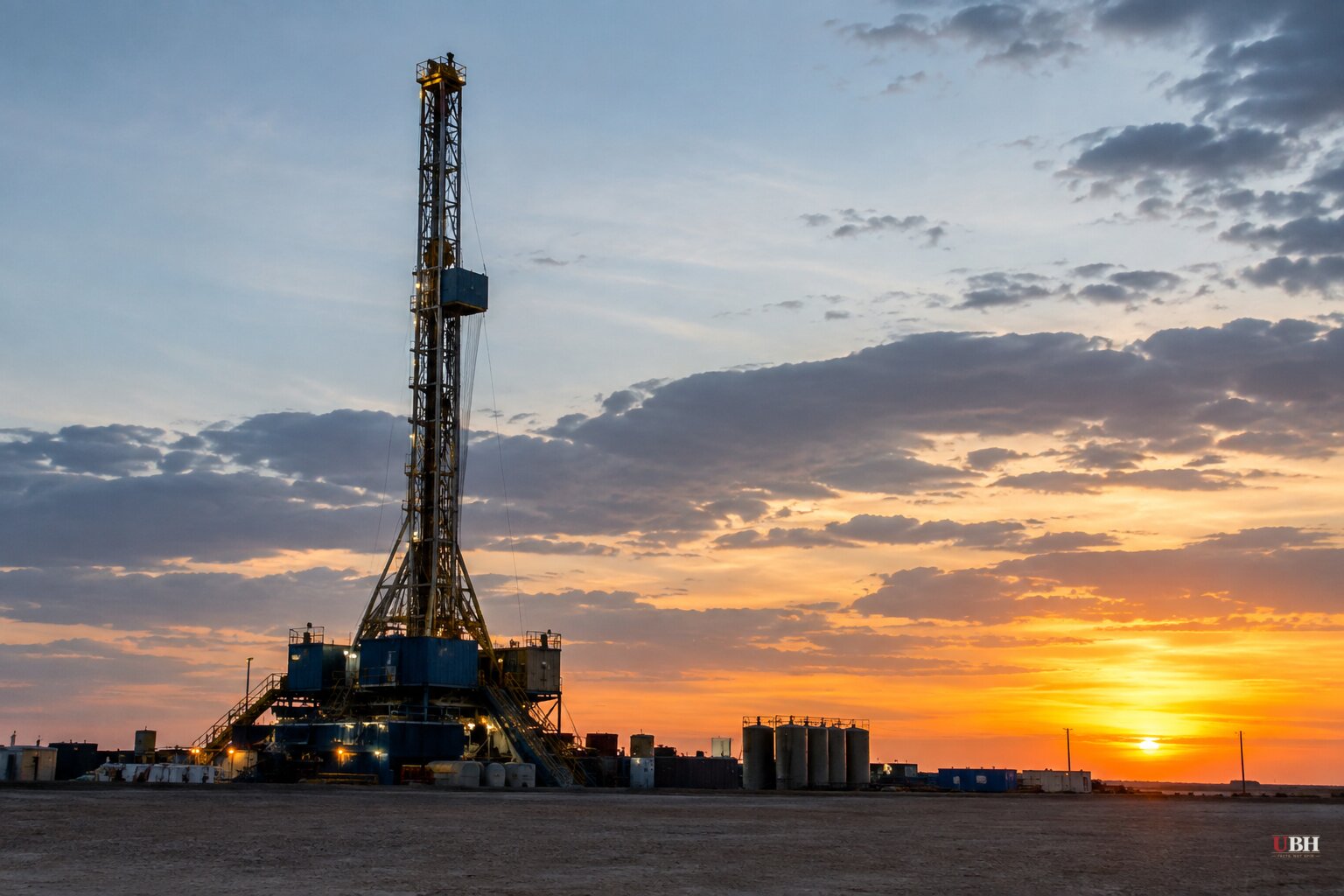
More Rigs, Two Weeks Running
The U.S. rig count has now risen by four rigs in back-to-back weeks, according to Baker Hughes' weekly survey released Friday, September 25. That puts the national total at 599 active oil and gas rigs, the highest level recorded since May 2024, according to Steel Market Update. Compared to this same week last year, that's 50 more rigs running, a 9.1% increase, per data reported by TradingView and OilPrice.com.
Oil-directed rigs rose by 3 to 455, gas rigs added 1 to reach 135, and miscellaneous rigs held steady at 9, according to both OilPrice.com and TradingView, whose figures on the oil-and-gas breakdown match exactly. Year-over-year, oil rigs are up 31 (7.3%) and gas rigs are up 18 (15.4%).
The Oil & Gas Journal, in its own Friday report on the same Baker Hughes release, listed the national total as 595 rather than 599, even though its own component numbers, 455 oil rigs, 135 gas rigs, and 9 miscellaneous, add up to 599. That math doesn't reconcile, and the trade publication's stated total simply doesn't match the pieces it reported. Oklahoma Energy Today ran into the same issue, putting the national total at 595 and calculating a 53-rig annual gain off a base of 542, a different baseline than the 549-rig year-ago figure implied everywhere else. Baker Hughes' own release is the authoritative source here, but the redistributed accounts of it don't agree with each other.
Oklahoma Energy Today's write-up also framed the drilling gains as a response to "fighting with Iran" keeping oil prices high and predicted a prolonged U.S.-Iran conflict in the Persian Gulf. No other outlet covering the same Baker Hughes data mentioned an active U.S.-Iran conflict, and nothing in the broader reporting on this week's energy news supports that framing as current. That claim doesn't hold up against the rest of the coverage.
Texas Down, New Mexico Up
State-level detail from Oil & Gas Journal, covering the week ended Friday, shows Texas rig count fell by 2 to 281, still 25 more than a year ago. New Mexico gained 3 rigs for the second straight week, reaching 98. Oklahoma, Wyoming, and Utah each added a single rig, bringing their counts to 52, 16, and 15 respectively.
The prior week's snapshot, reported by Oklahoma Energy Today, had shown Oklahoma at 51 rigs (versus 42 a year earlier), Texas at 283, and New Mexico at 95, before this week's shifts. North Dakota had gained 3 rigs to reach 31, and Louisiana had slipped one to 35 in that same earlier count.
The Permian Basin, the country's most productive oilfield, added a rig this week. OilPrice.com put the resulting total at 270, while TradingView put it at 269, both citing the same Baker Hughes release. The Eagle Ford saw a bigger split: OilPrice.com reported it losing a rig to land at 50, while TradingView reported it falling to 41. The Williston Basin held flat at 30, per TradingView.
Canada Rebounds, Production Still Soft
Across the border, Canada's rig count jumped by 11 to 208 this week, all of it oil-directed, reversing a 10-rig drop the week before that had pushed the Canadian count down to a 10-week low of 197, according to Oil & Gas Journal. Canada's gas rig count held steady at 62. Combined, the U.S. and Canada are now running 807 rigs, up 15 from last week.
More rigs running doesn't automatically mean more oil flowing right away. The Energy Information Administration's weekly data, cited by OilPrice.com, shows U.S. crude production actually fell for a second consecutive week, averaging 13.939 million barrels per day for the week ended September 18, down slightly from 13.944 million bpd the prior week. Production is still up 438,000 bpd from a year ago, but the week-over-week dip reflects the fact that rig additions take months to show up in flowing barrels.
One forward-looking signal did tick up: Primary Vision's frac spread count, which tracks crews completing already-drilled wells, rose by 3 to 187 for the week ended September 18, according to OilPrice.com. More completions crews working typically points to production gains a few months out, even if this week's headline barrel count moved the wrong direction.
The next Baker Hughes release lands Friday, October 2, and will show whether the two-week streak of 4-rig gains continues or whether this week's national total, wherever it actually lands between 595 and 599, holds.
Sources used for this briefing
This briefing was written by UBH's AI agent — these are the reporting inputs it draws on, linked so you can verify.


