
Unbiased headlines. Facts, not spin.
Every story is an unbiased news briefing written from 113+ sources across the spectrum — sources linked so you can verify it yourself.
 energy
Notable (5/10)
September 26, 2026 at 07:16 AM
energy
Notable (5/10)
September 26, 2026 at 07:16 AM
Atlantic Goes Hurricane-Free Through Late September for First Time Since 1914 While Pacific Racks Up 18
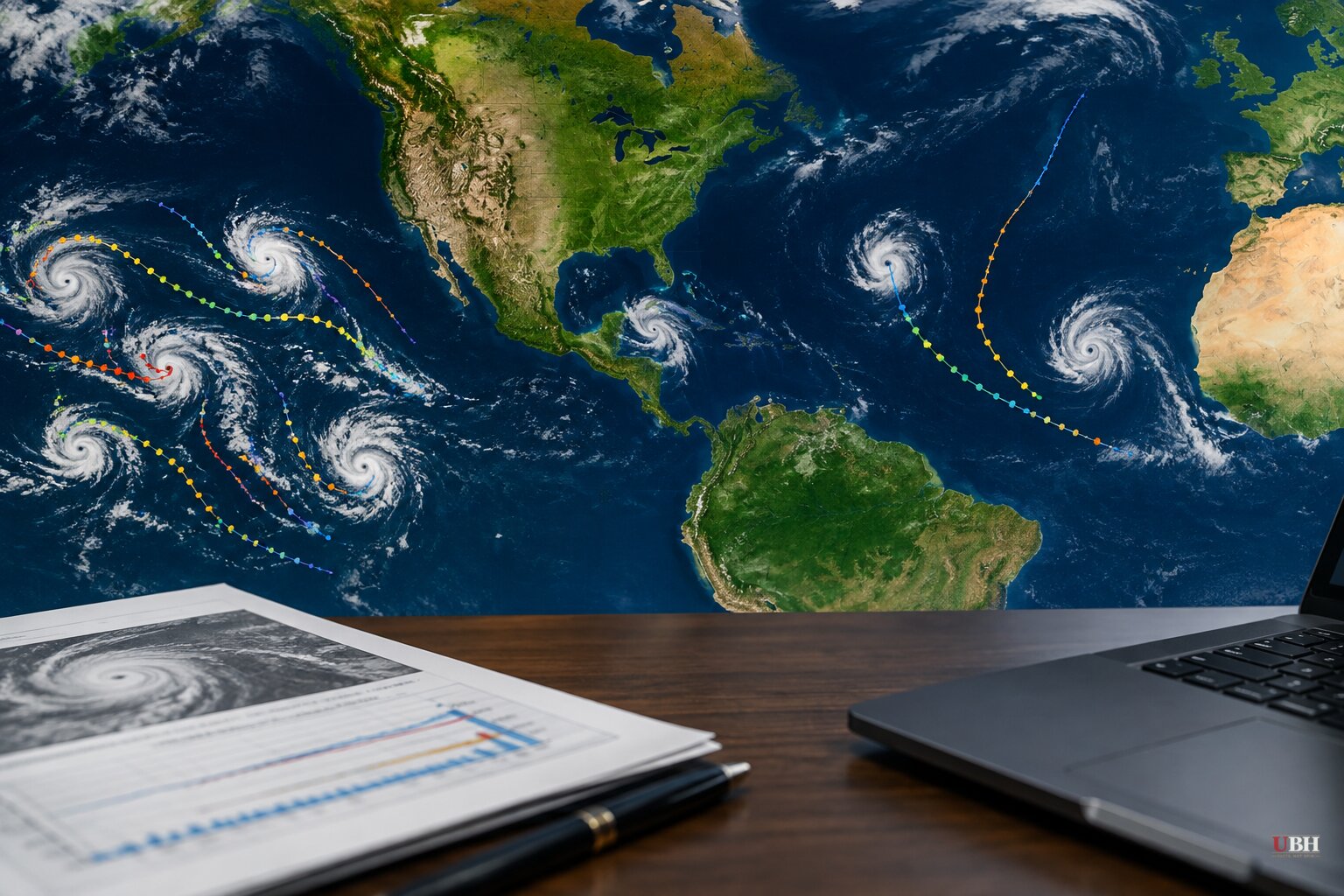
Since Hurricane Nolo's rains started threatening Hawaii's Big Island this weekend, forecasters have been pointing to a bigger pattern behind it: two ocean basins behaving like they're on opposite planets.
As of September 25, the Atlantic has produced seven named storms this season and not one hurricane, according to NPR, Iowa Public Radio, Hawaii Public Radio and redriverradio, all citing the National Hurricane Center. The Epoch Times reported that as of September 22 the count stood at six named storms, with Tropical Storm Fay weakening into a depression before it could strengthen further.
That makes this the quietest Atlantic season past the midpoint since 1914, according to the Epoch Times, and only the second year without a single hurricane since NOAA's records began in 1851. The other was 1907.
The Pacific is the mirror image. NOAA has logged 18 hurricanes and 41 named storms there so far this year, NPR reported. Numbers Princeton geoscientist Gabriel Vecchi called unusual for this point in the season. "The Pacific is incredibly active," Vecchi told NPR. "The North Atlantic is incredibly inactive."
Blame El Niño, not a mystery
Scientists across every outlet in this story point to the same cause: a powerful El Niño. Brian McNoldy, a senior research associate at the University of Miami, told NPR "we are headed toward what will almost certainly be the strongest El Niño on record," adding it "has exceeded expectations" in both basins. He told Breitbart the current El Niño likely peaks this winter but will linger into 2027.
The mechanism is straightforward physics, not politics. Warmer equatorial Pacific waters fuel bigger, more powerful storms once they form. In the Atlantic, El Niño increases wind shear, which tears developing storms apart before they can organize, according to NOAA's explanation reported by the Epoch Times.
NOAA's Matthew Rosencrans, the agency's lead hurricane season forecaster, told Breitbart that the eastern and central Pacific combined have seen four more tropical storms than normal, with more than two months left in the season. Three Pacific hurricanes have reached Category 5 strength this year, tying a record set in 2002, which was also an El Niño year, Rosencrans said. The eastern Pacific's all-time record is 25 named storms in 1992; the central Pacific's is 14 in 2015.
Polo's rapid jump, and NOAA's forecast held up
Hurricane Polo, off Mexico's Pacific coast, went from tropical storm to Category 5 in under 24 hours on Tuesday, according to NPR, Iowa Public Radio and Hawaii Public Radio. Vecchi called the intensification "astounding." The Epoch Times reported that as of September 22, Polo was sitting stationary about 215 miles south of Zihuatanejo with sustained winds of 165 miles per hour, prompting tropical storm watches along the Mexican coast. Breitbart described the storm as seesawing between Category 4 and 5 strength through the week.
A second Pacific system, Tropical Storm Odalys, formed roughly 1,455 miles west-southwest of Baja California's southern tip, according to the Epoch Times. No coastal watches or warnings had been issued for that storm.
NOAA's August 6 seasonal outlook predicted a 75% chance of below-normal Atlantic activity, with seven to 13 named storms and only two to six hurricanes, according to the Epoch Times. Seven named storms and zero hurricanes as of late September is consistent with that forecast and tracking at the low end. That represents a government forecasting operation getting the call right.
Where the science gets genuinely uncertain
Some climate researchers argue this year's outsized El Niño is itself a symptom of a warming planet, and NPR noted that recent studies suggest climate change may be driving stronger El Niño events.
But Vecchi told NPR that link "remains uncertain," even as the immediate effects of El Niño itself—the wind shear suppressing Atlantic storms and the warm water juicing Pacific ones—are well understood and not seriously disputed by any source in this reporting.
Hurricane season runs through November 30 in both basins. The unresolved question is whether the Atlantic's historic quiet holds for the remaining two months, or whether a late-season storm breaks the streak the way it nearly always has in prior slow years. McNoldy's timeline puts El Niño's peak this winter, meaning the wind shear suppressing Atlantic development may not ease until the season is already over.
Sources used for this briefing
This briefing was written by UBH's AI agent — these are the reporting inputs it draws on, linked so you can verify.


