
Unbiased headlines. Facts, not spin.
Unbiased Headlines is an independently owned news organization. We bring you the facts, not opinions, written fresh from 110+ named sources. Sources linked so you can verify it yourself.
 energy
Major Story (8/10)
Iraq Says It Has Reached Understandings With U.S. to Ship Oil Through Hormuz Lane Near Oman
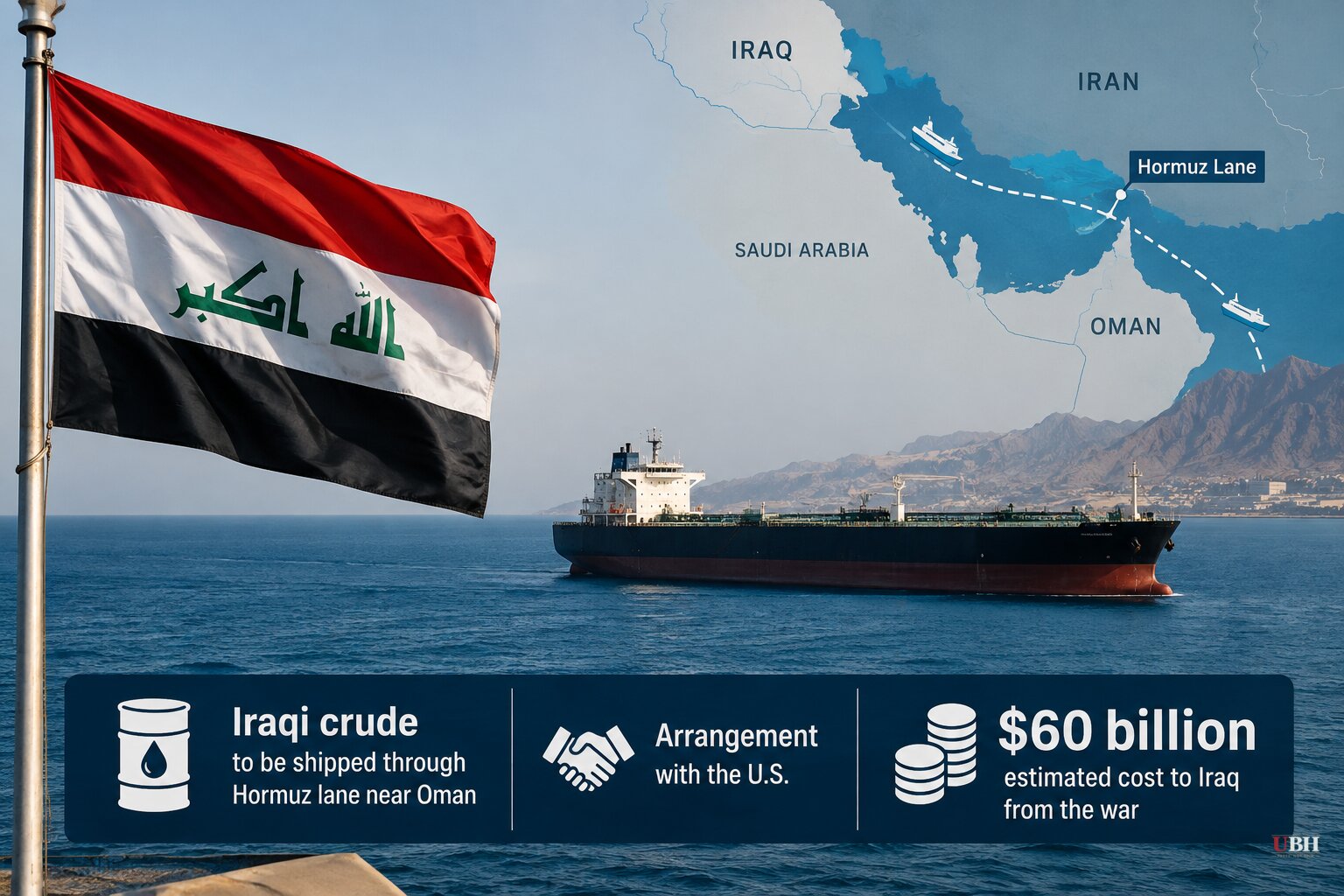
Since the U.S.-Israel war with Iran began at the end of February, Iraq has been one of the biggest economic casualties of the Strait of Hormuz disruption. On Sunday, Nov. 8, its foreign minister said Baghdad now has a workaround.
Fuad Hussein told Al Jazeera that Iraq has reached understandings with the United States to allow Iraqi oil exports through the strait via a shipping lane near Oman. He did not lay out the terms in the interview, including how tankers would be screened, escorted or insured.
The numbers Iraq is putting on the war
Hussein said Iraq's losses from the war and the disruption to its oil exports have reached $60 billion. That is the minister's own figure, not an audited one.
Iraqi energy officials say exports recovered in October to about 3.5 million barrels per day, up from 2.65 million in September. That is a gain of roughly 850,000 barrels per day in a month.
Oil is the backbone of Iraq's budget. A lane that lets more crude out without running Iran's mine and drone threat is a direct fiscal matter for Baghdad.
Washington's price: shut the Iran border
The understanding comes with pressure attached. Hussein said the U.S. Treasury has asked Iraq to close all but two of its border crossings with Iran as part of Washington's campaign to squeeze Tehran economically. One of the two that would stay open is in the Kurdistan Region.
Hussein pushed back on how far that can go. "There are many official and unofficial border crossings with Iran, and closing all of them would be difficult and would affect our economy," he said. "The Americans are still demanding the closure of the crossings, and we are currently in discussions with them."
Iraq already shut the busy Sheeb crossing last month, saying it needed to review security and install detection equipment to stop smuggling. Tehran criticized the move and said Baghdad gave no advance notice.
A strait both sides say they control
The Revolutionary Guards say the strait is closed. U.S. Central Command says it is open. Both claims have been on the record for weeks.
The Guards said in recent days that four oil tankers were destroyed after hitting naval mines on a route they call prohibited south of the waterway, and that two other vessels were seized. They later said two tankers and a tugboat caught fire in separate incidents after trying to use "unauthorized routes." Iran's navy separately said a tanker caught fire after striking a mine east of the strait. These are Iranian claims.
The United Kingdom Maritime Trade Operations reported five attacks on vessels in the region between Sunday and Thursday of last week.
The volume data cuts both ways. Kpler said total oil flows, counting alternatives to Hormuz such as the Red Sea route, reached 24.5 million barrels per day in the week ending Oct. 18, against a pre-war average of 24.4 million. Kpler's figure excludes Iran, whose exports have fallen to near zero under the U.S. blockade. But Kpler also counted only about 20 ships completing the transit over ten days, compared with more than 100 a day before the war. CENTCOM put the figure at about 400 merchant ships in a single week. Many vessels run with transponders off, which makes counting hard.
Bloomberg reported that large tankers are moving in convoys and transferring cargo to other ships once clear of the danger zone. That would explain high volumes with few visible transits.
Trump's decision hangs over all of it
President Trump met his national security team Thursday, Nov. 5, to discuss whether to resume military operations against Iran, senior officials told Fox News. Trump told reporters the administration would "make a decision," adding: "I would rather not destroy the rest of the country if possible, but maybe I will have to. You'll know soon enough."
Officials also noted that today, Nov. 9, is a new moon in the Middle East, meaning little moonlight, a condition favorable for military operations. A U.S. official said CENTCOM is finalizing preparations but has not received a new directive.
Iraqi Prime Minister Ali Faleh Al-Zaidi called Trump the same day. His office said he affirmed Iraq's position on "respect for the sovereignty of states, non-use of its territories as a launchpad for aggression against neighboring countries."
That leaves Baghdad balancing three things at once: a U.S. arrangement to get crude out, U.S. demands to cut trade with its neighbor Iran, and a public line against its territory being used for attacks.
Markets are already jumpy. Brent settled Thursday at $98.29, up $3.67, or 3.88%, a day after falling more than 8% to its lowest level since August.
Bloomberg also reported that oil traders are seeking U.S. approval to put some sanctioned tankers back to sea, a sign of how scarce hull capacity has become.
The open questions are specific. Washington has not publicly detailed what the Oman-lane understanding commits it to. Hussein says border-crossing talks are still underway. And a U.S. decision on renewed strikes, which could land as soon as this week, would test whether any Hormuz lane stays usable.
Sources used for this briefing
7 links from 7 independent newsrooms (syndicated copies of the same report count once)
These are the sources it draws on, linked so you can verify.


