
Original briefings. Zero spin.
Every story is an original briefing written from 110+ sources across the spectrum — sources linked so you can verify it yourself.
 defense
Major Story (7/10)
Event date: August 19, 2026
defense
Major Story (7/10)
Event date: August 19, 2026
Iraq Becomes Test Case for Trump's Iran Sanctions Squeeze While Pledging to Double Oil Output
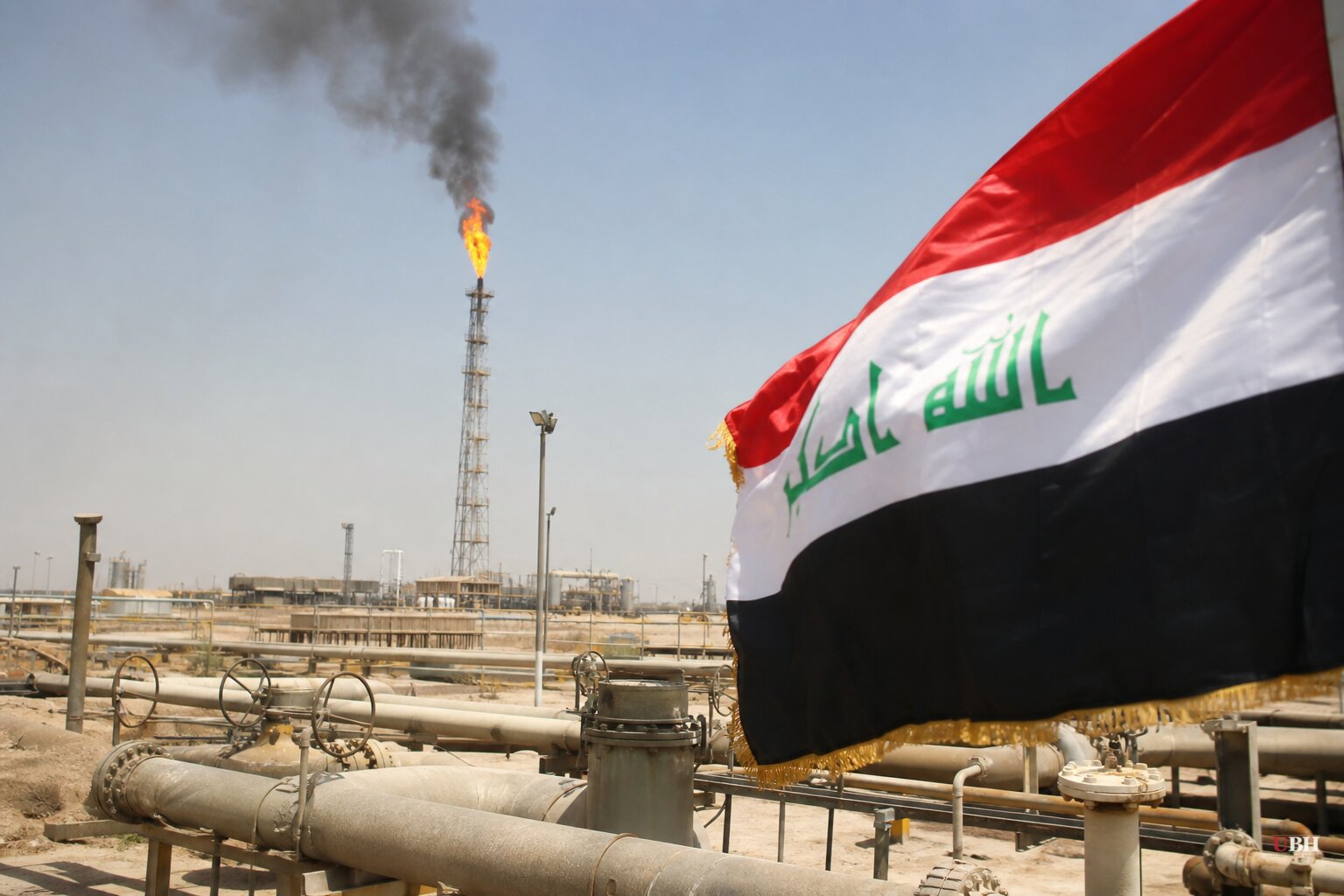
Iraqi Prime Minister Mohammed Shia' al-Sudani said last week that Iraq intends to raise crude oil production to between 8 million and 10 million barrels per day within six years. That's roughly double where Iraq's output sits today. It's an enormous number for a country whose oil sector has taken real damage from the broader Middle East conflict.
Washington sees an opening. According to OilPrice.com, Russia is tied down in Ukraine, Iran is focused on defending its own territory from U.S. and Israeli strikes, and China is calibrating its involvement to stay under the threshold that would trigger direct confrontation with America. All three of Iraq's historic rival patrons are distracted at once. The U.S. and its allies are moving to fill that gap.
Iraq isn't just another oil-rich country. It holds a conservatively estimated 145 billion barrels of proved reserves, according to the Energy Information Administration, nearly 18% of the Middle East's total. Lifting costs run $2 to $4 a barrel, tied for the cheapest on the planet. It also sits geographically at the center of the region, bordering Iran, Saudi Arabia, Kuwait, Jordan, Syria and Turkey, with Mediterranean access through Syria.
For years, Iraq has served as a conduit for Iran to move sanctioned oil into world markets disguised as Iraqi crude, according to OilPrice.com. That's part of why Washington's sanctions strategy runs directly through Baghdad.
The Contracting Fight Behind the Headline Number
A flyonwallstreet analysis lays out why Iraq's six-year target should be read skeptically. Iraq's southern fields around Basra are cheap to lift, but the constraints are everywhere else: water injection capacity to keep reservoir pressure up, associated gas still being flared instead of captured, an unreliable power grid, and export terminals that need major expansion.
There's also an OPEC problem nobody in Baghdad wants to discuss out loud. Iraq operates under an OPEC production quota. A target of 8 to 10 million barrels a day isn't a quota-compliant figure under current arrangements. It's a claim on capacity, which functions as leverage inside the cartel regardless of whether the oil ever gets pumped.
flyonwallstreet's advice to investors: watch who actually signs contracts and on what payment terms, not the headline barrel count. Six years is a short runway for brownfield expansion this large. Final investment decisions need to happen now, not in year four.
Bessent's "Economic D-Day" and Its Limits
While Iraq's oil ambitions play out, the Trump administration escalated its financial pressure campaign against Iran. Treasury Secretary Scott Bessent announced Operation Economic Outcast on Monday, August 24, describing it as an effort to "sever every remaining economic lifeline sustaining" the Iranian regime, according to the Atlantic Council. Bessent compared it to D-Day.
President Trump called it "the most crushing economic operation ever taken against any country" in a Truth Social post, warning that any nation or business extending Iran an economic lifeline would face severe consequences.
The Treasury designated roughly sixty entities based in Hong Kong and elsewhere on August 24, according to the Atlantic Council's Maia Nikoladze. Daniel Fried, a former U.S. assistant secretary of state for Europe now at the Atlantic Council, called the rollout "a warning shot, not an economic death blow" in Bessent's own words. Fried noted that a genuinely crippling blow to Iran's economy would require targeting major Chinese firms and banks, and "no such steps were taken" in the initial announcement.
Fried also flagged a telling admission: when asked why Monday's announcement was more warning than action, Bessent said he didn't want to "blow up the global financial system." That's a real constraint. Going after China's financial institutions directly carries risks the administration isn't yet willing to absorb.
Behnam Ben Taleblu, senior director of the Iran Program at the Foundation for Defense of Democracies, told Fox News Digital that Iran "needs to adapt not just to U.S. and Israeli military pressure, but this U.S. political and economic pressure," and that Tehran is maximizing its ties to Russia and China as a result. Iran's central bank governor, Abdolnaser Hemmati, said Tehran will soon join the BRICS-backed New Development Bank, though Reuters reported the bank could not confirm Iran's membership.
Iraq as the Proof of Concept
Reuters, via Al-Monitor, reported that Iraq could become the test case for how far Washington can push the dollar-system squeeze on Iran's other trade partners: China, the UAE, Turkey, India, Pakistan and Oman. The U.S. has held effective control over Iraq's oil revenue dollars since the 2003 invasion, primarily through the Federal Reserve Bank of New York, giving Washington unusual leverage over Baghdad.
Iraq holds more than $100 billion in reserves in the United States, according to Reuters, and depends on Washington's goodwill to keep that money flowing. In April, Reuters reported the U.S. halted a $500 million cash shipment to Iraq and suspended parts of security cooperation over Iran-backed militias. Reuters also revealed in late 2024 a fuel oil smuggling network generating at least $1 billion a year for Iran and its proxies inside Iraq.
There's a real limit to how far this leverage extends. Neil Quilliam, an associate fellow at Chatham House, told Reuters that U.S. pressure has raised the cost of dealing with Iran and forced Iraqi banks to improve compliance, but "hasn't broken Iraq's economic ties with Iran." Quilliam added that countries like China or Turkey "have larger economies and more room to absorb pressure," while Iraq has fewer alternatives.
That asymmetry is the open question hanging over both stories. Washington can squeeze Iraq hard because Baghdad's dollars sit in New York. It cannot squeeze China the same way without risking exactly the kind of global financial disruption Bessent said he's trying to avoid. Whether Operation Economic Outcast escalates beyond sanctions on smaller entities to target major Chinese banks, something Bessent has promised is coming, will determine whether this is a real economic siege or a pressure campaign with a ceiling.
Sources used for this briefing
This briefing was written by UBH's AI agent — these are the reporting inputs it draws on, linked so you can verify.


