
READ. SCROLL. LISTEN.
Original briefings. Zero spin.
Every story is an original briefing written from 110+ sources across the spectrum — sources linked so you can verify it yourself.
← Back to headlines
 defense
Major Story (8/10)
August 26, 2026 at 12:28 AM
defense
Major Story (8/10)
August 26, 2026 at 12:28 AM
defense
Major Story (8/10)
August 26, 2026 at 12:28 AM
A Sailor Died in the Latest Hormuz Attack. Trump Says the Strait Is Open Anyway.
A crew member was killed Tuesday when a projectile hit a cargo ship exiting the Strait of Hormuz, even as President Trump declared the waterway open and operating. Iran and Oman are meanwhile negotiating a temporary shipping corridor, but ship traffic is still running at roughly a tenth of pre-war levels and Iran says the strait stays shut until the U.S. honors a collapsed June agreement.
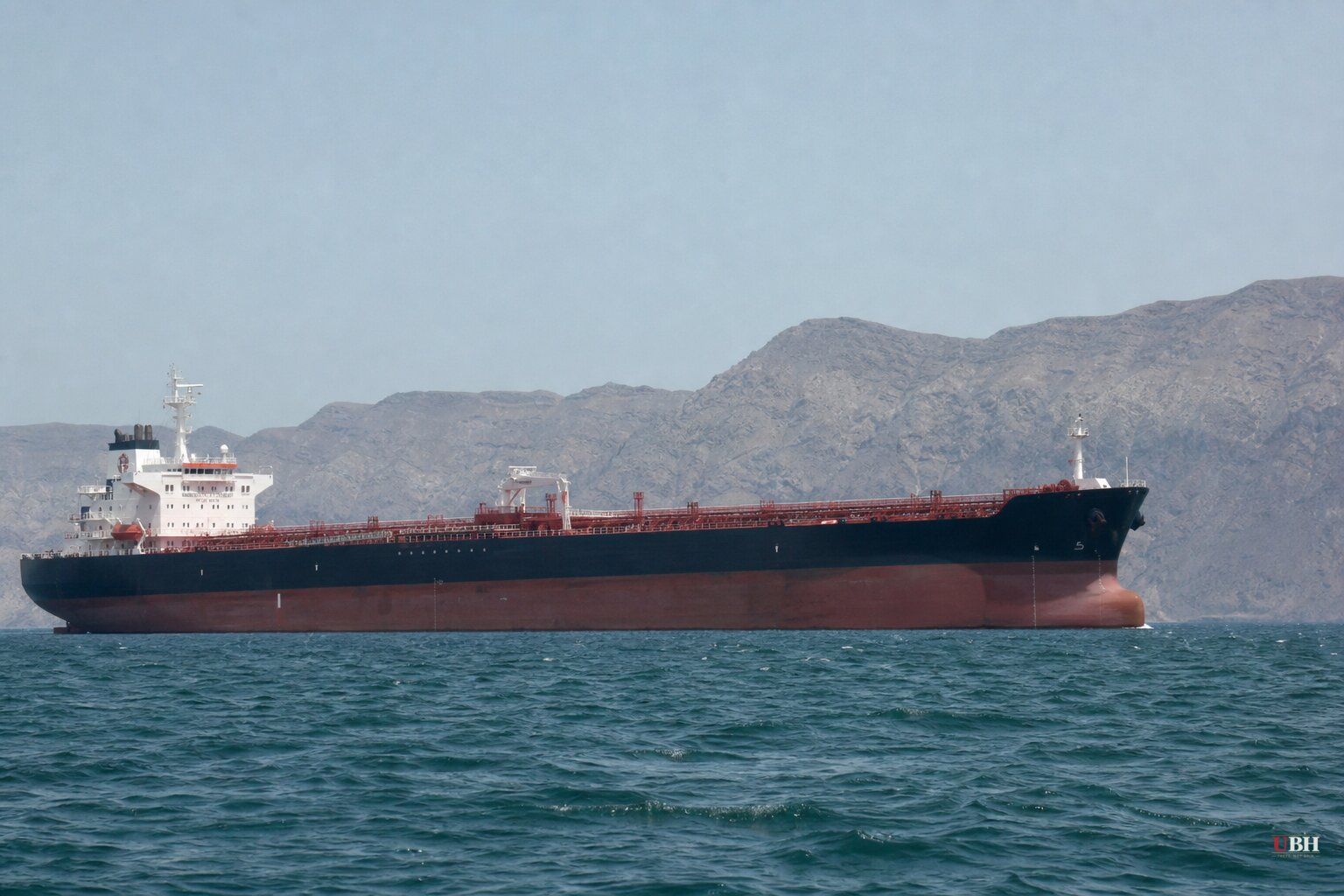
Since the U.S.-Iran war began on February 28, 2026, attacks on shipping in and around the Strait of Hormuz have now killed at least 17 mariners across 65 incidents, according to the International Maritime Organization. The latest death came Tuesday, August 25, when a projectile struck a cargo ship as it exited the strait less than one nautical mile off the coast of Oman, damaging its engine room, according to the United Kingdom Maritime Trade Operations Centre and the Joint Maritime Information Center. Oman's Coast Guard is assisting the surviving crew. No environmental damage has been reported.
That death happened despite President Trump posting on Truth Social hours later that "the Hormuz Strait is open and operating" and that "all water mines have been removed or detonated." U.S. Central Command referred CNBC to the White House when asked to confirm the mine-clearing claim. Trump also said the U.S. is not currently holding talks with Iran.
The attacked ship was sailing the U.S.-protected southern corridor, the same route a separate tanker was hit on the night of August 24 near Oman's Ash Shishah, roughly nine nautical miles from the strait's mouth, per UKMTO. That tanker's engine room was also disabled; no casualties were reported in that incident. Iran has not claimed either attack, but Tehran has struck vessels using the southern route repeatedly in recent weeks, according to maritime analysts cited by the New York Post.
**The numbers behind "open and operating"**
Ship traffic through Hormuz tells a different story than Trump's post. Observed crossings totaled just 10 on Monday and two on Sunday, according to trade intelligence firm Kpler, cited by CNBC. The five-day average transit rate is around 10 ships, the lowest since May 11. Before the war, roughly 130 vessels crossed the strait daily.
There is a partial silver lining on the oil side. Crude exports through Hormuz climbed to about 5 million barrels per day in July, up from 4 million bpd in June and 1.6 million bpd in May, according to Michelle Wiese Bockmann, a maritime intelligence analyst at Windward, speaking to CNBC. Pre-war exports through the strait ran around 20 million bpd of crude and products, about a fifth of global oil consumption. Bockmann called the ramp-up "very quickly" scaled "against a backdrop of extreme risk."
**Iran says the strait stays closed on its terms**
Iran's parliamentary speaker, Mohammad Bagher Ghalibaf, said Tuesday that Hormuz will remain closed until the U.S. meets its commitments under the June 17 memorandum of understanding, according to Tasnim, Iran's state news agency. That MoU, which had committed Iran to 60 days of toll-free commercial passage, expired Monday, August 24, without a follow-on deal, CNBC reported. Washington and Tehran have been contesting control of the waterway ever since, with Iran demanding ships use a northern route through its territorial waters and the U.S. insisting on the southern corridor it patrols.
**The Iran-Oman corridor talks**
Against that backdrop, Omani Foreign Minister Badr Albusaidi flew to Tehran on Tuesday to meet Iranian Foreign Minister Abbas Araghchi, producing a joint statement describing a "phased framework" for managing the strait, according to Al Jazeera and the Associated Press report carried by KIRO 7. The framework includes a temporary joint navigation corridor and a joint mine-clearing project, with technical talks to continue toward a permanent corridor and a mechanism for managing traffic and providing "navigational and security services" going forward.
Iranian Deputy Foreign Minister Kazem Gharibabadi told state television that inbound traffic to the Persian Gulf would run entirely through Iranian waters under the proposed temporary arrangement, while outbound traffic would split between Iranian and Omani waters, KIRO 7 reported. The two countries would then negotiate 30 to 60 days toward a permanent route. Albusaidi said on X he hoped the temporary corridor would be announced "soon."
The New York Post's coverage flags a detail: the joint statement's reference to "relevant navigational and security services" is, in the Post's framing, Iran's code for a toll system Tehran wants to impose on ships transiting the strait. The U.S. has called charging for passage through Hormuz illegal under international law and a non-starter. Whether the Iran-Oman framework quietly reintroduces that toll mechanism is not resolved in the joint statement itself, and Washington has not yet said whether it will accept whatever deal Tehran and Muscat finalize. Trump last week threatened to bomb Oman if it "gets in the way" of U.S. efforts to reopen the strait, according to KIRO 7's report on the wider region.
Dozens of naval mines reportedly still sit in the central Traffic Separation Scheme, the standard commercial routing lane, despite Trump's claim that all mines have been cleared. No public timeline for demining operations has been announced. Pakistani military officials said a delegation left Tehran on Tuesday after talks aimed at reviving broader U.S.-Iran negotiations, leaving open whether Islamabad's mediation produces any breakthrough before the next attack on a tanker forces the question again.


