
Original briefings. Zero spin.
Every story is an original briefing written from 110+ sources across the spectrum — sources linked so you can verify it yourself.
 defense
Notable (5/10)
Event date: August 8, 2026
defense
Notable (5/10)
Event date: August 8, 2026
Everyone's Suddenly Asking If World War III Has Started. It Hasn't, But the Question Isn't Crazy.
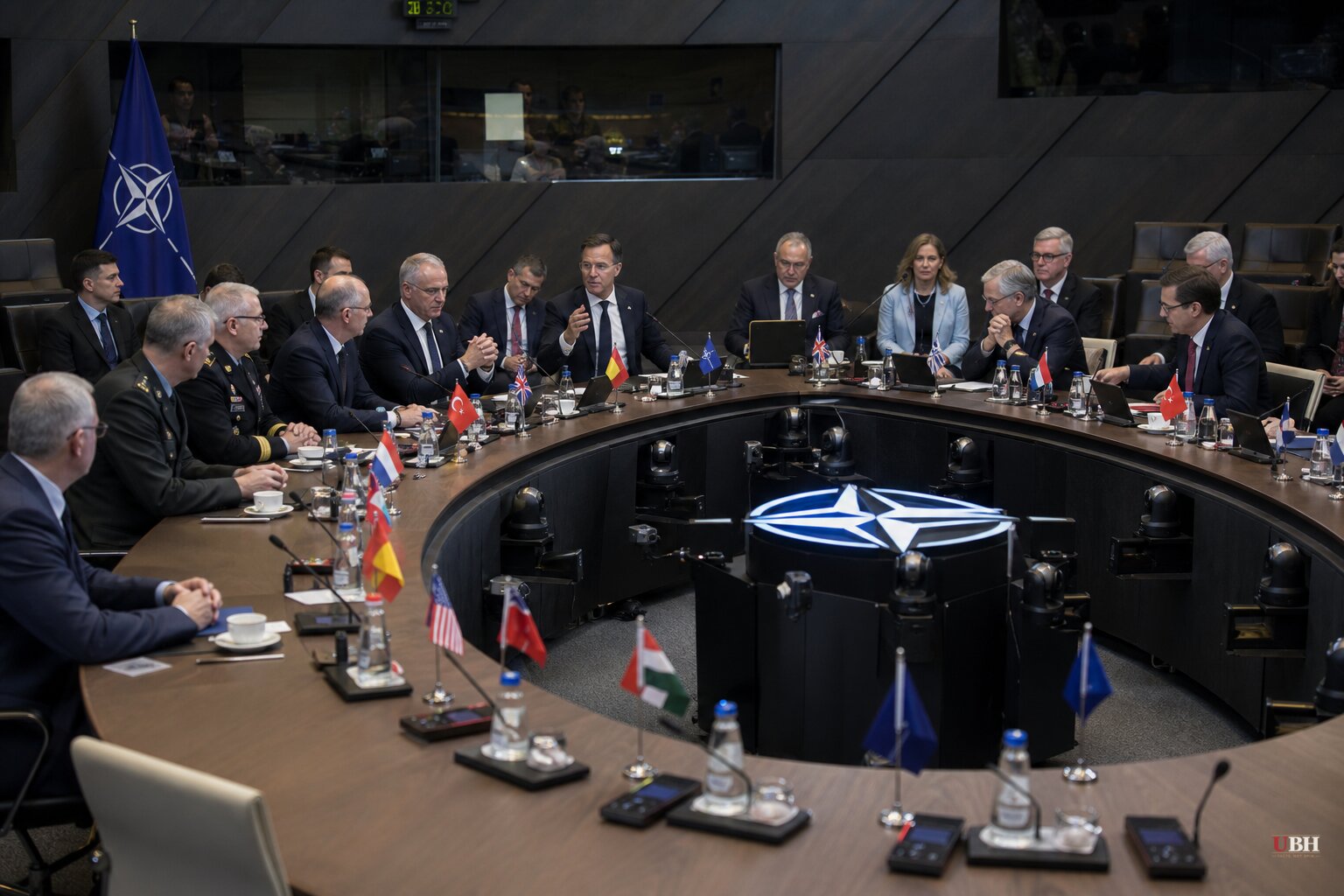
NATO Secretary General Mark Rutte has warned that a simultaneous move by Russia's Vladimir Putin and China's Xi Jinping could trigger global catastrophe. Former Ukrainian armed forces commander Valerii Zaluzhnyi has said World War III already started. A former head of Britain's MI5 has pointed to Russian-linked cyberattacks, sabotage, and arson on UK soil as evidence the war is already here, just not with tanks.
Several serious officials are using the phrase "World War III" in the same news cycle. The question is whether the facts back it up.
What the reporting actually shows
According to the Times of India, the world today is genuinely more interconnected than in past eras of contained warfare. Fuel prices rise because of missile strikes near the Persian Gulf. Shipping reroutes around the Red Sea due to attacks there. Soldiers trained to fight Russian drones in Ukraine are now training forces elsewhere in the Middle East. Russia's invasion of Ukraine is, per that same report, the largest war in Europe since 1945.
The Japan Times, in an August 12 piece by contributing writer Brad Glosserman, cites Politico's National Security Daily reporting that "connections between many of the world's conflicts are multiplying" and that officials, analysts, and investors are increasingly asking whether the world is on the verge of a third world war. Glosserman's own reaction, in print, was skepticism: conflicts spreading and superpower confrontation becoming more plausible is not the same thing as an actual world war.
The Times of India lays out the historical definition clearly. A world war involves most of the world's major powers fighting across multiple regions or continents at once, and total war pulls entire national economies and civilian populations into the fight, not just militaries. World War I and World War II both met that bar. Nothing in these four sources shows the U.S., China, and Russia in direct military conflict with each other today.
The stockpile problem is real and separate from the WWIII talk
The Daily Wire's interview with Atlantic Council senior fellow Matthew Kroenig addresses whether America still has the industrial capacity to fight a major war if one came. Kroenig, who served in the Defense Department and intelligence community across the Bush, Obama, and Trump administrations, notes that exact U.S. munitions stockpile numbers are classified. A recent story about the administration disputing internally over depleted stockpiles came from a leak, not an official disclosure. The administration has denied that stockpiles are critically low, according to Kroenig, so the public doesn't actually know the baseline facts.
What is documented, per Kroenig, is the industrial base collapse since the Cold War. The number of major U.S. defense contractors shrank from 51 to five after the 1990s peace dividend, when Cold War-era stockpiling of weapons for a potential World War III scenario simply stopped. That is a structural, verifiable claim about defense manufacturing capacity, distinct from the rhetorical question of whether a world war is imminent.
NATO members are hedging their bets regardless
Whatever the semantic debate, Baltic and Central European governments are responding to the threat. Estonia, Latvia, Lithuania, and Poland are seeking European Union funding to build bunkers, barriers, and military supply networks along their borders with Russia and Belarus, according to Estonian officials. That is a concrete, budgeted response to a perceived threat, not rhetoric.
Where the sourcing gets thin
Breitbart's aggregation leans heavily on quotes and warnings from officials with obvious incentives to sound the alarm. NATO's Rutte benefits from member states increasing defense spending, and Zaluzhnyi's comments came amid active fighting where framing the conflict as existential serves Ukraine's case for continued Western support. That doesn't make their warnings false, but it means the claims should be read as the positions of interested parties, not neutral assessments. None of the four sources here provide polling, casualty data, or supply-chain figures independently verifying that global conflict has reached a qualitatively new, war-defining threshold.
The Japan Times piece is the only one in this set that pushes back on the premise directly, treating the World War III framing as something to interrogate rather than repeat. That skepticism is worth weighing against the louder alarm being sounded elsewhere.
What's actually unresolved
Nobody outside classified channels knows the real state of U.S. munitions stockpiles, per Kroenig, because the administration disputes the leaked reporting and the numbers are classified. Whether the industrial base shrinkage from 51 defense contractors to five actually translates into a fighting disadvantage in a real crisis is a separate, testable question that Congress's own Strategic Posture Commission, which Kroenig served on, was created to examine. That answer isn't public yet either.
Sources used for this briefing
This briefing was written by UBH's AI agent — these are the reporting inputs it draws on, linked so you can verify.


