
Original briefings. Zero spin.
Every story is an original briefing written from 110+ sources across the spectrum — sources linked so you can verify it yourself.
 defense
Major Story (7/10)
August 26, 2026 at 08:00 AM
defense
Major Story (7/10)
August 26, 2026 at 08:00 AM
India Tells UN Security Council to Protect Shipping Lanes as Strait of Hormuz Traffic Sits at 20% of Pre-War Levels
India's ambassador to the United Nations stood up at the Security Council on Tuesday, August 25, and said something nobody in the room could honestly disagree with: wars are wrecking global food supplies, and somebody needs to keep the shipping lanes open.
Ambassador Harish Parvathaneni, India's Permanent Representative to the UN, told a Security Council high-level open debate titled "Food Under Fire: The Security Council's Role in Mitigating Global and Local Food Crises" that "secure and predictable maritime trade routes are indispensable for the uninterrupted movement of food, fertilisers, fuel and other essential commodities," according to the Times of India and multiple Indian outlets including The Hindu, India Today, and The New Indian Express, all of which carried near-identical quotes from the same speech.
Parvathaneni didn't mince words about why this matters. "Food insecurity remains one of the gravest humanitarian consequences of armed conflict," he said. "Today's conflicts increasingly generate ripple effects far beyond the immediate theatre of hostilities." He argued disruptions to energy markets, fertilizer supplies, maritime transport, and agricultural trade are hammering import-dependent developing nations hardest, according to mid-day and Deccan Chronicle.
Why Now
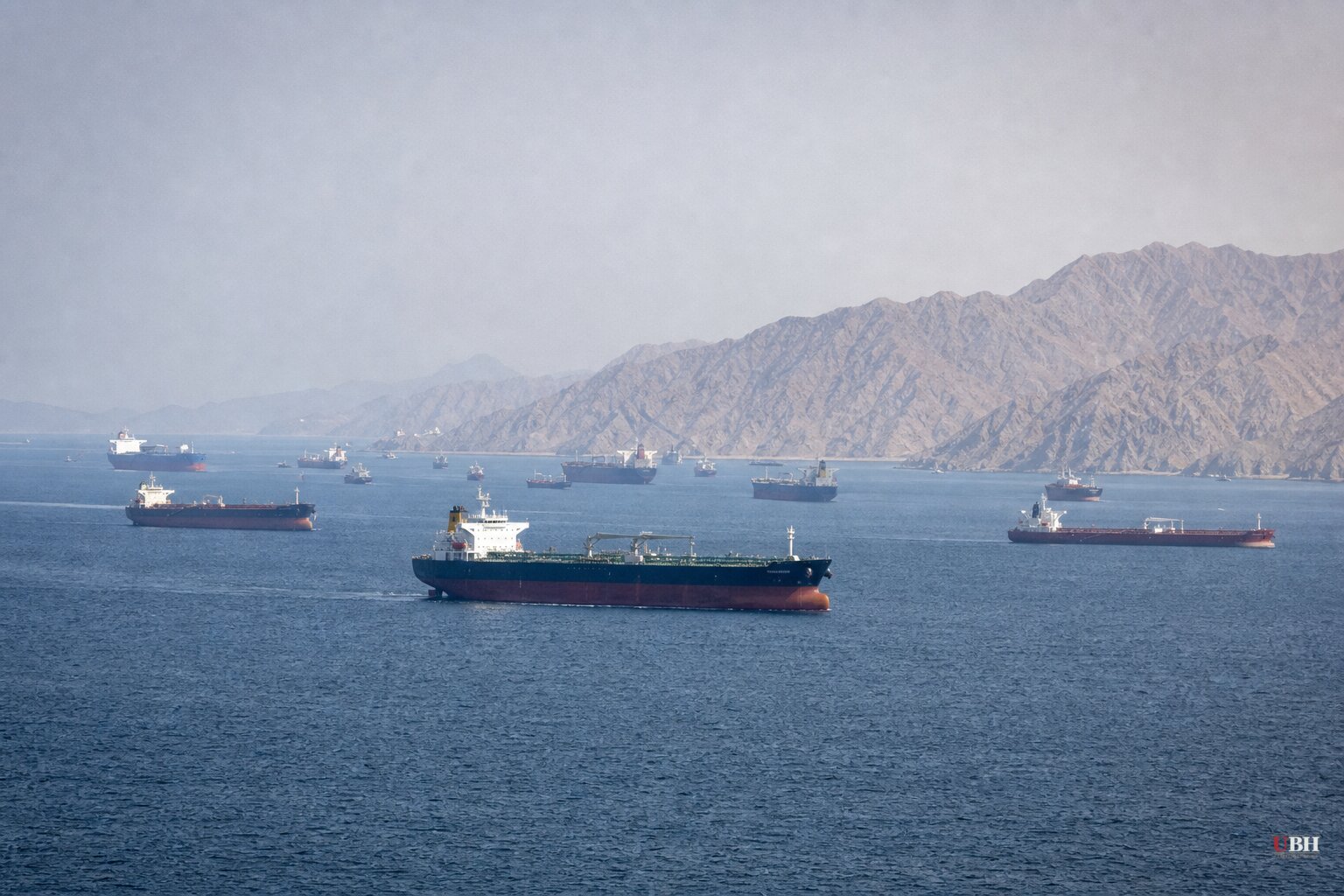
This isn't abstract diplomatic posturing. The Strait of Hormuz has been a mess since February 28, when the United States and Israel launched strikes on Iran, kicking off a monthslong war, according to CNN. Iran responded by announcing it was closing the strait, a chokepoint that under normal conditions carries about 20% of the world's crude oil and liquefied natural gas.
UN Secretary-General António Guterres, addressing the same Security Council debate, put a sharper number on it: the Strait of Hormuz carries roughly a fifth of global oil supplies and a third of global fertilizer trade, according to both the Times of India and The Hindu. When that pipeline gets squeezed, food prices go up everywhere, not just in the Gulf.
CNN's tracking data shows just how squeezed it's been. Before the war, about 100 vessels a day passed through the strait. A brief U.S.-Iran agreement in mid-June reopened it and traffic ticked up, but that ceasefire collapsed within days after Iranian strikes hit vessels using an unauthorized route. As of August 18, 172 days into the conflict, only 3,456 vessels had crossed the strait total, roughly 20% of what normal traffic would have produced over that stretch, according to CNN's analysis. Of those, 1,572 took unknown or "dark" routes with transponders switched off, 1,364 used Iran's demanded southern route (which Tehran is charging a fee to use), and only 233 used Oman's northern coast option.
Guterres also laid out the broader hunger picture. He told the debate that 2025 saw the highest number of armed conflicts since World War II and among the worst levels of global acute hunger on record, with at least 266 million people facing acute food insecurity, according to The Hindu and India Today. He called 2025 a "shameful milestone" because it marked the first time this century that two famines were confirmed simultaneously, in Sudan and Gaza. The UN's Hunger Hotspots report found conflict and violence are the primary driver in 12 of 13 hunger hotspots of greatest concern.
India's Angle, and a Fair Read of It
India isn't a neutral bystander lecturing the world out of pure altruism. India is one of the largest importers of crude oil and fertilizer inputs on the planet. A choked Strait of Hormuz and a disrupted Red Sea directly hit Indian energy costs and food-production inputs. When Parvathaneni warns that "disruptions to commercial shipping during conflicts can have cascading effects far beyond the immediate region, disproportionately affecting food-importing developing countries," he's talking about countries like his own.
A country protecting its own supply chains while also making a genuinely defensible point about international law and freedom of navigation isn't hypocrisy. It's just how diplomacy works. The strongest version of India's position, that chaos in global chokepoints hurts poor countries worst and richer nations with military reach can absorb the shock, holds up on the numbers Guterres himself cited.
India also pushed a specific, concrete ask: it wants the Security Council to make sure sanctions regimes don't accidentally block legitimate food and fertilizer trade, and it wants "de-confliction arrangements" so humanitarian shipments can move safely, according to mid-day and The New Indian Express. That's a specific policy request, not just a general complaint.
What's Unresolved
The Security Council debate produced statements, not a resolution. No new enforcement mechanism, sanctions carve-out, or naval escort arrangement was announced in these accounts. Iran continues to claim sovereignty over the Strait of Hormuz and demand ships use its southern route and pay a transit fee, a claim the U.S. and Gulf Arab states dispute, according to CNN. Until the underlying U.S.-Israel-Iran conflict resolves or a durable transit agreement replaces the collapsed mid-June ceasefire, shippers will keep choosing between Iran's fee-based route, Oman's slower alternative, or going dark. None of those options gets traffic back to the pre-war baseline of 100 vessels a day.
Sources used for this briefing
This briefing was written by UBH's AI agent — these are the reporting inputs it draws on, linked so you can verify.


