
Original briefings. Zero spin.
Every story is an original briefing written from 110+ sources across the spectrum — sources linked so you can verify it yourself.
 defense
Major Story (8/10)
August 26, 2026 at 06:26 AM
defense
Major Story (8/10)
August 26, 2026 at 06:26 AM
Kurdish-Led SDF Dissolves, Folds Into Syrian Army Under al-Sharaa
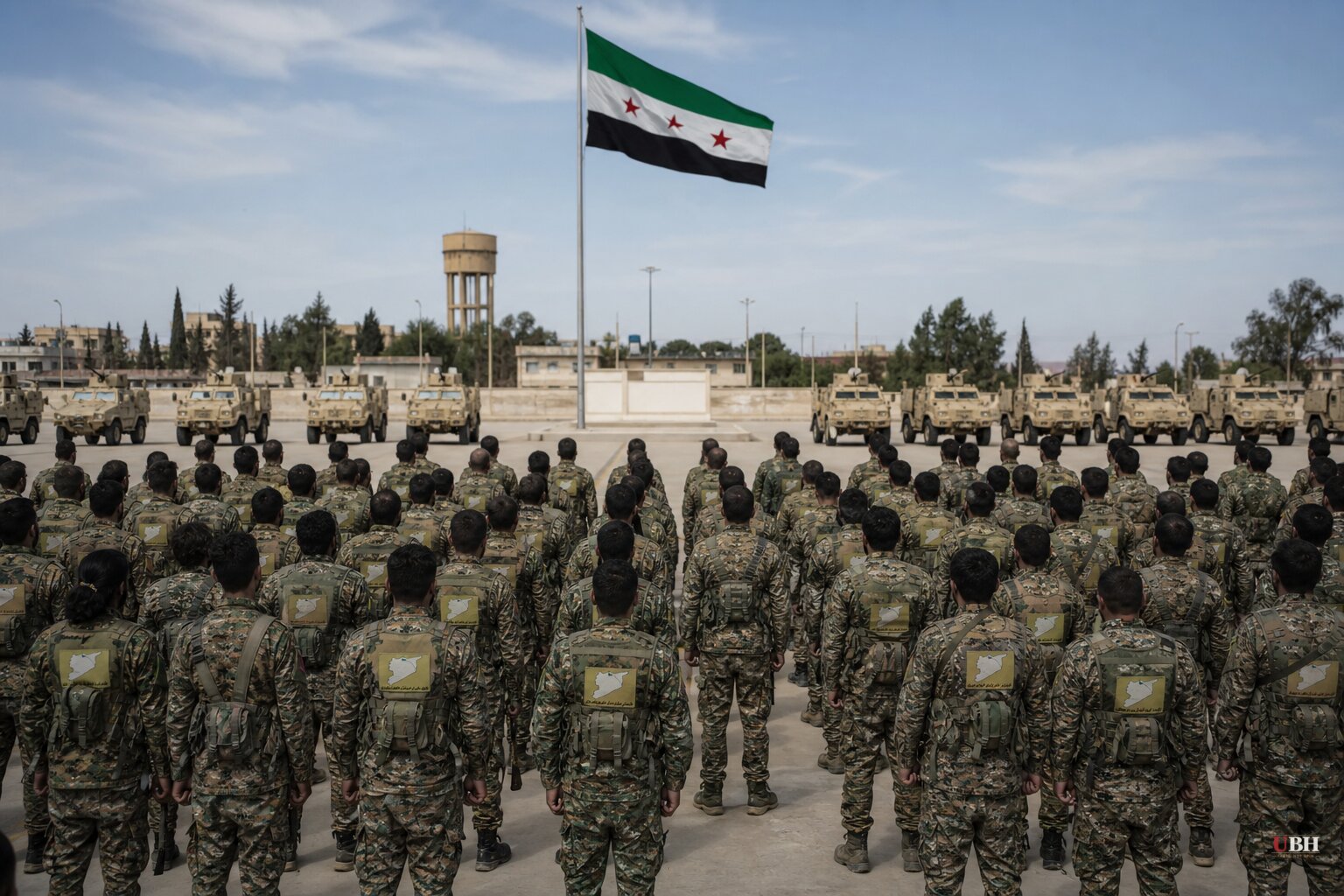
The Syrian Democratic Forces are done. Gen. Mazloum Abdi, the Kurdish commander who ran the group, announced its dissolution Tuesday, August 25, from the presidential palace in Damascus, according to the Salem Radio Network wire report from the Associated Press. The SDF, once America's top partner against ISIS on the ground, no longer exists as an independent military force.
Abdi called it "the end of the SDF's mission" and said Syria has entered "a new phase, one of peace and participation in building a new Syria," per the AP account. He made similar remarks at a separate event in Qamishli marking that city's 100th anniversary, saying the integration process "has ended and has been fully completed," according to Breitbart's reporting, which cited the Kurdish outlet Rudaw.
This is not a surprise ending. It's the finish line of a process that started after government forces routed SDF positions in January 2026, taking back most of northeast Syria including Raqqa and Deir Ezzor, according to Al-Monitor and the Long War Journal. Facing that military reality, the SDF signed a January 29 agreement to fold into state structures rather than keep fighting a war it was losing.
How the Merger Actually Worked
The numbers, per the Long War Journal, show the scale. Roughly 10,000 SDF fighters have joined the Syrian army, with officials expecting that to reach around 12,000. Those forces were organized into brigades based in Hasakah, Qamishli, Derik, and Kobani, each still led by former SDF officers, then folded into a newly created 2nd Corps of the Syrian Arab Army.
Former SDF commander Jiya Kobani is now deputy commander of that corps. Former SDF commander Sipan Hamo is deputy defense minister. Damascus also absorbed the SDF's police force, the Asayish, into the Ministry of Interior after vetting roughly 9,000 personnel, though no final number on how many made it through has been released.
President Ahmed al-Sharaa's government, in exchange, issued a decree recognizing Kurdish as a national language and restoring citizenship to Kurds who'd been denied it for decades under the Assad family's 50-year rule, according to the AP report. Assad banned public Nowruz celebrations. Al-Sharaa's government made it a national holiday.
One Unresolved Fight: The Women's Units
Not everything is settled. The Long War Journal reports Damascus has rejected demands from the SDF's all-female Women's Protection Units, known as the YPJ, to join the Defense Ministry as an intact unit, arguing the Syrian army doesn't have female combat formations. YPJ leaders have refused individual integration and want to keep a distinct command structure. Damascus floated dispersing YPJ personnel into civilian roles like tourism police and passport services in May; the YPJ rejected that too. The two sides are reportedly now weighing a compromise that would move around 2,000 YPJ personnel into civilian institutions.
That's a real, unresolved dispute between two named parties with a factual disagreement about what integration should look like. Neither side has issued a final resolution.
Turkey's Framing, and Why It Matters
Coverage of this story splits sharply on language. Daily Sabah, a Turkish outlet, described the SDF as "terrorist" and referred to Abdi by the name "Ferhat Abdi Şahin," emphasizing the group's roots in the YPG militia, which Ankara, Washington, and the EU have all designated as tied to the Kurdistan Workers' Party (PKK), a group that waged a decades-long insurgency against Turkey. That framing reflects Turkey's longstanding position, not a universal consensus. Al Jazeera and Al-Monitor describe the SDF simply as Kurdish-led forces without the terrorist label, while acknowledging the PKK linkage is real and contested.
Syria specialist Fabrice Balanche told AFP, as cited by Al-Monitor, that the YPG was "indeed" directed by the PKK "behind the scenes." International Crisis Group analyst Nanar Hawach told AFP the YPG was formed in 2011 by PKK veterans, including Abdi himself. The YPG has denied any organizational link to the PKK. Both claims are on the record; neither side conceded the point.
The PKK itself announced it was ending its armed struggle against Turkey in May 2025, following a call from its imprisoned founder Abdullah Ocalan, ending an insurgency that killed roughly 50,000 people over four decades, according to Al-Monitor.
What the SDF Was, and What Ends With It
The force was created in 2015 with U.S. backing after Kurdish fighters defeated ISIS in Kobani, according to Al-Monitor. At its peak it fielded roughly 100,000 fighters, controlled about a quarter of Syrian territory, and held much of the country's oil wealth in the northeast. It was America's primary partner in the ground war that ended ISIS's territorial caliphate in Syria.
Washington-based Kurdish affairs analyst Mutlu Civiroglu told AFP the dissolution marks "the end of Kurdish strength in Syria" and "a bitter end" for Kurdish aspirations toward autonomy. Damascus and Ankara read it differently: that Syria finally has one army and one government after 14 years of civil war and fragmentation.
President Trump's administration brokered part of the January integration deal, according to Breitbart, and Trump has publicly backed al-Sharaa's government since Assad's December 2024 ouster. Whether Washington's abandonment of its old Kurdish battlefield partner in favor of the new Damascus government pays off depends largely on whether al-Sharaa's promises on language rights and citizenship hold up, and whether the YPJ dispute gets resolved without a return to the kind of clashes that forced this merger in the first place.
Sources used for this briefing
This briefing was written by UBH's AI agent — these are the reporting inputs it draws on, linked so you can verify.


