
Unbiased headlines. Facts, not spin.
Unbiased Headlines is an independently owned news organization. We bring you the facts, not opinions, written fresh from 110+ named sources. Sources linked so you can verify it yourself.
 defense
Major Story (8/10)
Iran's Security Chief Names U.S. Bases in Europe and Distant Islands as Targets if Strikes Resume, Rules Out Giving Up Enriched Uranium
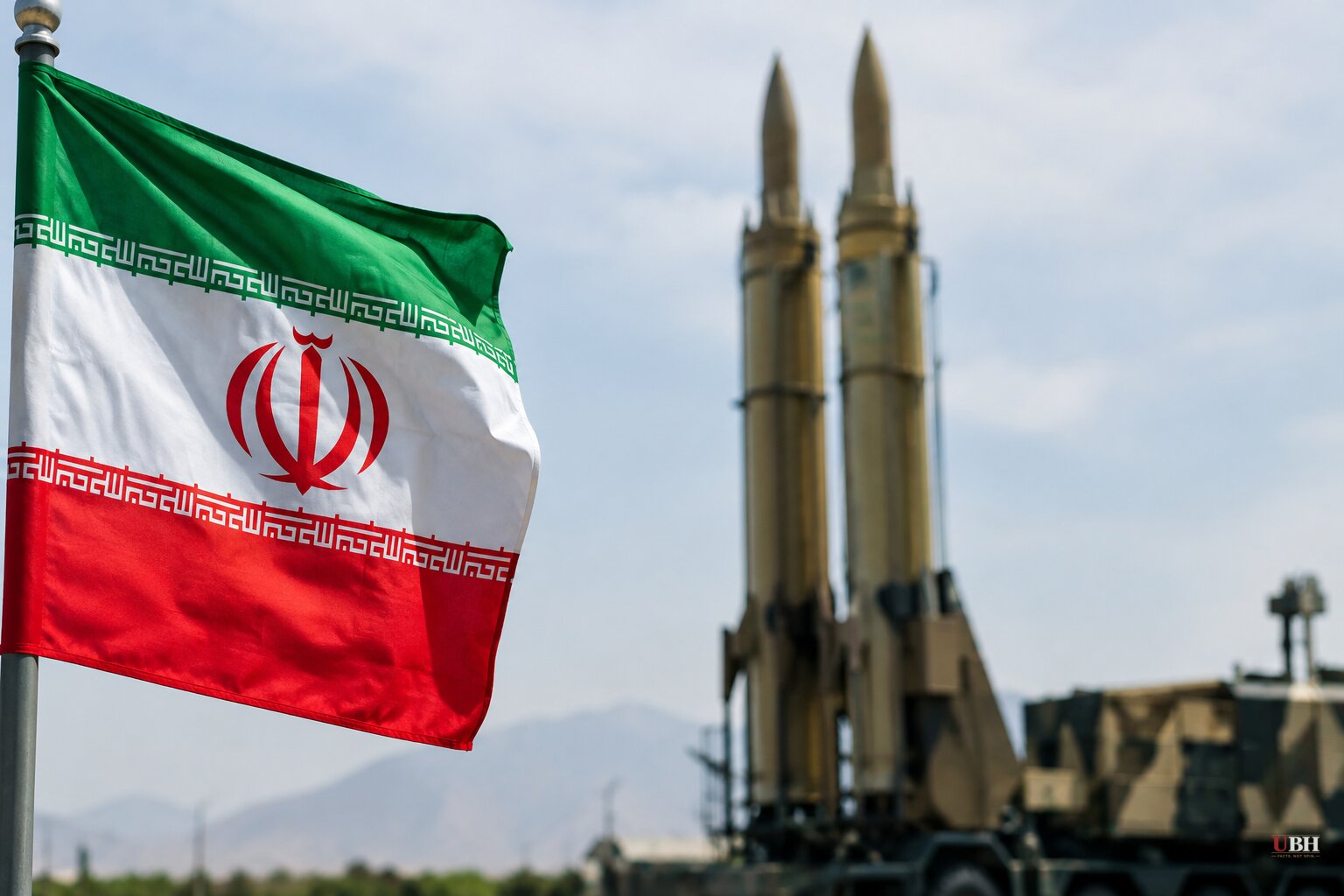
Since U.S.-Israeli strikes on Iran began Feb. 28, the war has settled into a standoff over Hormuz, sanctions and nuclear material. That standoff now has sharper threats attached to it.
In an interview with Lebanon-based Al Mayadeen TV, broadcast Wednesday, Nov. 11, Rezaei said Iran would answer renewed U.S. attacks by hitting more than the Gulf bases it has already targeted.
"If American aircraft take off from an American military base, even one located in a European country or some other distant region, to bomb Iran, we will strike those bases as well," Rezaei said. He added that Iran would go after "America's more distant military installations, including the ones we have not yet attacked."
He named no specific targets. He did say Iran "may even strike certain islands that they assume are beyond the reach of our missiles." Middle East Eye suggested he may have meant Diego Garcia, the Indian Ocean island where the U.S. has base access. Rezaei did not say so.
Capabilities and the new target list
Rezaei claimed Iran's offensive and defensive capabilities are "far greater than on the first day of the war." That is an Iranian claim. Bloomberg reported Tuesday that Iran can now build about 50 ballistic missiles a month, roughly half its prewar capacity.
Iran's Tasnim news agency reported Wednesday that Iran unveiled an underground "missile city" housing ballistic and cruise missiles.
The threats follow an Oct. 31 order from Supreme Leader Mojtaba Khamenei, carried by IRNA. It told the armed forces to meet any threat with "an immediate, impactful, and geographically unrestricted response" and to overhaul their target database so every U.S. and Israeli asset falls within reach.
The Gulf has already absorbed the worst of Iranian retaliation. The UAE, Qatar, Bahrain and Kuwait have faced thousands of missile and drone strikes since February.
Uranium stays in Iran
Rezaei also drew a hard line on nuclear material. "Not a single particle, however insignificant, of the enriched material will leave Iran," he said.
He said Iran wants the stockpile for nuclear-powered ships and submarines it is designing, and possibly small modular reactors later. He said Tehran has told Moscow the material stays put. "We will use it ourselves," he said.
On Hormuz, he repeated that Iran will reopen the strait only after Washington meets its seven conditions. He called the earlier U.S. response "deceptive" and full of "ambiguity and confusion," and demanded "a clear and explicit response." Iran's demands include lifting sanctions, ending the U.S. naval blockade, unfreezing assets and shrinking the U.S. military footprint in the region, according to Al Jazeera.
Rezaei rejected reports that talks with Washington are underway. Trump has also said no negotiations are taking place between the two governments. Qatar and Pakistan are leading mediation efforts, and Iran has sent a nuclear proposal to the U.S. through Qatar. Tehran says that proposal is to be discussed only after the seven demands are met.
Washington's position
The U.S. side has not moved toward those terms. Rubio said Tuesday that Iran's conditions for a political settlement are "absurd." He said the Trump administration believes its maritime blockade gives it the upper hand in negotiations.
Trump has called the war "effectively over" and said there is "momentum" to end it. Republicans lost the Nov. 3 midterms to Democrats, who campaigned against the war and rising energy prices. Analysts cited by Arab News have noted a more conciliatory tone from Trump since then.
That tone has limits. Trump wrote earlier this month that the U.S. "will not be attacking Iran at any time prior to the midterm elections." He did not say what happens afterward. Israeli Prime Minister Benjamin Netanyahu, who has pushed for new strikes, remains in office after losing his parliamentary majority, CNN reported.
Iran's own framing is that these threats are conditional. Rezaei said the strikes on bases would follow a U.S. attack, and Tehran says it remains committed to diplomacy.
The price tag
The insurer Allianz said Wednesday in a report that the war would likely cost Gulf countries more than $200 billion in damage to physical infrastructure. With tourism and trade losses included, it put the total cost at about $790 billion through 2030.
AAA puts the national average for regular gasoline at $3.94 a gallon.
What remains open
The gap is plain. Rezaei wants a clear U.S. answer to seven conditions. Rubio calls those conditions absurd. Nothing in the record shows either side budging on enrichment, sanctions relief or who controls Hormuz.
If talks do not start, Rezaei's list of possible targets, now including bases in European countries, is what Iran says it will use if the U.S. resumes bombing.
Sources used for this briefing
7 links from 7 independent newsrooms (syndicated copies of the same report count once)
These are the sources it draws on, linked so you can verify.


