
Unbiased headlines. Facts, not spin.
Unbiased Headlines is an independently owned news organization. We bring you the facts, not opinions, written fresh from 110+ named sources. Sources linked so you can verify it yourself.
 defense
Major Story (7/10)
Event date: November 9, 2026 ·
Turkey, Iraq and Pakistan Have Not Closed Iran Borders Despite U.S. Pressure, Officials Tell New York Times
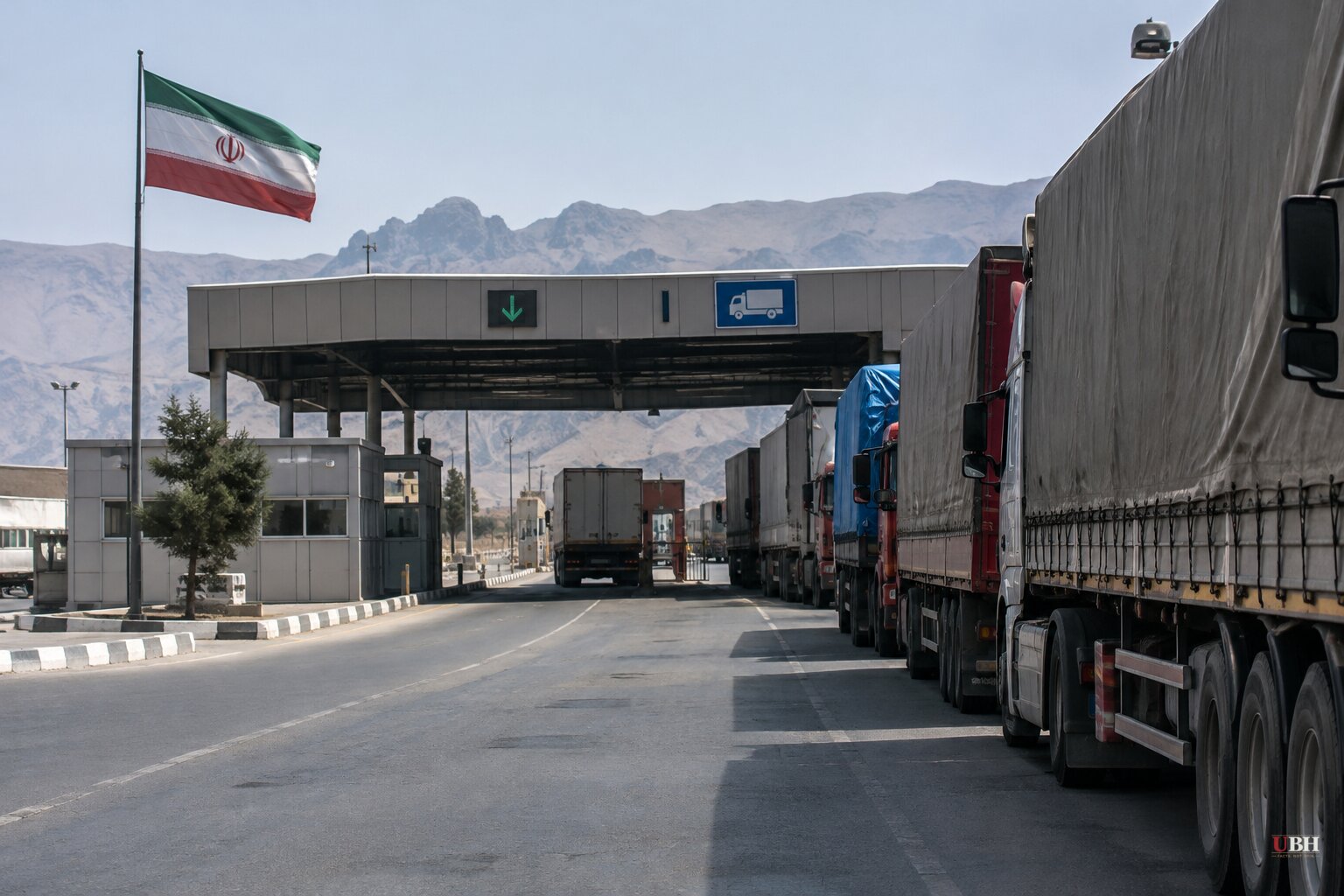
Since the U.S. naval blockade of Iran took hold during the war that began more than eight months ago, Washington's economic campaign has had one open flank: Iran's land borders. As of today, Wednesday, Nov. 11, that flank is still open.
The New York Times reported Wednesday, citing three Iraqi officials and one U.S. official, that weeks of American pressure have not produced the border closures the Trump administration wants. Türkiye, Iraq and Pakistan have been the main targets. All three have resisted.
What the neighbors have refused
Türkiye has largely refused to change its border policies, according to the Times.
Iraq has been pressed in weekly talks with U.S. diplomats, including regional envoy Thomas Barrack, to close all but two of its crossings with Iran. Baghdad has refused. It temporarily shut one or two posts as a gesture, the officials said.
Pakistan has opened and closed some crossings in recent weeks, analysts told the Times. Pakistani officials have cited security issues or new electronic import processes. Iranian officials have tied the moves to U.S. sanctions. Pakistan's official trade with Iran runs about $3 billion a year.
Why they say no
The neighbors' argument is practical. A U.S. official familiar with the talks told the Times that many governments fear "civil insurrection" if they cut trade and smuggling routes that border communities depend on.
The same official said the campaign is stoking resentment among regional allies already angry about the February war.
Iraq's problem is geographic. It shares a 994-mile border with Iran that it cannot fully control. Ellie Geranmayeh of the European Council on Foreign Relations told the Times that Iraq relies on Iran for more than a third of the gas that powers its grid, and that Pakistan depends heavily on Iranian fuel imports.
None of those governments has publicly announced a change of position.
Task Force Iron Gate
When the diplomatic track stalled, U.S. Central Command announced Task Force Iron Gate on Saturday, Nov. 7. Reuters was first to report it.
The unit will be based in Tampa, Florida. CENTCOM says it will work on "preventing the movement of advanced weapons systems, dual-use technologies, sanctioned materials, and illegal revenue streams across Iran's land borders and the Caspian Sea."
CENTCOM says the force will have 20 civilian and military personnel. A U.S. military official told the Times it will not conduct military operations. It may instead push neighboring states to use their own forces against illicit or sanctioned trade.
An anonymous U.S. military official told Reuters the task force is expected to work with the Treasury, State and Justice Departments and the intelligence community.
Admiral Brad Cooper, the CENTCOM commander, said in a statement that closer work with interagency partners "will further constrain Iran's ability to finance terrorism, rebuild weapons factories, and replenish their military."
The leak the land routes represent
A Reuters investigation found that Iran built a secret network of military agencies that imported at least $2 billion in hardware, explosives and heavy-duty trucks since January 2025. The goods arrived by cargo ship across the Caspian from Russia, by truck from Central Asia, and by freight plane from China. Reuters found the network evaded both the naval blockade and Western sanctions.
That is the traffic Iron Gate is meant to target. It is also traffic that runs through places Washington does not control.
Where this sits against the public line
Secretary of State Marco Rubio said Tuesday, Nov. 10, in Paris that "the economic pain that is being inflicted on Iran right now and on that regime is extraordinary and it compounds." He said Trump sees no need for major combat operations because the U.S. is "achieving the same objective by economic means." Rubio also said Iran's last oil cargoes, which left port during an earlier ceasefire, are being exhausted, and that "once that dries up, almost all of their oil revenue will dry up."
CENTCOM estimates the naval blockade has kept more than $25 billion in Iranian crude off the market.
Tehran's position is unchanged. Mohsen Rezaei, chief of Iran's Supreme National Security Council, wrote on X on Monday that Washington should "SURRENDER to the seven conditions Iran has repeatedly set out," and called reports of talks "FAKE NEWS."
On the other side of the argument, the Financial Times cited a diplomat saying Israeli Prime Minister Benjamin Netanyahu is calling Trump daily to urge renewed strikes. The diplomat said Gulf leaders and others inside and outside the White House are working against that.
The economic strategy now depends on partners who have not agreed to carry it out. Iraq's weekly talks with Barrack continue, and Baghdad has so far held to its refusal to cut its crossings to two.
Sources used for this briefing
6 links from 6 independent newsrooms (syndicated copies of the same report count once)
These are the sources it draws on, linked so you can verify.


