
Unbiased headlines. Facts, not spin.
Unbiased Headlines is an independently owned news organization. We bring you the facts, not opinions, written fresh from 110+ named sources. Sources linked so you can verify it yourself.
 defense
Major Story (8/10)
Abu Dhabi Talks End With Prisoner Swap Agreed in Principle, No Ceasefire; Kushner and Witkoff to Meet Putin Thursday
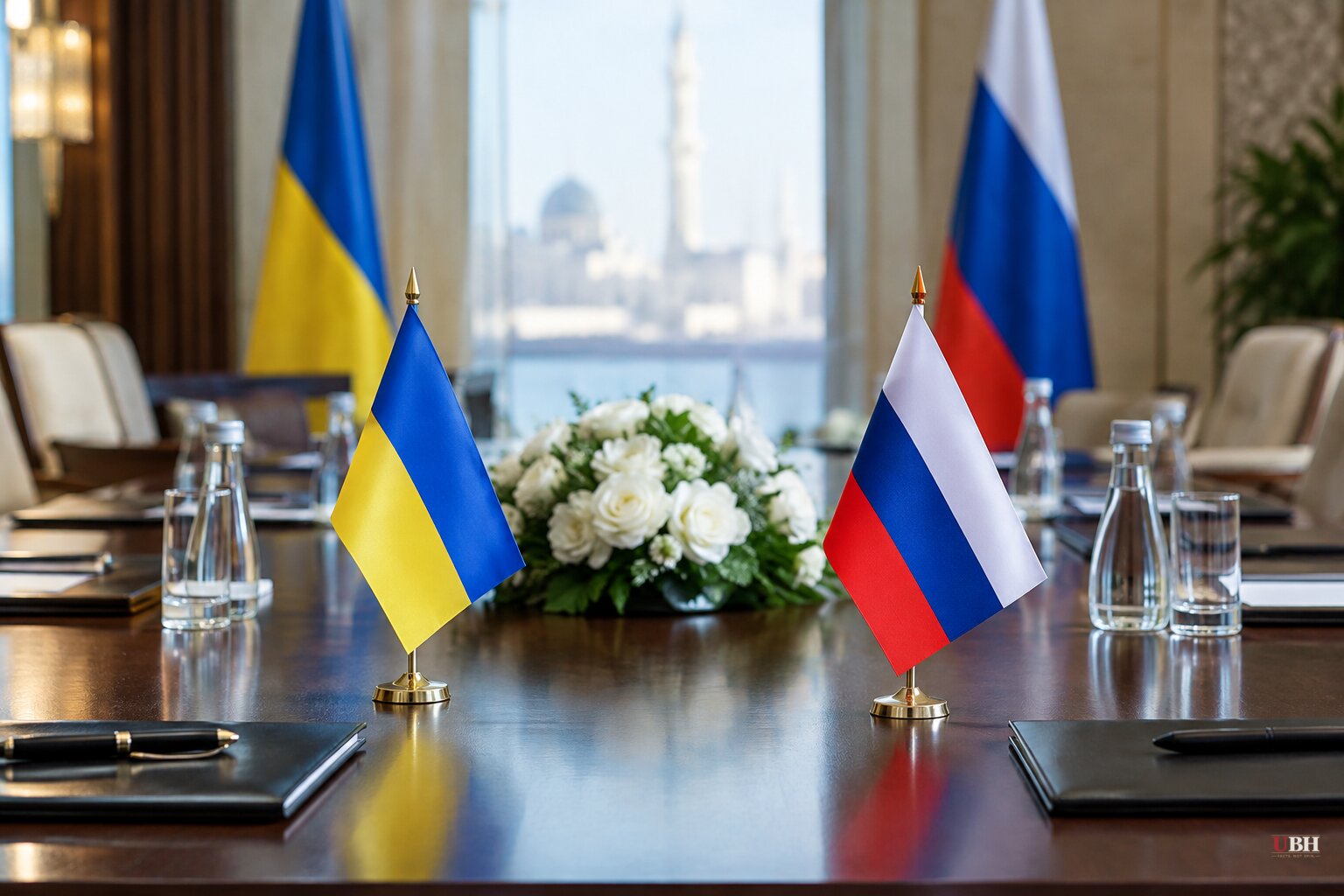
Since the U.S.-brokered talks opened Tuesday, Nov. 10, the second and final session has ended in Abu Dhabi with one concrete result: Russia and Ukraine agreed in principle to a large prisoner exchange. No ceasefire. No movement announced on territory.
Russia's chief negotiator, Vladimir Medinsky, announced the swap to Russian journalists. "We have reached an agreement in principle on a new large-scale prisoner exchange. The specific details will be announced in the near future," he said. Ukraine's lead negotiator, Rustem Umerov, also confirmed the planned exchange.
Kushner put it in bigger terms. "One of the positives is we agreed that we're going to have the biggest humanitarian release of prisoners, which we're going to finalise the numbers tomorrow," he said Wednesday. Neither side has given figures or a timeline. On Tuesday, Zelensky said negotiators had discussed 1,000 prisoners from each side, possibly rising to 1,500 each.
Next stop: Moscow, then Dublin
Kushner and Witkoff will fly to Moscow on Thursday to meet Vladimir Putin. They will then go to Dublin to meet Zelensky. Zelensky confirmed on social media that Ukraine will meet them there.
Kushner said the envoys' meeting with Zelensky will "further explore some of the ideas that we came up with here today." He did not say what those ideas are.
The second day of talks ended after a little less than two hours, according to RFE/RL. These were the first face-to-face talks between Russian and Ukrainian officials since the February round in Geneva, which ended without a breakthrough.
Positions unchanged
Russia still demands that Ukraine withdraw from the part of the eastern Donbas it holds. Moscow has rejected an immediate ceasefire, insisting on broader security arrangements before agreeing to halt hostilities. Zelensky has maintained that territorial decisions must be addressed at the leaders' level.
Before the talks, a U.S. official said both sides had shown "a little bit of flexibility privately" on territory. That official also said neither side would settle the territorial question until it knew what the postwar security setup would be. Nothing announced from Abu Dhabi shows that flexibility has turned into a position.
Ukrainian negotiator David Arakhamia said he saw "good momentum" toward reaching a solution before the end of the year, and said the talks should be multilateral rather than trilateral, with Europe represented. Medinsky said more talks would be held.
The Europe question
Delegations from Britain, France, Germany and Italy, plus NATO and the EU, were in Abu Dhabi for separate consultations with the U.S. and Ukrainian teams. They did not take part directly in the trilateral negotiations with Russia.
Medinsky was dismissive. "We did not communicate with them. We don't really understand in what capacity they are here," he told reporters. He said Moscow had received no concrete peace initiatives or proposals from European countries, questioning what there was to discuss with them.
Zelensky took the opposite view. "We believe that Europe must be represented at every stage of real diplomacy," he wrote on X, adding that the United States should exert pressure on Moscow.
Germany welcomed the idea of including European negotiators but set a condition. "The first step is peace in Ukraine. Following that, discussions can take place regarding the European and transatlantic security order," government spokesman Stefan Kornelius said in Berlin. That sits awkwardly with Moscow's insistence on broader security arrangements before any halt to hostilities.
Strikes continued during the talks
The fighting did not pause. Ukraine's prime minister, Serhiy Koretskiy, said Russia hit six major electricity facilities in four regions overnight, and railway infrastructure in the Dnipropetrovsk and Zhytomyr regions. A drone strike left Kryvyi Rih partly without power and heat, and Oleksandr Vilkul, head of the city's defense council, said apartment buildings, schools and kindergartens were damaged. A Russian strike on a market in Chornomorsk, in the Odesa region, killed three people and injured 11, the regional governor said.
On the Russian side, Leningrad Governor Aleksandr Drozdenko said 150 Ukrainian drones were shot down over the region overnight. Several struck the port area of Ust-Luga, Russia's largest Baltic energy and oil export hub, causing a fire and injuring three workers. In the Smolensk region, regional authorities said two people were killed when drone debris hit an apartment building.
Ukraine also disputes Russian battlefield claims. Zelensky said Tuesday that Russian negotiators overstated the territory their forces have taken, including a claim to hold half of the Donbas. He said the American side confirmed Ukraine's assessment of the front.
What to watch
Thursday will test two things: whether the prisoner numbers are actually finalized, and whether Putin shifts on European participation or a ceasefire when he sits down with Kushner and Witkoff. Zelensky's Dublin meeting with the envoys follows. President Trump has not yet decided what security guarantee the U.S. itself would offer Ukraine, a U.S. official said ahead of the talks.
Sources used for this briefing
8 links from 7 independent newsrooms (syndicated copies of the same report count once)
These are the sources it draws on, linked so you can verify.


