
Unbiased headlines. Facts, not spin.
Unbiased Headlines is an independently owned news organization. We bring you the facts, not opinions, written fresh from 110+ named sources. Sources linked so you can verify it yourself.
 defense
Major Story (7/10)
Event date: November 3, 2026 ·
U.S. Hit Iran's Qeshm Island Nov. 2 in Strikes Officials Call Defensive; Trump Now Says More Aren't Needed 'for Now'
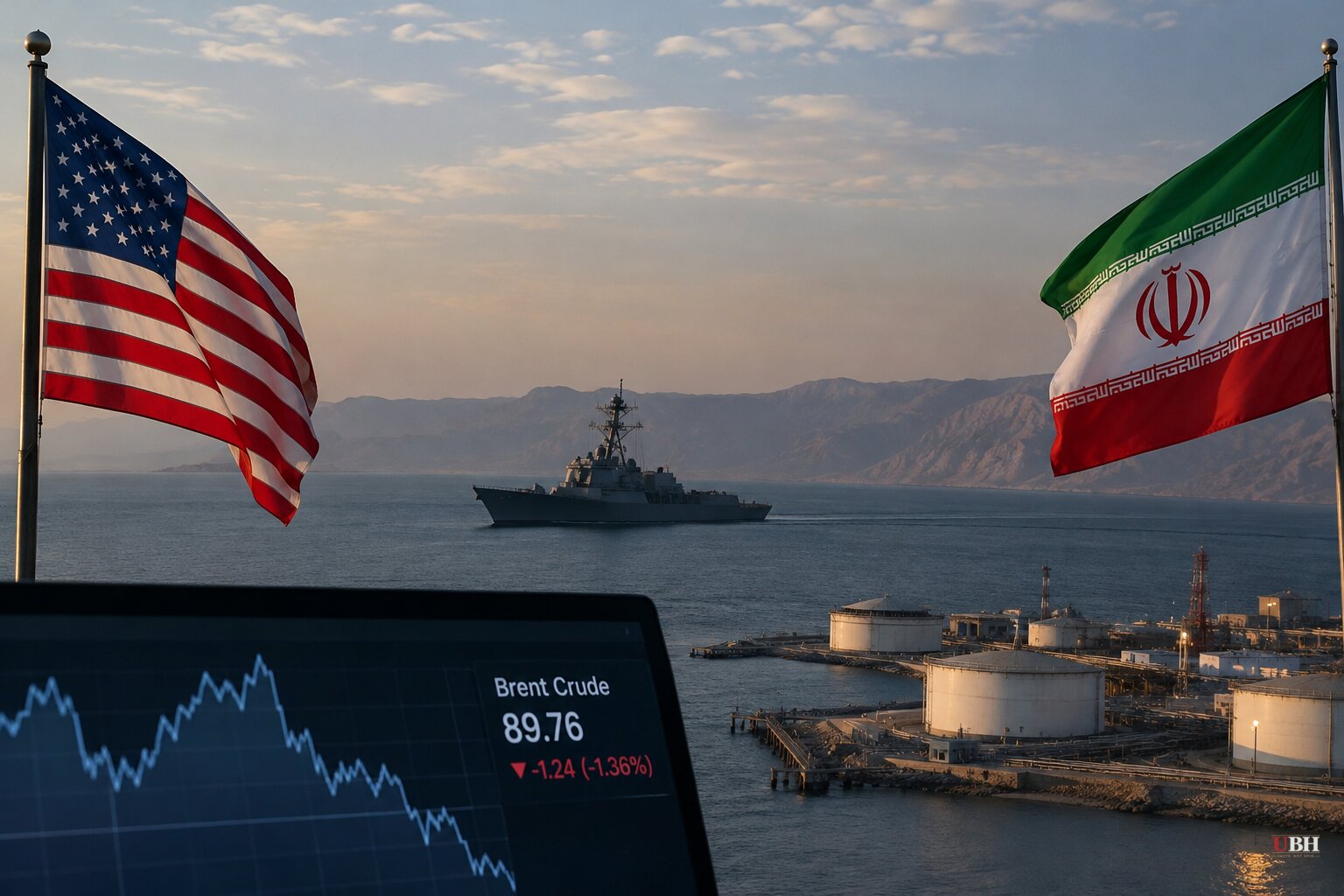
Since the Nov. 2 strikes on Qeshm Island, the Iran war has settled into a pattern: small, deniable exchanges at sea and on islands in the Strait of Hormuz, with big decisions pushed off. As of today, Nov. 10, Trump says further U.S. strikes don't seem necessary for now, and Brent crude briefly fell below $90 a barrel.
That is a long way from Nov. 5. Brent settled at $98.29 that day, after fresh tanker attacks. Trump met his national security team on Nov. 4 and 5 to weigh resuming major operations, and officials told Fox News that Nov. 9 was a new moon, a condition favorable for military action. Nov. 9 came and went without a new directive.
What happened on Qeshm
Three U.S. officials told CNN the Monday, Nov. 2 strikes were limited and defensive, meant to protect U.S. assets. One said they answered Iran firing at a U.S. aircraft. Another said it was "a defensive measure for Iranians using surface-to-air missiles against US assets." The Wall Street Journal first disclosed the operation and reported that similar strikes had been carried out in secret before.
The accounts differ on details. A U.S. official told the New York Times that Iran shot down an American drone and fired at, but missed, two U.S. fighter jets. The U.S. military rejected the Revolutionary Guard's claim that it downed two MQM-170 drones south of Qeshm using electronic warfare, and denied Iran's earlier claim of capturing two others. U.S. forces also intercepted a missile fired from Qeshm at commercial ships, according to reports.
Trump gave a different rationale. He told Fox News on Nov. 3 that the U.S. hit an anti-aircraft facility Iran built over about two months. "We watched it get built; as soon as it was completed, we hit it last night very nicely," he said. "It's just a minor attack. It wasn't war." He also said Iran has "no anti-aircraft," which sits awkwardly beside U.S. officials describing Iranian surface-to-air fire.
One person familiar with the matter told CNN the administration deliberately kept the strike quiet so as not to overstate a defensive move. CENTCOM, which usually announces actions in the Strait, did not comment.
Why Qeshm matters
Qeshm is the largest island in the Persian Gulf, about 14 miles from Bandar Abbas. The Revolutionary Guard keeps a major naval base there, plus missile launchers and tunnel networks. About 20 million barrels of oil a day moved through the Strait before the war.
The U.S. has hit the island before. CENTCOM said in May it struck radar and drone command-and-control sites on Qeshm and at Goruk after Iran shot down a U.S. MQ-1 drone. Explosions were reported there again in September.
Dow Jones Newswires now describes both sides striking islands in the waterway in recent days as they fight for control of the Strait.
Blockade expands, diplomacy stalls
The U.S. has enforced a naval blockade of Iranian ports since earlier this summer. CENTCOM said U.S. forces had redirected 144 commercial vessels as of Oct. 31.
On Saturday, Nov. 7, CENTCOM announced Task Force Iron Gate, meant to extend the blockade to overland routes, including the Caspian Sea. It will target military technology and illegal revenue streams. CENTCOM has not said whether military force would be used. Trump posted Sunday that the task force "is in full force and effect."
Iran has downplayed it. Deputy Foreign Minister Kazem Gharibabadi said Tehran reserves the right to defend itself after the Qeshm strikes but called the exchange part of an "ongoing war." Foreign Minister Abbas Araghchi told state media Iran is prepared for both military and diplomatic options "more than ever before."
Iran's position, as outlined by Iranian officials, is seven conditions for ending the war. They include lifting the maritime blockade, releasing frozen assets, ending the war "on all fronts," and an end to U.S. military action and sanctions relief. Iran says it can reopen the Strait within two days if Washington complies. The U.S. rejects Iran's claim of authority over the waterway.
Secretary of State Marco Rubio said Sunday the two sides are not "on the verge of a breakthrough." He called Iran's demands "unacceptable" and in some cases "outrageous and ridiculous."
Araghchi said mediators have not traveled since last week's midterm elections, citing "the shock" of the results. A diplomat told CNN that Qatari mediators returned to Doha Monday evening, Nov. 2, from Tehran, and that each side is now separately reviewing the latest bridging proposals. Trump wrote Monday, Nov. 2, that an agreement "could happen."
The politics
Republicans lost in the Nov. 3 midterms. Rubio declined to say whether the war played a role. Oil fell more than 8% on Nov. 4 to its lowest since August on expectations that the losses could reduce escalation risk, per Reuters figures cited by Fox.
Trump told 60 Minutes the war may not be a good decision "for today and tomorrow," but said "historically, this will be a very good decision." He added that if Iran had a nuclear weapon during his term, "I would be excoriated far worse than what's happened."
The cost is already visible at the pump. GasBuddy's Patrick De Haan said gas has dropped below $4 a gallon but Thanksgiving will still be the most expensive on record for fuel.
What is unresolved
Trump has left the option of resuming major operations open. Qatar has warned that escalation would complicate a settlement. Whether Iran will reopen the Strait within the two days it claims depends on the U.S. meeting demands Rubio has rejected as unrealistic. Iran has not publicly accepted the idea that the blockade and Task Force Iron Gate are separate from its terms. The mediators' next step is to carry each side's reaction to the latest proposals back to the other.
Sources used for this briefing
6 links from 6 independent newsrooms (syndicated copies of the same report count once)
These are the sources it draws on, linked so you can verify.


