
Unbiased headlines. Facts, not spin.
Unbiased Headlines is an independently owned news organization. We bring you the facts, not opinions, written fresh from 110+ named sources. Sources linked so you can verify it yourself.
 defense
Major Story (7/10)
Event date: November 4, 2026 ·
Qatar's Prime Minister Meets Trump and Vance on Iran Deal as Tehran Denies $8 Billion Hormuz Swap
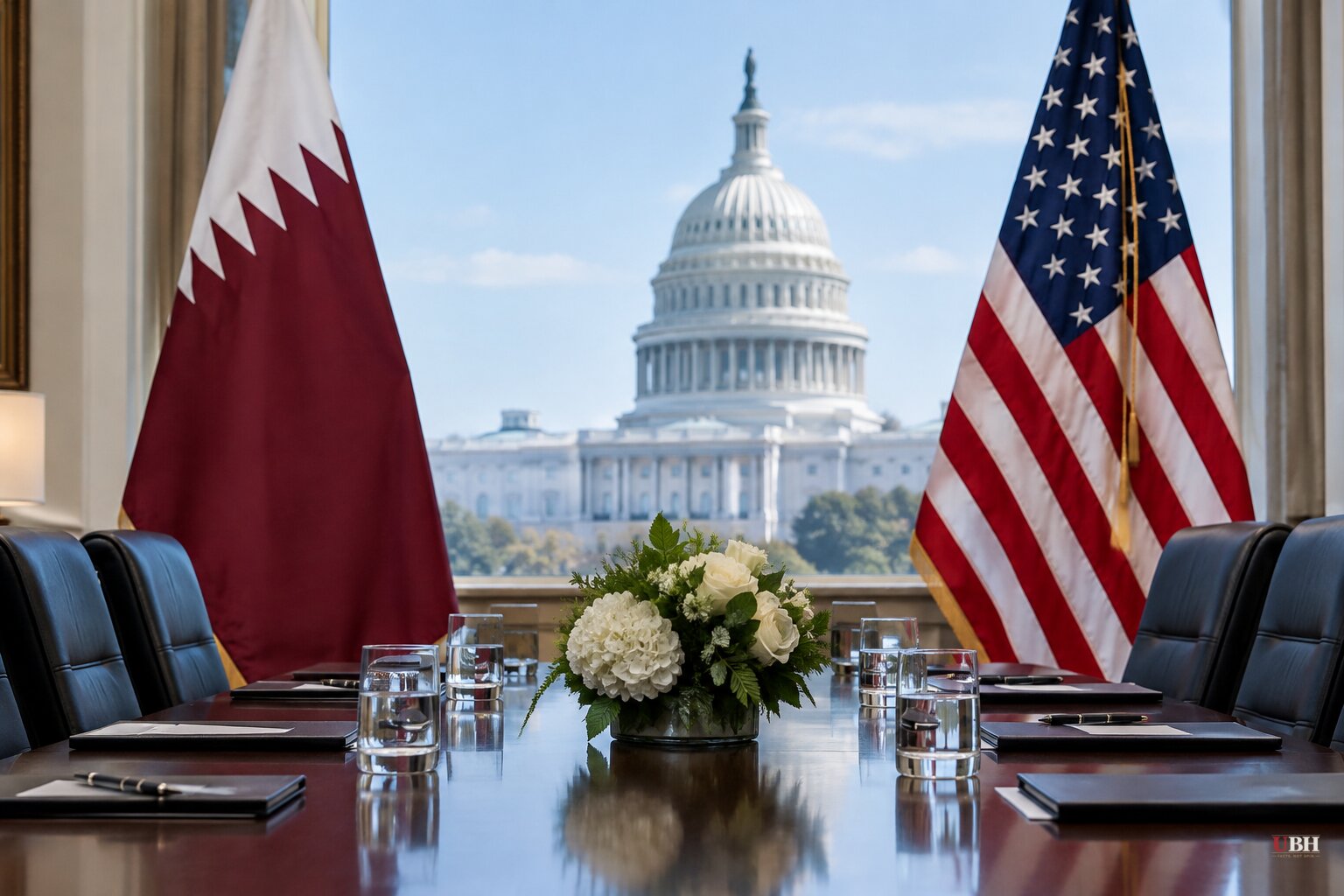
Since the U.S. and Israel attacked Iran on Feb. 28, the war has gone through an April ceasefire and a resumption of U.S.-Iran fighting in July. The latest diplomatic push ran through Washington on Monday, Nov. 9, when Qatar's prime minister and foreign minister, Sheikh Mohammed bin Abdulrahman Al Thani, met President Trump and Vice President JD Vance.
The sheikh said on X that they "discussed the situation in the region and ways to progress the US-Iran talks." He added that he was "grateful for the positive discussions on reaching a deal and bringing peace to the region."
Trump called the conversation "excellent" on Truth Social. "We are seeing positive momentum toward an end to this Conflict," he wrote.
Al Jazeera, citing a source familiar with the talks, reported that the separate meetings produced "good progress." A diplomatic source told the network the aim was to narrow differences between Washington and Tehran.
Tehran Pushes Back
Iran's side did not echo the optimism. An unnamed Iranian official told the semi-official Fars News Agency on Monday that reports of a deal to reopen the Strait of Hormuz in exchange for $8 billion in frozen Iranian assets were false.
The official said Tehran will negotiate only within seven conditions it has already given Washington. Those include lifting the naval blockade and unilateral sanctions, releasing frozen assets and ending the war.
The U.S. position, as Vance stated it, is narrower and aimed at the nuclear program. "We want to make sure they don't rebuild it or try to rebuild it. That's what matters most to the United States," he told reporters at Joint Base Andrews. Vance said Trump retains both military and nonmilitary options and that no deadline for Iran has been set.
That was Nov. 2, the day before the midterms. Trump said then that "Iran wants a settlement, as soon as possible. It could happen!" He told Axios, "One way or the other, we will do something, but there is no rush," and added, "We crippled them financially."
Trump also claimed oil was "DROPPING LIKE A ROCK, down almost $10 a Barrel," because people believe there will be no war. That is his figure and his explanation. The sources do not give an independent price record.
The Vance Problem
The negotiator himself is now a story. On Nov. 4, after Republicans suffered a sweeping midterm defeat, Vance wrote on X: "The reason we lost is the war. The president himself said so last night." He challenged anyone who thinks the war was worth losing the Senate for six years to say so.
He also listed four conditions for winning back former Trump voters: end the war, address inflation, put America first and "change our relationship to Israel." Donald Trump Jr. endorsed the post.
Trump gave a split verdict. Asked about Vance's claim, he said it was "largely true" because the fighting pushed gasoline prices up in the short term, according to the Hudson Institute's account. In a separate interview Trump told the Wall Street Journal, "I would have done it again." He did not accept the Israel demand.
The Journal's editorial board argued the public statements damage the negotiations. "By doing so in public, Mr. Vance signals desperation to Iran's regime, undermining his boss at a critical moment in the war," it wrote. It said the blockade is working and that Vance risks turning a U.S. concession into an Iranian one. "It's hard to see how Mr. Vance can credibly continue as America's lead negotiator with the Iranians," the editorial said.
The board also cited exit polls. They showed 63% opposed attacking Iran, 66% said tariffs hurt the economy and 58% said immigration enforcement had gone too far. Ninety percent called corruption a crucial or major issue, and only 4% ranked foreign policy first.
Vance's defenders have not been quoted in these accounts, but Vance's own words frame his case. He says an honest conversation about where the party goes next "must start" with the war.
The Back Channel
Fox News and Breitbart both reported that Vance sent a letter in late October to Mohsen Rezaei, an Iranian hardliner, to try to restart talks. The reports describe the letter as unconfirmed. The Fox segment aired Oct. 29 alongside discussion of reported U.S. and Israeli preparations for possible strikes.
Two tracks are running at once. One is a Qatari-mediated effort with Vance at the table. The other is a blockade Trump says is strangling Iran's economy and that he sees as a reason not to hurry.
It is unclear whether Iran's seven conditions, which begin with ending the blockade, can be squared with a U.S. demand for verifiable limits on rebuilding the nuclear program. Neither government has said when the next round of talks will take place.
Sources used for this briefing
6 links from 6 independent newsrooms (syndicated copies of the same report count once)
These are the sources it draws on, linked so you can verify.


