
Unbiased headlines. Facts, not spin.
Unbiased Headlines is an independently owned news organization. We bring you the facts, not opinions, written fresh from 110+ named sources. Sources linked so you can verify it yourself.
 defense
Major Story (8/10)
Iran's Rezaei Rules Out Sending Enriched Uranium Abroad, Cites Nuclear Ships and Submarines; Brent Rises 1.3% to $92.71
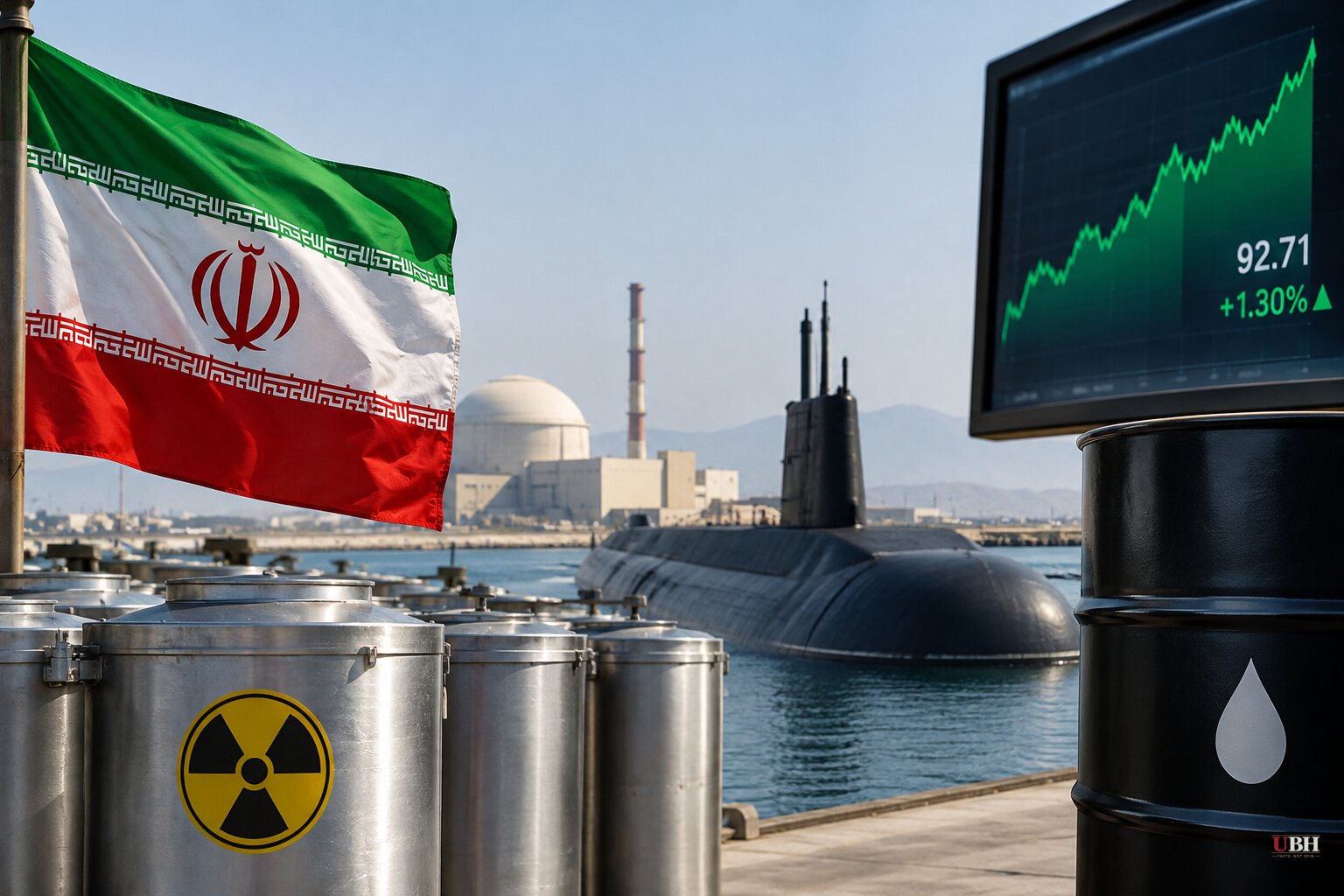
Iran has hardened its public line on enriched uranium as US officials downplay the need for more military action and Trump strikes a more conciliatory tone since the Republicans' defeat in the Nov. 3 midterms. On Wednesday, Nov. 11, security chief Mohsen Rezaei told Lebanon's Al Mayadeen TV that Iran "will not allow even a single particle of enriched nuclear material to leave the country."
He also said there are currently no negotiations between Tehran and Washington.
Nuclear ships and a message to Moscow
Rezaei gave a reason beyond the Supreme Leader's directive, which two senior Iranian sources said in May bars sending near-weapons-grade uranium abroad. "We need the enriched material to design ships and submarines that work on nuclear energy," he said.
He said Tehran has told Moscow the material stays put. "We will use it ourselves," Rezaei said. Russia has previously offered to take uranium out of Iran as part of a deal, but has said the decision belongs to Tehran.
The IAEA estimated Iran held 440.9 kg of uranium enriched to 60% when Israel and the US struck its nuclear facilities in June 2025. How much of that survived is unclear.
Washington's position is that nuclear issues must be part of any initial negotiations aimed at ending the war. A senior Iranian official told Reuters last week that Iran sent the US a nuclear proposal through Qatar, but that it would be discussed only after Washington meets seven demands Iran has laid out.
Rezaei added a new one in the interview: ending the war "on all fronts in West Asia, particularly in Lebanon, is one of our fundamental conditions," according to Iran's Mehr News Agency.
Threats against US bases
Rezaei warned that any new US strikes would be met with attacks on "US bases far away." The Jerusalem Post's account of the interview says he specified that bases in European countries would be targeted if US aircraft launched strikes on Iran from them.
He also claimed Iran has reached an "advanced level in electronic warfare" that lets it take control of American drones and bring them down safely. No evidence for that claim has been offered.
Dueling scorecards
On Tuesday, Defense Secretary Pete Hegseth told reporters that during 40 days of combat the US struck 13,000 targets and destroyed more than 80% of Iran's nuclear industrial base. "Their navy sunk, their air force grounded, their defense industrial base gone," he said. He also said the Strait of Hormuz is under US control.
Iran's Defense Ministry called that a fabrication on Wednesday. A spokesperson said Iran's stockpile "far exceeds the deceptive figures fabricated by Trump and the defeated Pete," and credited "strategic production and upgraded technologies." Iranian officials claimed a month ago that weapons production capacity had risen 250% since the war began, with help from Russia and China.
Neither side has produced evidence for its numbers. Neither the US nor Iran has launched large-scale strikes since the summer, and both claim victory.
The Hormuz claim is also contested by events. Iran continues attacking vessels daily in and near the waterway. The Washington Institute for Near East Policy counted 37 ships attacked in October, the highest monthly total since the war began. On Tuesday, the UK Maritime Trade Operations agency reported a tanker struck northeast of Lima, Oman. Iran's Revolutionary Guards Navy said separately that two tankers caught fire after hitting naval mines on an "unauthorized route."
Oil reverses part of its slide
Brent futures were up $1.22, or 1.3%, at $92.71 a barrel as of 1412 GMT Wednesday. US West Texas Intermediate gained $1.09, or 1.3%, to $87.13. Both had dropped to two-month lows in the previous session.
Brent and WTI are still down about 21% and 17% since the start of the month on hopes of an end to the war.
"Oil prices are being supported by fading hopes of an imminent de-escalation," UBS analyst Giovanni Staunovo said. Sparta Commodities senior analyst June Goh said the key driver is whether Iran engages with US demands for a diplomatic agreement.
Supply data points the other way. US crude stocks rose by 9 million barrels in the latest week, market sources said, citing American Petroleum Institute figures. Official government data is due later Wednesday.
Bessent moves to a military base
Treasury Secretary Scott Bessent has relocated from his Washington-area home to a military base after a series of Iranian threats against his life, according to the Treasury Department. A spokesperson said he "will not be deterred" and remains committed to "Operation Economic Outcast" and the blockade, which the spokesperson said together are "collapsing Iran's economy."
A person familiar with the situation told CBS News that security concerns rose after The Wall Street Journal published an article featuring an online photo that allowed the location of his Georgetown home to be geolocated. That account comes from a single unnamed source.
What comes next
The gap is plain. Washington wants nuclear terms in the first round of talks, while Tehran says the uranium stays in Iran and its own proposal waits on seven preconditions.
Even if a deal is reached, a LSEG Oil Research note dated Nov. 10 says higher flows through Hormuz would still depend on mine clearance, insurance costs and whether shipowners are willing to take the risk.
Sources used for this briefing
8 links from 8 independent newsrooms (syndicated copies of the same report count once)
These are the sources it draws on, linked so you can verify.


