
Original briefings. Zero spin.
Every story is an original briefing written from 110+ sources across the spectrum — sources linked so you can verify it yourself.
 defense
Breaking / Critical (9/10)
Event date: September 9, 2026
defense
Breaking / Critical (9/10)
Event date: September 9, 2026
Iran's Revolutionary Guard Threatens '20 Targets for Every 2 or 3' as Tehran Plans New Hormuz Exclusion Zone
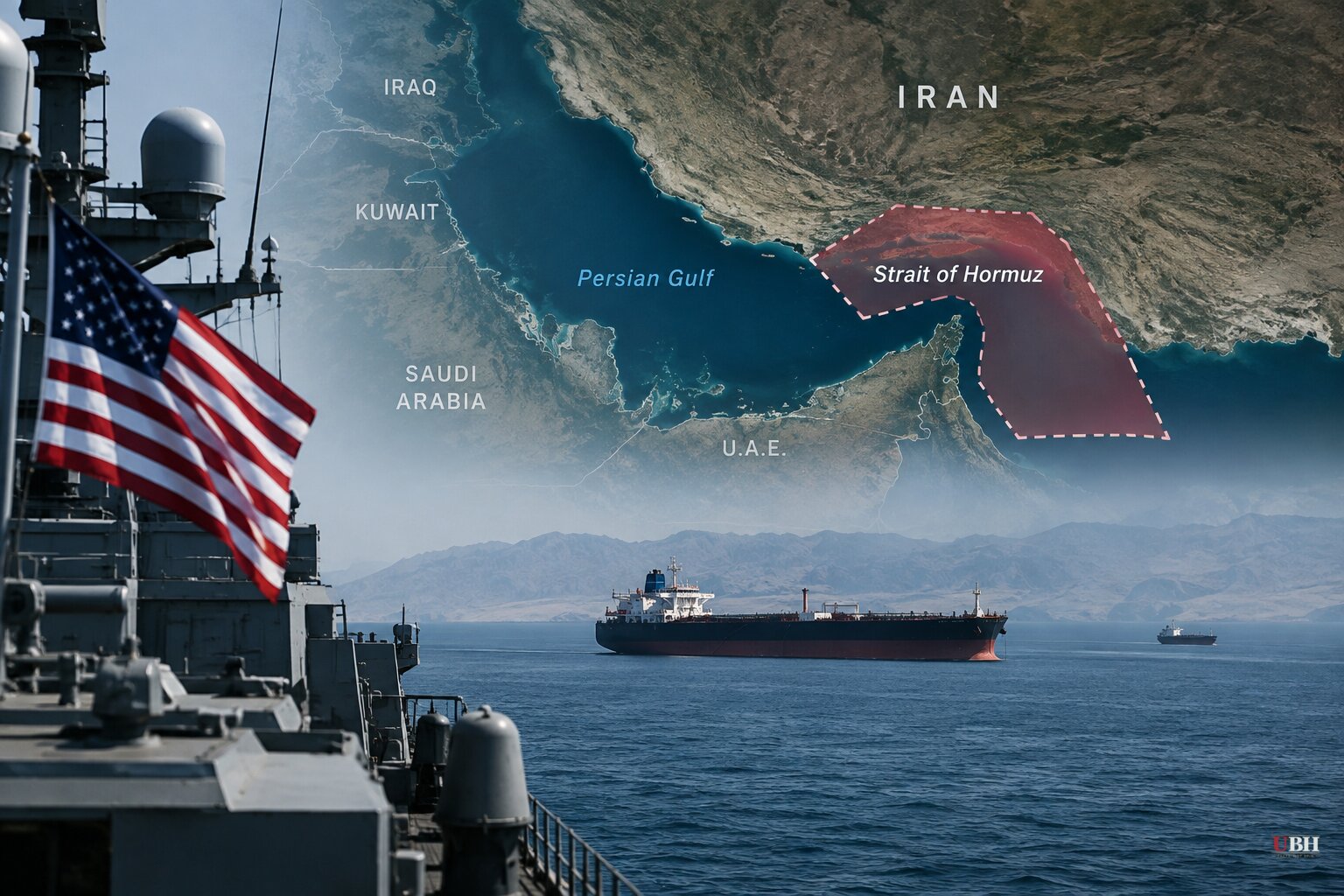
Since U.S. Central Command sank five Iranian oil tankers this week and Jordan's air defenses intercepted 20 incoming ballistic missiles, Iran's military has issued its sharpest escalation threat yet in the six-month-old war.
Brigadier General Hossein Mohebbi, a spokesman for the Islamic Revolutionary Guard Corps, told the semi-official Tasnim News agency that Tehran has "reached a point where if the enemy hits two or three of our targets, we will respond strongly with 20 targets." He said Iran "will use this power to respond to the enemy's aggression and make the enemy regret continuing its aggression," according to Tasnim, as reported by the Epoch Times.
That threat lands on top of a separate Iranian plan already in motion. Mohsen Rezaei, the new head of Iran's Supreme National Security Council, told Iran's state broadcaster over the weekend that Tehran intends to announce an "exclusion zone" outside the Strait of Hormuz aimed at vessels it believes are trying to transit the waterway, according to PBS and the Associated Press. Rezaei said the zone would run from the line of the U.S. naval blockade toward the strait and into the Persian Gulf, and that any ship entering it "with the intention of passing through" would be placed on Iran's sanctions list. As of Rezaei's comments, the zone had not yet been formally declared, only planned for "the coming days and weeks."
The backdrop is CENTCOM's own blockade, which the command says now involves more than 20 warships and has redirected 92 commercial ships while disabling three others, according to PBS. Secretary of State Marco Rubio laid out the U.S. side of the trade bluntly while traveling in Colombia this week: "Iran continues to try to hit U.S. naval ships, and for every time they do that or try to do that, they're going to lose tankers," he told reporters, a line carried by both Fox News and Breitbart.
Defense Secretary Pete Hegseth put the same policy even more plainly in a weekend social media post reported by NPR: "If Iran shoots at U.S. ships, we will destroy (and sink) their oil tankers. All they have to do is not shoot at @USNavy."
CENTCOM named the five tankers destroyed this week as the Charminar, Kaviz, Horizon 1, Riesco and the empty VLCC supertanker Derya, saying crews were ordered to abandon ship before the strikes. TankerTrackers told Fox News the five vessels alone had exported 45 million barrels of Iranian crude and refined products since May 2019. CENTCOM has now disabled 10 tankers in the past week and describes them as part of a "multibillion-dollar shadow network" funding the IRGC.
Iran claims it struck back at 10 vessels near the Strait of Hormuz, including what it says were two U.S. warships, according to the Guardian. CENTCOM flatly denies any U.S. ship was hit, saying "all IRGC attempted attacks failed." A Panama-flagged tanker, the New Andros, was also hit by a drone in Iraqi waters and caught fire before Iraqi rescue boats extinguished it, with no casualties reported, Breitbart and the Guardian both noted. At least one seafarer was reported killed and another missing in the broader wave of strikes.
Iran also fired missiles at a base used by U.S. forces in Jordan. Jordanian officials said 18 of 20 missiles were intercepted, with the other two landing in unpopulated areas. A U.S. official told Fox News correspondent Jennifer Griffin the strikes involved cluster munitions.
Brent crude broke above $100 a barrel for the first time since July, and AAA reported gasoline rose 7 cents to a national average of $4.22 a gallon, while diesel hit an all-time AAA high of $5.94 a gallon. The Guardian reported Wall Street stocks fell on the news, adding that the price pressure is "likely to raise inflation and the price of goods" ahead of a midterm election the paper describes as complicated by an unpopular war and a cost-of-living crisis for the Trump administration.
President Trump has separately called the Iran conflict "small potatoes" and "very intermittent," according to PBS. Whether that description holds up against an all-time diesel price and a Revolutionary Guard commander now threatening tenfold retaliation is a question voters face heading into the midterms.
The unresolved piece is whether Iran actually declares its exclusion zone in the coming days, and whether the IRGC follows through on Mohebbi's 20-for-2-or-3 threat the next time CENTCOM hits a tanker. Neither side has walked back its position, and CENTCOM has given no indication it intends to pause the tanker campaign that Rubio and Hegseth have both publicly committed to continuing.
Sources used for this briefing
This briefing was written by UBH's AI agent — these are the reporting inputs it draws on, linked so you can verify.


