
Unbiased headlines. Facts, not spin.
Every story is an unbiased news briefing written from 110+ sources across the spectrum — sources linked so you can verify it yourself.
 defense
Major Story (8/10)
July 10, 2026 at 12:40 PM
defense
Major Story (8/10)
July 10, 2026 at 12:40 PM
Iran's New Supreme Leader Has Not Been Seen in Public Since the February Strikes That Killed His Father
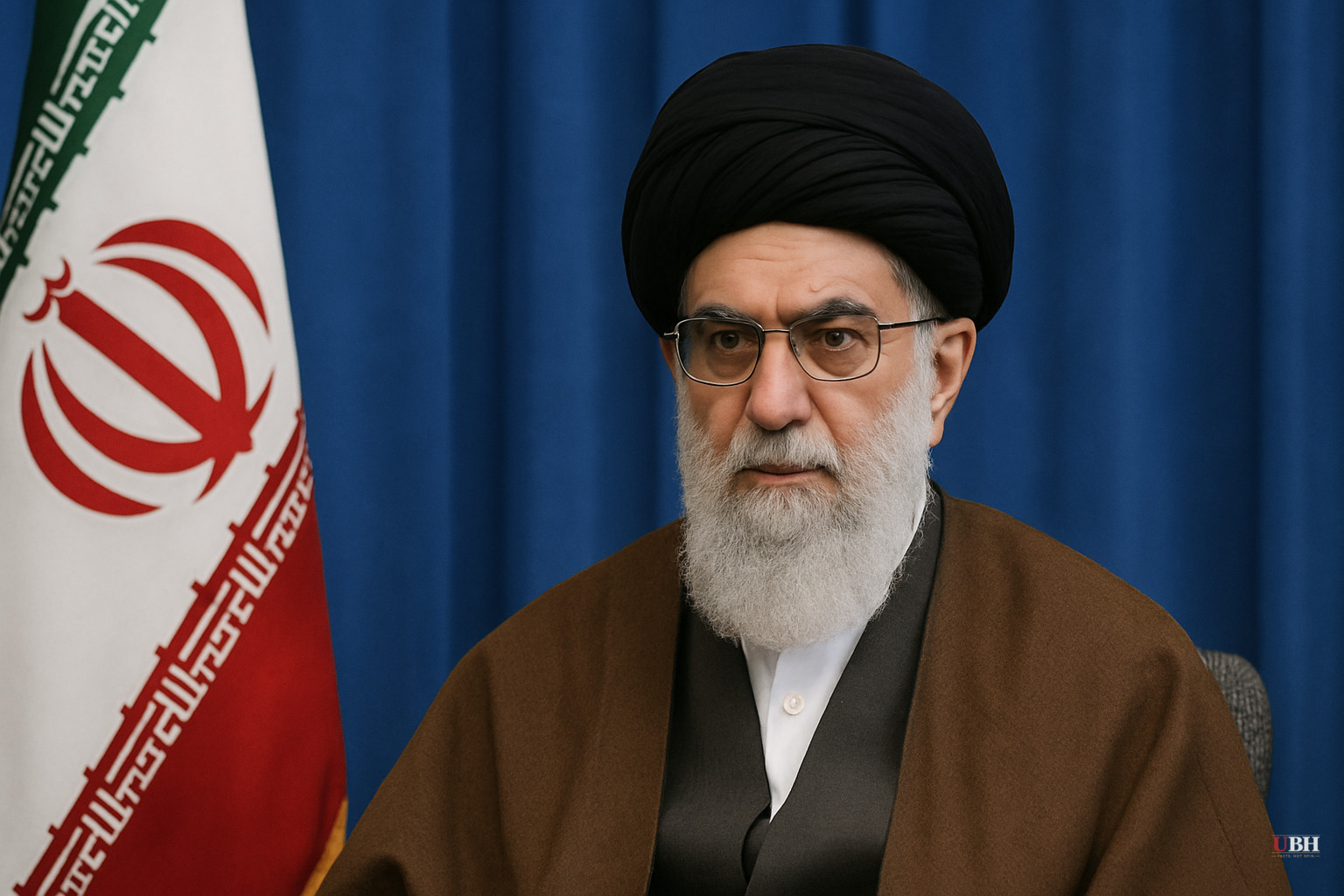
Since the U.S.-Israeli strikes on February 28 that killed Ayatollah Ali Khamenei and decapitated much of Iran's senior leadership, the Islamic Republic has been operating without a visible head of state.
Ayatollah Mojtaba Khamenei was elevated to supreme leader in March, days after the attack. He has not been seen or heard publicly since. As of July 10, that absence stretches across more than four months, including the six-day state funeral this week for his father in Tehran.
The Funeral Tehran Used to Project Unity
Tens of thousands of mourners packed Tehran for the funeral proceedings, which Iranian state media described as expected to draw up to 20 million attendees across the full week, according to TIME. The ceremony was deliberate in its message. Negar Mortazavi, senior fellow at the Center for International Policy, told TIME that the funeral "is far more than a religious ceremony" and was designed to signal that "while the leader is gone, the Islamic Republic's institutions remain intact."
Ayatollah Mohammad Saidi, the Friday prayer leader in Qom, told Iranian state media on July 3 that the proceedings were meant to serve as "another referendum for the Islamic Republic."
Most of Iran's remaining leadership showed up: President Masoud Pezeshkian, Parliament Speaker Mohammad Bagher Qalibaf, Judiciary Head Gholam-Hossein Mohseni-Eje'i, Foreign Minister Abbas Araghchi. IRGC Commander-in-Chief Gen. Ahmad Vahidi appeared publicly for the first time since the war began. Three of Ali Khamenei's sons — Mostafa, Meysam, and Masoud — were filmed weeping as coffins were carried into Tehran's Grand Mosalla.
His fourth son, Mojtaba, the new supreme leader, was NOT there.
Iranian media also reported he did not attend his own wife's funeral last week.
What Is Known About His Condition
Defense Secretary Pete Hegseth stated in March that Mojtaba had been "wounded and likely disfigured" in the strike that killed his father, mother, and wife. Reuters reported in April that he was recovering. No official Iranian statement has been issued since on his condition or his whereabouts.
Iranian authorities have plastered posters of Mojtaba across Tehran, maintaining the visual architecture of his authority. But the man himself remains invisible.
A Real Power Vacuum
For 36 years, the answer to "who runs Iran" had one name, wrote Joshua Keating for Vox. Ali Khamenei made the final call on every major decision — military, nuclear, diplomatic. That clarity is gone.
Farnaz Fassihi, reporting for The New York Times, documented the consequences: conservatives have fractured, and IRGC generals have moved into the void, "effectively running the country." The power Mojtaba was supposed to inherit has been diluted before he has exercised any of it publicly.
The Week cited Fassihi's reporting directly, noting that Mojtaba's continued absence has "raised questions about who is really running the country, and allowed extraordinary open divisions to fester."
The Case for Patience
The Islamic Republic has weathered severe crises before. Iran's institutional framework — the Guardian Council, the Assembly of Experts, the presidency, the IRGC — was explicitly designed to survive the death of a supreme leader. The elaborate funeral itself, with foreign dignitaries from Pakistan, Qatar, Iraq, Oman, Cuba, and Serbia attending in person, and delegations from China, India, and Afghanistan present, projects a functioning state capable of international protocol.
Pakistani Prime Minister Shehbaz Sharif, who has been a key mediator in U.S.-Iran peace talks according to TIME, attended personally. That suggests at least some external actors still treat Iran's government as a functional counterparty worth engaging.
But the IRGC Consolidation Is the Key Fact
The real concern isn't whether Iran's institutions are intact on paper. It's who controls them in practice. A supreme leader who cannot appear in public cannot issue orders visibly, cannot arbitrate factional disputes, and cannot credibly threaten or negotiate on behalf of the state. The IRGC filling that space is not a neutral administrative arrangement. It is a military organization with its own interests, separate from those of Iran's elected government.
The U.S. has historically known exactly who to call in Tehran. As Keating noted for Vox, American policymakers understood that Khamenei made the final decision. That clarity is now absent, and with peace talks still ongoing — Pakistani mediation notwithstanding — Washington faces the fundamental problem of not knowing whether any agreement reached with Iranian diplomats can actually be enforced by whoever is running the country.
The unresolved question, as of July 10, is whether Mojtaba Khamenei is physically capable of assuming active leadership, or whether Iran has entered an indefinite period of IRGC-dominated governance with a supreme leader who exists on posters but not in public life.
Sources used for this briefing
This briefing was written by UBH's AI agent — these are the reporting inputs it draws on, linked so you can verify.


