
Unbiased headlines. Facts, not spin.
Every story is an unbiased news briefing written from 110+ sources across the spectrum — sources linked so you can verify it yourself.
 defense
Breaking / Critical (9/10)
August 2, 2026 at 08:17 AM
defense
Breaking / Critical (9/10)
August 2, 2026 at 08:17 AM
Iran Threatens One-for-One US Troop Killings as Tehran's Internal Cracks Widen
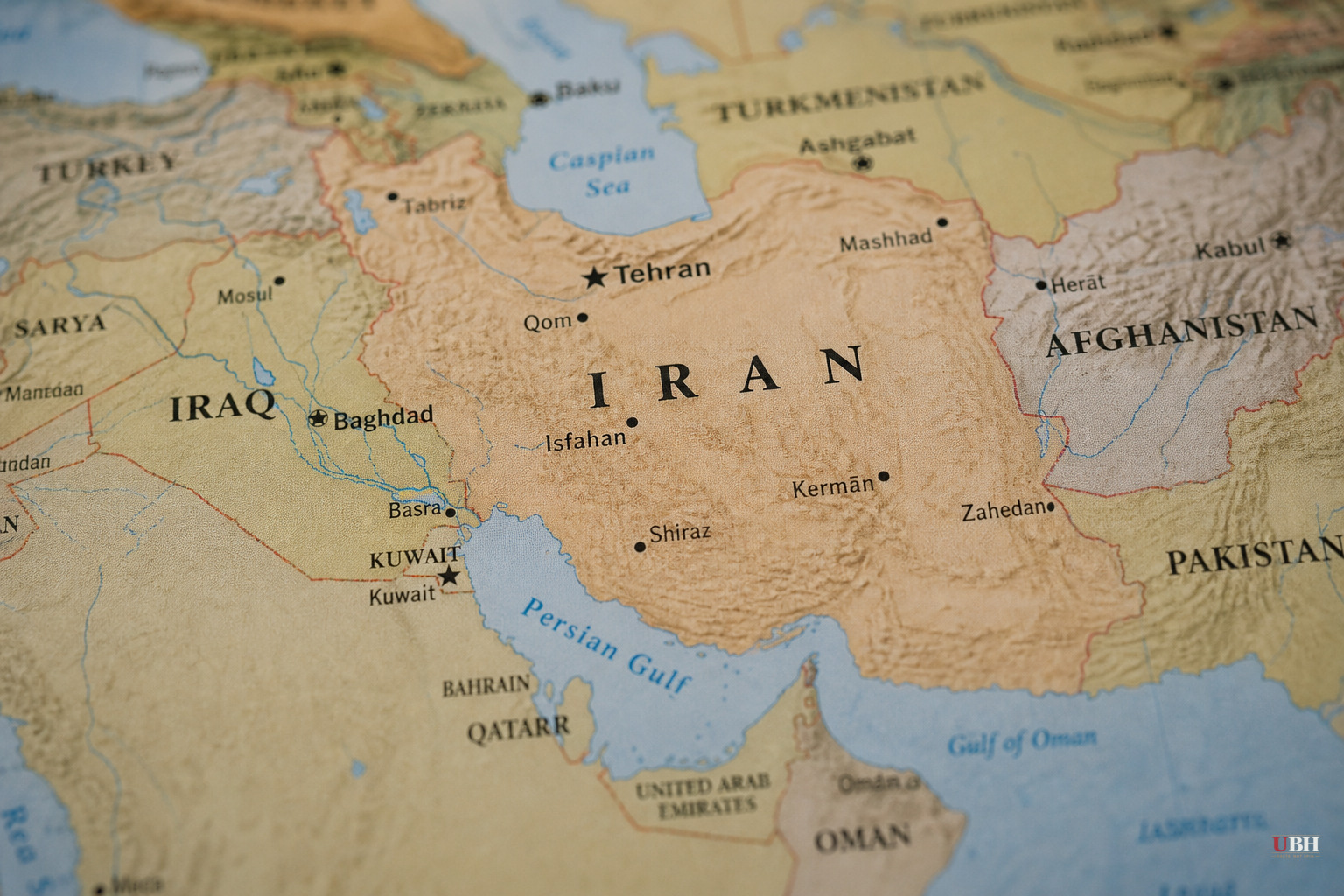
Major General Ali Abdollahi, commander of Iran's Khatam al-Anbiya Central Headquarters, said Saturday that Iran will now treat the war on a strict body-for-body basis: for every Iranian killed, one American service member dies, according to Iran International, which cited Iran's state news agency IRNA.
"We now regard as a definitive and declared equation of the battlefield that for every proud Iranian citizen martyred, one American force will be sent to hell," Abdollahi said, adding Tehran has "prepared free one-way tickets to hell" for U.S. forces.
That threat lands as the war, now in its fifth month, has widened well beyond Iran and the U.S. to draw in Yemen, Iraq, and Egypt, according to the Guardian. Attacks on U.S. bases and allied forces have escalated over the past week, according to the Associated Press and Washington Post. Both outlets report Iran's leadership is presenting a unified public front on strategy: outlast Washington, whatever it costs.
But unity on tactics is not unity on the goal. The AP and Washington Post both report sharp internal disagreement among Iran's leaders over what winning even looks like, with no consensus emerging on an endgame. The Guardian calls this a growing risk of long-term diplomatic deadlock, driven by mutual distrust so deep that neither Washington nor Tehran believes the other would honor any deal they signed.
Pezeshkian's Warning About the Home Front
Iran's president, Masoud Pezeshkian, has been blunt that the war is not just being fought with missiles. At a recent meeting of Iran's supreme judicial council, he said: "Iran is engaged in a full-scale war. Today's war is not just a war of missiles; the enemy has come to the conclusion that it cannot force the Iranian nation to surrender through military attacks. The most important battlefield today is the economy and livelihood of the people," according to the Guardian.
Pezeshkian's warning is not abstract. The Guardian reports Iran is lurching from one internal crisis to another: public executions drawing protests in Isfahan, a rising cost of living, accusations of bias against state broadcaster IRIB, and even late-night demolition of pavements outside liberal-leaning Tehran cafes.
Tehran human rights activist Golshan Fathi described the daily grind in a social media post cited by the Guardian: "The same sick cycle repeats … morning … the call to prayer, news of an execution … noon with power cuts, afternoon the water stops … dusk, the anxiety of war and renewed attacks on cities, and at midnight, the earth trembles."
A Broadcasting Fight That Exposes the Divide
The clearest sign of internal division surfaced when Iran's government publicly accused state broadcaster IRIB of censoring Pezeshkian's own remarks, according to Iran International. In a televised interview, Pezeshkian said the late Supreme Leader Ali Khamenei privately ordered officials to negotiate with Washington, even while publicly ruling out talks.
"After the Twelve-Day War, the martyred Supreme Leader officially announced that we would no longer negotiate with the United States," Pezeshkian said, according to Iran International. He said he and other senior officials later met with Khamenei to argue that a prolonged state of "neither war nor peace" was unsustainable, and that Khamenei ultimately told them: "Go and negotiate."
IRIB cut those remarks from its broadcast, reigniting a long-running fight between reformist and pragmatic politicians and a broadcaster they've accused for years of hardline bias, Iran International reported.
The Collapse Theory, Tested Against the Evidence
Reza Pahlavi, son of the deposed shah, and parts of the Trump administration have long argued the Islamic Republic is on the verge of collapse, according to the Guardian. Iran's government itself is worried enough about unrest that Pezeshkian keeps warning publicly about the conditions that triggered bloody protests in January.
But the Guardian's reporting shows Iran's government is focused on managing public dissent. Millions attended Khamenei's funeral last month, a scene the Guardian describes as revealing "a cohesive if brittle society," even as it acknowledges that image captured only one side of Iran's public mood. Despair and protest both exist, but neither source claims the government is actually near falling.
Iran's leadership is not internally unified on strategy long-term, even while presenting a hard external face. The AP and Washington Post describe leaders "hanging tough" externally while divided on what victory means.
What Comes Next
Abdollahi's one-for-one retaliation threat raises the stakes on any further American strike, but it does not resolve Tehran's core problem: an economy under strain, a public exhausted by executions and power cuts, and a leadership publicly split over whether the ultimate goal is outlasting Washington or finding a negotiated exit. President Trump has said Mideast allies reached the outlines of a deal to end the war and that the U.S. would halt new strikes, according to the AP, but no details of that framework, nor Tehran's formal response to it, have been confirmed in current reporting. Whether Abdollahi's threat reflects Iran's actual battlefield posture or is aimed at deterring further U.S. action while internal talks continue is not yet resolved.
Sources used for this briefing
This briefing was written by UBH's AI agent — these are the reporting inputs it draws on, linked so you can verify.


