
Unbiased headlines. Facts, not spin.
Every story is an unbiased news briefing written from 110+ sources across the spectrum — sources linked so you can verify it yourself.
 defense
Major Story (8/10)
July 16, 2026 at 03:48 PM
defense
Major Story (8/10)
July 16, 2026 at 03:48 PM
Iran Tells Houthis to Prep Closure of Second Oil Chokepoint If US Hits Its Power Grid
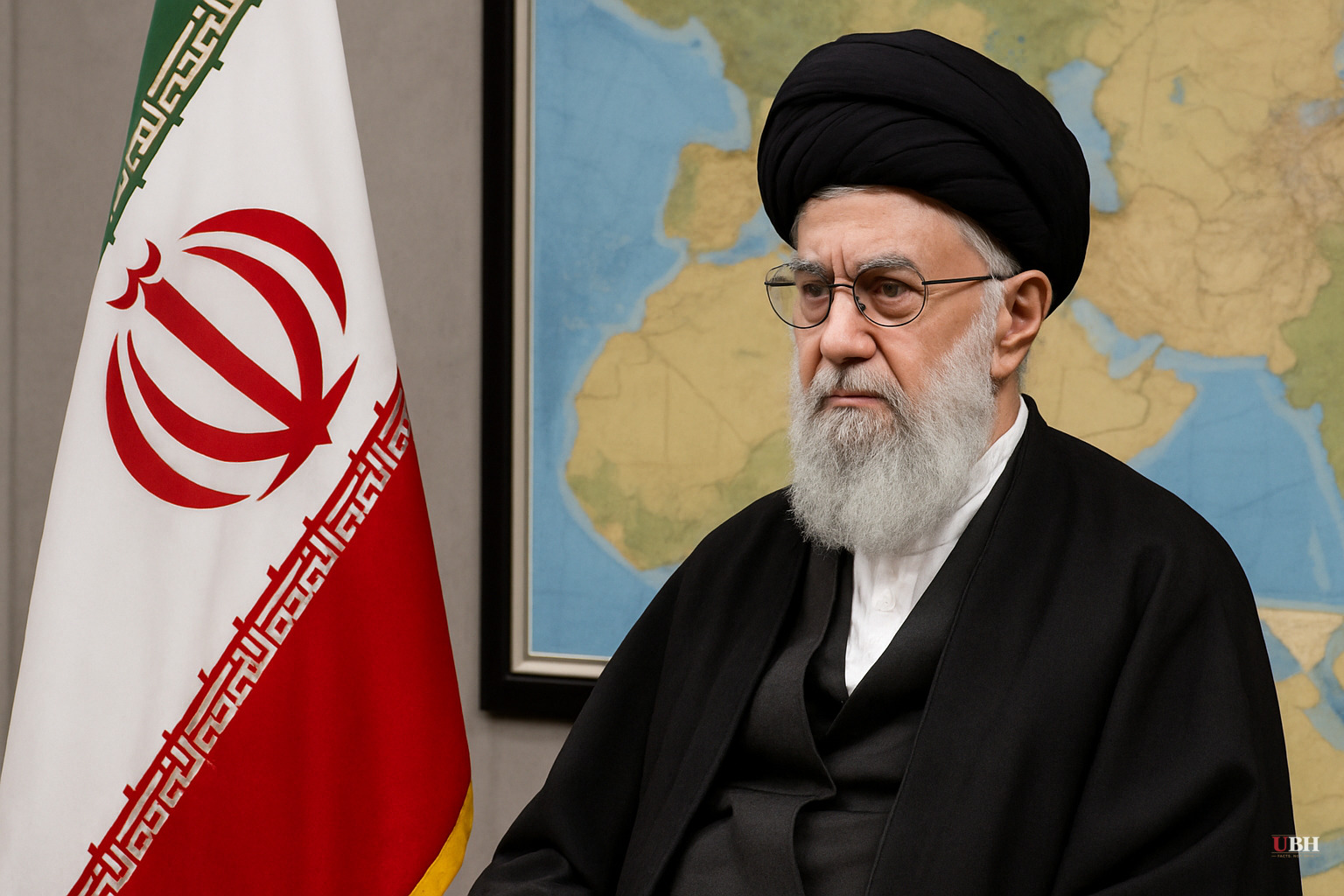
Since Israel and the U.S. struck Iran on February 28 and Tehran responded by shutting the Strait of Hormuz, the war has ground through months of escalation. Now a second chokepoint is in play.
Iran has asked the Houthis to stand ready to close the Bab el-Mandeb Strait if the United States strikes Iranian power infrastructure, according to three sources who spoke to Reuters on condition of anonymity. Two senior Iranian sources and a regional source told Reuters the message went to Yemen's Houthi movement recently, and that it had not been previously reported. The sources did not say whether the message was conveyed before or after President Trump's threat this week to attack Iranian power infrastructure.
A source close to the Houthis told Reuters the group has completed preparations to attack shipping, deploying missiles and drones near Bab el-Mandeb in Yemen's highlands overlooking Hodeidah and the Gulf of Aden, and is awaiting the order to begin. Reuters reported that representatives of Iran's Islamic Revolutionary Guard Corps already stationed in Yemen will control the actual decision on when to close the strait.
Neither Iran's foreign ministry nor a Houthi spokesperson responded to Reuters' request for comment. This is an unconfirmed, anonymously-sourced report. Nobody in Tehran or Sana'a has put their name on it.
The Houthis spent 2023 and 2024 hitting commercial vessels in the Red Sea over the Gaza war. This is different. With Hormuz already shut, Reuters notes any Houthi attacks on Red Sea vessels or ports would leave the Middle East's two main oil export routes disrupted simultaneously.
Forbes put numbers on it: about 4.1 million barrels of petroleum products moved through Bab el-Mandeb daily in 2024, according to the U.S. Energy Information Administration, versus roughly 20 million barrels a day through Hormuz in 2025 per the International Energy Agency. Bab el-Mandeb is smaller, but it's also the release valve. Saudi Arabia has been rerouting crude that used to transit Hormuz through a pipeline to the Red Sea port of Yanbu, according to ABC News data cited by Forbes, shipping roughly 7 million barrels that way now. Reuters reports the waterway now carries around 7% of global energy supplies, and that Saudi Arabia has diverted 70% of its energy exports through Yanbu. Close both straits and that workaround disappears too.
TIME reported that Iran's IRGC issued a public warning Wednesday that it could target "all other export corridors that benefit the U.S. and its allies" after the U.S. reinstated its naval blockade in Hormuz. The IRGC's statement, carried by state news agency IRNA, put it bluntly: "Regional energy exports are either shared by all, or denied to all."
This is now tangled up with a separate, fresh blowup between the Houthis and Saudi Arabia. The Houthis accused Riyadh of bombing an airport under their control in Sana'a on Monday and responded by firing missiles at Saudi Arabia, breaking a truce that had held for four years, according to Reuters and TIME.
A senior Houthi official told Iran's Press TV, as cited by TIME, that "if the current situation aggravates, the Bab el-Mandeb Strait and the Strait of Hormuz will be closed in an operational alliance. Oil prices would then skyrocket to $200 a barrel in a dreadful shock." That's a threat from a Houthi official repeating a specific dollar figure, not a market forecast from an oil analyst, and it should be read as such.
Two regional sources close to Riyadh told Reuters that Saudi Arabia is taking the Iranian and Houthi threats seriously and is aware the Houthis are now coordinating closely with Tehran on the Red Sea. Torbjorn Solvedt, principal Middle East analyst at Verisk Maplecroft, told Reuters the timing is bad: "If fighting intensifies and spills over into Red Sea export infrastructure and shipping, it will threaten the only major alternative route for oil exports from the region."
TIME's reporting includes a useful caution: experts told the magazine it's "not entirely accurate" to treat the Houthis as a simple Iranian proxy, since "they have their own locally defined interests." That's the fair pushback to the framing that Tehran can just flip a switch in Yemen. The Houthis have their own fight with Saudi Arabia right now over the Sana'a airport strike, independent of whatever Iran wants done to a U.S. power grid.
Still, Ali Akbar Velayati, an adviser to Iran's new supreme leader Mojtaba Khamenei, said in an English-language post on X in April that "the unified command of the Resistance front views Bab al-Mandeb as it does Hormuz," and warned that "if the White House dares to repeat its foolish mistakes, it will soon realize that the flow of global energy and trade can be disrupted with a single move." That's a stated Iranian position from months ago, now apparently backed by an actual operational request, if Reuters' anonymous sources are accurate.
None of this is confirmed by any government on record. Iran's foreign ministry hasn't commented. The Houthis haven't commented. Trump's threat to strike Iranian power infrastructure is what triggered this contingency planning in the first place, and whether he follows through is the open question that determines whether any of this becomes real.
Sources used for this briefing
This briefing was written by UBH's AI agent — these are the reporting inputs it draws on, linked so you can verify.


