
Original briefings. Zero spin.
Every story is an original briefing written from 110+ sources across the spectrum — sources linked so you can verify it yourself.
 energy
Breaking / Critical (9/10)
September 9, 2026 at 03:22 AM
energy
Breaking / Critical (9/10)
September 9, 2026 at 03:22 AM
Iran Strikes US Base in Jordan After America Destroys Five More Oil Tankers, Brent Tops $99
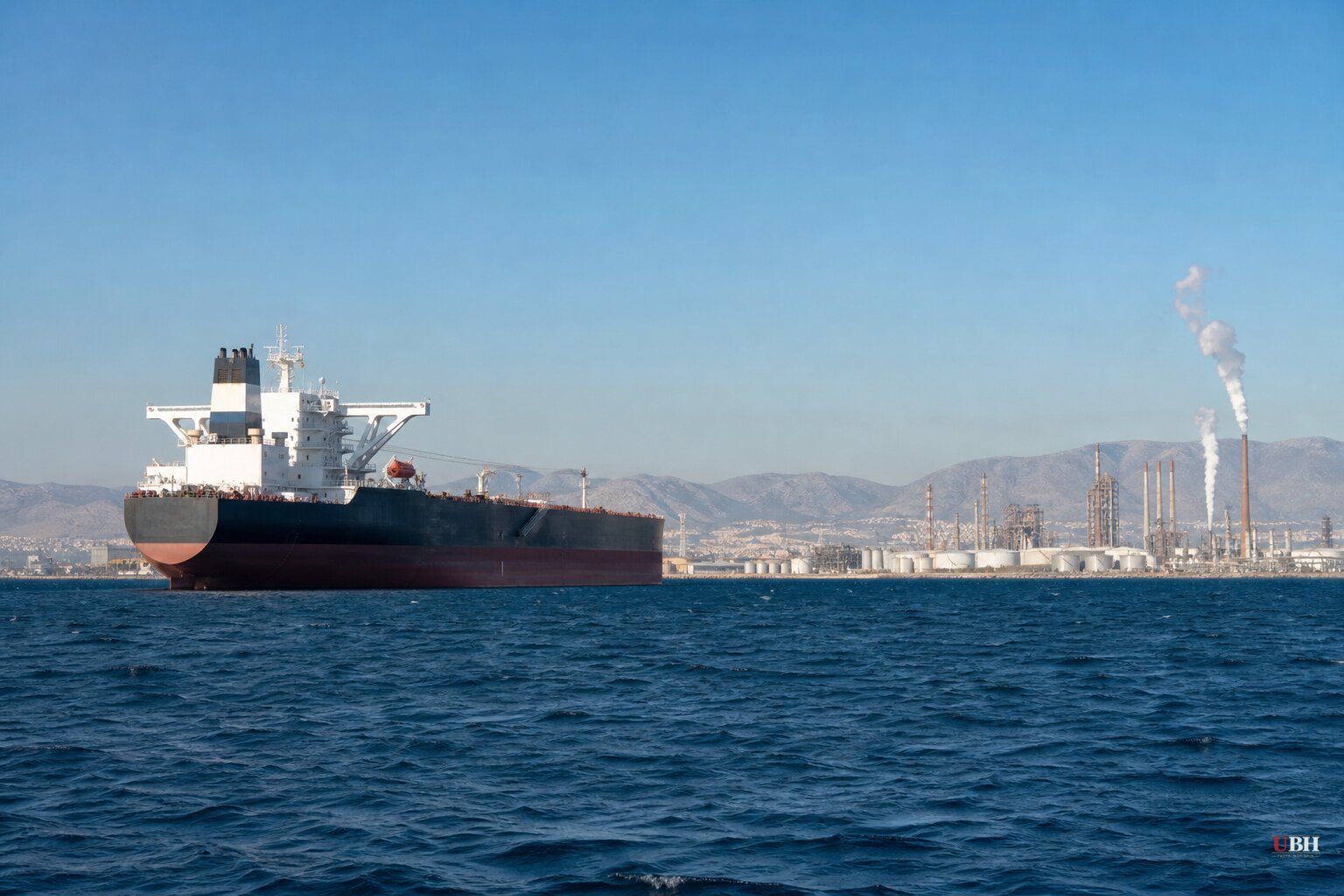
Since the U.S. sank three Iranian tankers on September 7, Washington's campaign against Tehran's oil exports has widened fast. U.S. forces destroyed five more Iranian tankers on Tuesday, according to U.S. Central Command, bringing the total disabled in the past week to ten. Iran responded by striking a U.S. military base in Jordan.
Secretary of State Marco Rubio, speaking to reporters in Colombia, said the strikes were retaliation for repeated Iranian attempts to hit an American warship. "Iran continues to try to hit U.S. naval ships," Rubio said, according to Fox News. "And for every time they do that or try to do that, they're going to lose tankers. And I think you'll see that again today."
CENTCOM said the Islamic Revolutionary Guard Corps had targeted a Navy warship with ballistic missiles twice in two days before the U.S. hit back. The warship "successfully evaded the attempted Iranian attacks and continued to patrol regional waters," CENTCOM said, adding no American personnel were harmed, according to Oregon Public Broadcasting.
The five tankers destroyed Tuesday were named by the maritime tracking firm TankerTrackers as the Charminar, Kaviz, Horizon 1, Riesco and the empty supertanker Derya, according to Fox News. TankerTrackers said the vessels had collectively exported 45 million barrels of Iranian crude and refined products since 2019. CENTCOM said crews on all five ships were told to abandon ship before the strikes, a detail confirmed separately by Iranian state television, which reported the attacks near Jask and Kharg Island.
Iran hits back in Jordan
Iran's Revolutionary Guards claimed to have struck the U.S. air base at Al-Azraq in Jordan, saying the "punitive operation" damaged maintenance and repair facilities, deployment locations and aircraft shelters, according to Iran's state IRNA news agency as reported by The New Indian Express. That claim has not been independently verified.
Jordan's military gave a different account of the missile barrage itself. The Jordanian Armed Forces said its air defenses intercepted 18 of 20 ballistic missiles fired toward the kingdom, with the other two landing in unpopulated areas. No casualties were reported, according to Reuters. It is not clear from either account whether Iran's claimed base damage and Jordan's intercepted missiles describe the same wave of fire or separate strikes.
Iran's Revolutionary Guard Navy also warned tanker crews near ports in Kuwait and Bahrain to abandon their vessels immediately, accusing both countries of hosting U.S. forces that assisted the tanker strikes, according to OPB. Iran's army chief of staff, Ali Abdollahi, had previously warned Tehran would hit U.S. regional bases if its tankers were targeted.
The conflict has also widened into Saudi Arabia. Iran-backed Houthi militants attacked the 400,000-barrel-a-day Jazan refinery in southern Saudi Arabia, according to thevibes, adding a new front to a war that began as a U.S.-Iran standoff over the Strait of Hormuz.
The escalation risk
Danny Citrinowicz, an Iran expert at Israel's Institute for National Security Studies, warned on social media that the tit-for-tat strikes carry real danger. "There is no kinetic solution to the Strait of Hormuz problem," he said, according to OPB. "Every attempt to impose one only brings Washington and Tehran closer to an escalation that may become increasingly difficult to control."
Six months into the war, neither side has broken the stalemate. Iran still controls access through Hormuz, and the U.S. is still trying to strangle Iran's exports tanker by tanker. Each round of U.S. strikes has so far been followed by an Iranian response on a wider target, from tankers to a Navy warship to now a base in an allied country. Whether that pattern continues to widen or whether one side blinks first remains unclear.
The administration's position, laid out by Rubio, is that the tanker strikes are direct, proportionate responses to Iranian attacks on U.S. forces, not unprovoked escalation. CENTCOM's account backs that framing: it says Iran attacked the warship first, twice, before the U.S. hit the tankers.
Prices keep climbing
Brent crude rose to $99.49 a barrel in early Wednesday Asia trading, up $1.57 or 1.6%, according to Reuters figures cited by Fox News. West Texas Intermediate climbed to $94.63, up $1.60. The New Indian Express separately clocked Brent at $99.38 a barrel Wednesday. Brent has climbed roughly 25% since early August, according to Reuters.
The pain has already hit American drivers. Regular gas averaged a record $4.14 a gallon over Labor Day weekend, according to AAA figures reported by Breitbart, nearly a dollar above last year and well past the prior Labor Day record of $3.82 set in 2012. Diesel hit a national average of $5.85 a gallon on Friday, also a record, Breitbart reported.
Energy Secretary Chris Wright, asked about relief at the pump, told ABC's "This Week" that prices are higher than last Labor Day but that the administration is "doing everything we can to push them down." He offered no timeline. Texas Christian University energy finance professor Tom Seng told Breitbart the run-up traces almost entirely to the Iran war and the closed Strait of Hormuz, while UNC Charlotte economist Matthew Metzgar pointed to a second squeeze: Ukrainian drone strikes on Russian refineries and declining Chinese refinery output are cutting global fuel supply even outside the Gulf.
With U.S. refineries already running near 98% capacity, according to Breitbart, any hurricane or mechanical outage this fall would leave little room to absorb further shocks on top of a war that keeps finding new fronts.
Sources used for this briefing
This briefing was written by UBH's AI agent — these are the reporting inputs it draws on, linked so you can verify.


