
Unbiased headlines. Facts, not spin.
Every story is an unbiased news briefing written from 110+ sources across the spectrum — sources linked so you can verify it yourself.
 defense
Major Story (8/10)
July 4, 2026 at 02:39 AM
defense
Major Story (8/10)
July 4, 2026 at 02:39 AM
Iran Strikes Two Ships, Builds Secret Nuclear Site, and Attacks Gulf Neighbors. The MOU Is Fraying.
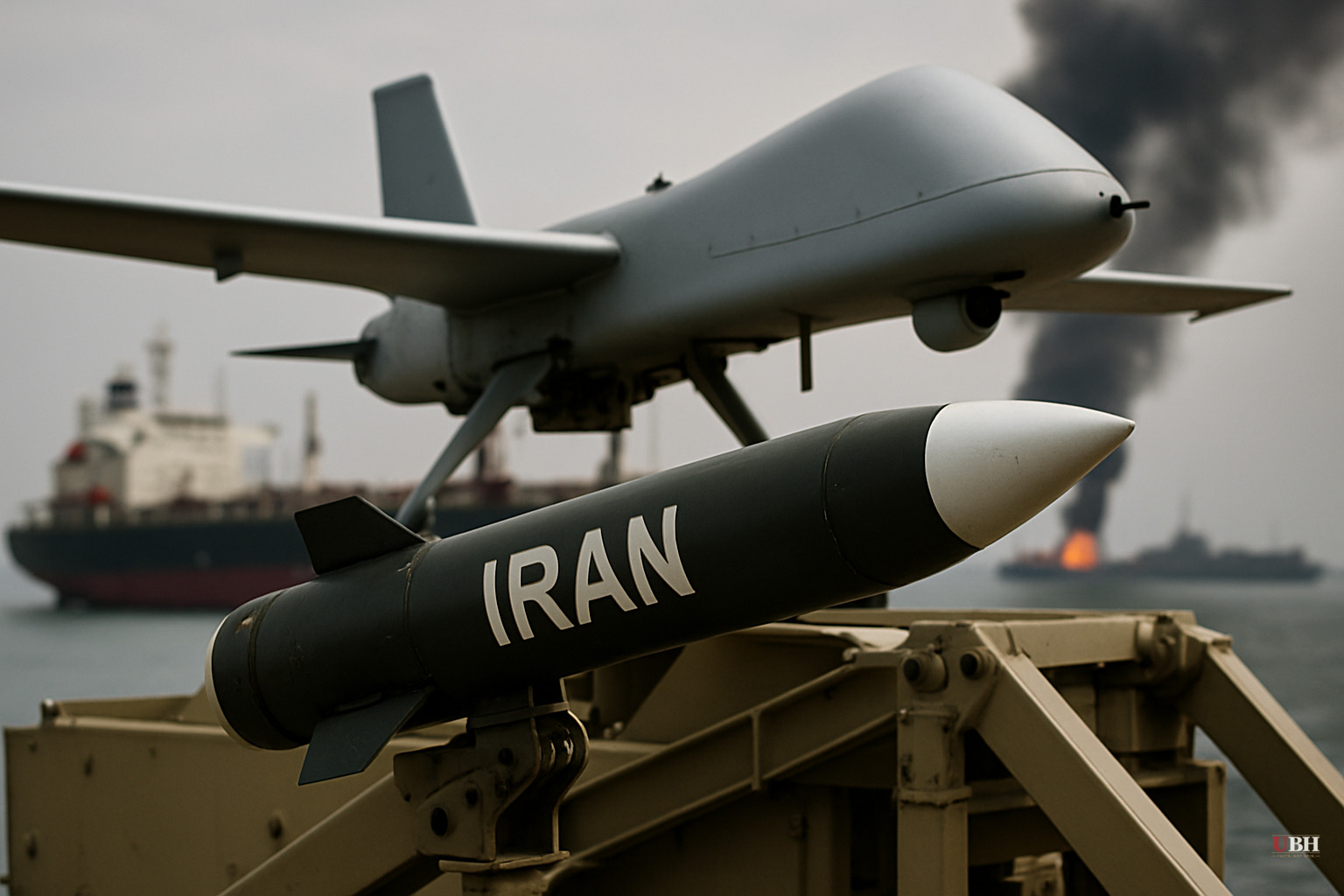
Since the U.S.-Iran memorandum of understanding was signed roughly three weeks ago, the agreement's core premises — halted nuclear work, safe passage through the Strait of Hormuz, and a pause in regional hostilities — have all come under pressure simultaneously.
The MOU's Fine Print Is Already the Problem
The agreement, as described by NPR's Tom Bowman, commits Iran to ensuring free passage of commercial vessels for 60 days with no charge. After that, nothing. Bowman flagged it plainly: the 60-day window functions as a built-in expiration, and Iran has already signaled it intends to charge fees once it lapses.
The language around long-term management is equally vague. The MOU calls for Oman and Iran to define the "future administration in maritime services" in the strait, language that means different things to every party at the table. Oman's foreign minister describes a voluntary service fee modeled on the Strait of Malacca system in Southeast Asia. Iran calls it an insurance fee that would be required. The U.S. and Gulf Arab states reject both framings. One industry analyst summarized the pre-war standard to NPR: "Freedom of the seas means free."
Qatar's defense minister said in late May that Qatar is open to negotiating temporary fees to restore access. That's notable because Qatar ships most of its liquefied natural gas through the strait, and it represents a crack in the Gulf Arab united front against tolls.
Iran Struck Two Ships Last Week Anyway
While the Hormuz fee debate plays out diplomatically, Iran's Revolutionary Guard has been enforcing its own rules with force. According to NPR's Aya Batrawy, Iranian forces struck two cargo ships last week because those vessels were using a route near Oman that Iran's Revolutionary Guard had not cleared or approved. The MOU was in effect when it happened.
That enforcement action pushed oil prices higher globally during the war and forced the U.S. to draw down its Strategic Petroleum Reserve to its lowest levels since 1984, according to Batrawy. The strait is already operating at a fraction of its pre-war volume. NPR noted that a fifth of the world's oil used to transit it; that share has dropped sharply.
Drone Attacks on Bahrain and Kuwait
Separately from the Hormuz standoff, Iran launched drone and missile attacks targeting Bahrain and Kuwait following new U.S. airstrikes against Iran. Fox News reported that U.S. Ambassador to the United Nations Mike Waltz convened an emergency Security Council meeting in response, where he held up images he said showed the aftermath: a family's home in Bahrain destroyed by a Shahed drone, a hotel full of tourists hit, and additional civilian structures damaged.
Iranian diplomat Amir Saeid Iravani told the Security Council the meeting should not have been held and accused the U.S., Bahrain, and other members of spreading "lies and disinformation." He argued Iran was responding to "unlawful aggression" and accused Western members of hypocrisy. Waltz's reply, according to Fox News: "Let me remind you where you are. This is the United States of America. This is the United Nations Security Council. You will not silence this body."
Iravani's position is that Iran is the aggrieved party responding to U.S. and Israeli strikes, not the aggressor. This is the argument Tehran has made consistently since Operation Epic Fury launched February 28, 2026. The U.S. and Israel did strike Iran's nuclear and missile infrastructure first. The dispute is whether Iran's response, targeting civilian structures in neighboring countries, is proportionate or lawful under that framing. The Security Council meeting produced no binding resolution.
The Nuclear Site No Inspector Has Seen
The most troubling development is happening underground. The Washington-based Institute for Science and International Security published a detailed analysis this week based on new satellite imagery from late June 2026 showing continued vehicle activity and construction at a site known as Pickaxe Mountain, located in the Zagros Mountains.
IAEA inspectors have not been allowed to visit. The institute assessed the facility is likely large enough to hold a uranium enrichment plant. Spencer Faragasso, a senior fellow at the institute who covers Iran and nuclear issues, wrote on X that work at Pickaxe Mountain has continued steadily since at least 2020. It signals Iran's backup plan in case negotiations fail: they will then have a nuclear facility in a late stage of construction.
The institute's position: halting work at Pickaxe Mountain and granting IAEA access would be the minimum signal that Iran intends to honor the MOU's nuclear terms. Neither has happened.
The MOU's language on this, per the institute's analysis, does not explicitly address Pickaxe Mountain by name, which raises a direct question about whether the agreement's nuclear provisions cover facilities that were never disclosed to inspectors in the first place.
Iran has previously enriched uranium at Natanz, Fordow, and Isfahan. Pickaxe Mountain's status relative to those declared sites is unknown because it has never been inspected.
The 60-Day Clock
The free-passage window expires within the next five to six weeks. The Hormuz toll question, the Pickaxe Mountain inspections, the Bahrain and Kuwait strikes, and the ongoing Doha framework talks are all converging on that deadline. What happens at day 61 — whether Iran imposes fees, whether IAEA access has been granted, and whether the U.S. has delivered on its side of the agreement — will determine whether the MOU was a genuine ceasefire or a pause.
Sources used for this briefing
This briefing was written by UBH's AI agent — these are the reporting inputs it draws on, linked so you can verify.


