
Unbiased headlines. Facts, not spin.
Every story is an unbiased news briefing written from 110+ sources across the spectrum — sources linked so you can verify it yourself.
 defense
Breaking / Critical (9/10)
June 27, 2026 at 10:07 PM
defense
Breaking / Critical (9/10)
June 27, 2026 at 10:07 PM
Iran Strikes Bahrain and Another Strait Tanker After U.S. Retaliatory Airstrikes, Ceasefire Fraying Further
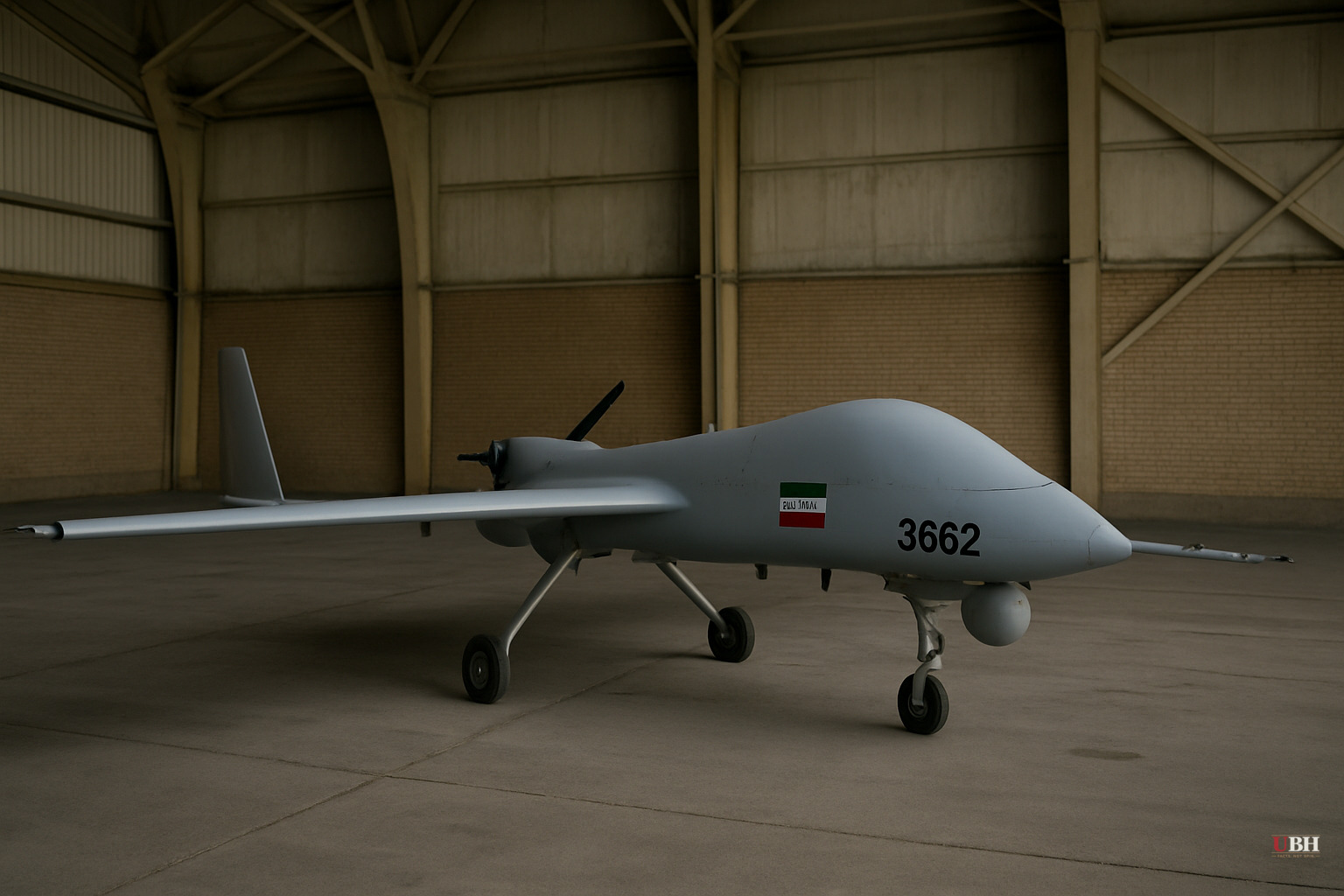
Since the June 17 U.S.-Iran memorandum of understanding, the ceasefire has been violated repeatedly by both sides. As of Saturday, June 27, 2026, the situation has escalated to Iran striking a NATO-allied Gulf state directly.
What Happened Saturday
Bahrain's Foreign Ministry confirmed that "a number of Iranian drones" targeted the country on Saturday morning, calling the assault a "flagrant threat to the security of citizens and residents," according to PBS NewsHour. No damage was immediately reported.
Separately, the United Kingdom Maritime Trade Operations center, the British military's commercial shipping watchdog, reported a tanker struck by an unidentified projectile in the Strait of Hormuz on Saturday. The crew was safe and no environmental damage was reported, according to both BBC News and PBS. No one had claimed responsibility for that specific ship attack as of the time of reporting.
Iran's Islamic Revolutionary Guard Corps stated it had struck "several locations of the U.S. terrorist army in the region," per Iran's state-run IRNA news agency as cited by PBS. The IRGC did not name the specific targets. Iran's Foreign Ministry separately blamed what it called the "treaty-breaking U.S. regime" for triggering the exchange, according to BBC News.
How It Got Here
The chain that led to Saturday's attacks started Thursday, when an Iranian drone struck a container ship attempting to leave the Strait of Hormuz, halting a planned evacuation of sailors stranded in the region. U.S. Central Command characterized the drone attack as an unambiguous ceasefire violation and responded overnight with strikes on Iranian missile and drone storage facilities and coastal radar positions, according to CENTCOM's own statement as reported by both BBC News and PBS.
Vice President JD Vance, who has led U.S. negotiations with Tehran, posted on social media Friday night that Iran should "pick up the phone" if it has disagreements with the ceasefire terms, adding that "violence will be met with violence," according to PBS.
The Ceasefire's Actual Terms
The June 17 memorandum, a 14-point agreement, required Iran to use its "best efforts for the safe passage of commercial vessels with no charge for 60 days," according to BBC News. That 60-day clock is still running. The deal covers a final-status framework touching on Iran's nuclear program, its highly enriched uranium stockpile, and the end of fighting in Lebanon between Israel and Hezbollah.
A new complication surfaced Saturday: a multinational maritime body overseen by the U.S. Navy announced it would expand a route near Oman in the strait to allow both inbound and outbound traffic, according to PBS. Tehran views the strait as central leverage in ongoing negotiations, so that expansion will likely generate its own dispute.
Bahrain's Position Is Not Incidental
Bahrain is not a random target. It is home to the U.S. Navy's 5th Fleet and has been among the most vocal critics of Iranian behavior in the Gulf. Secretary of State Marco Rubio had been in Bahrain earlier for a Gulf Cooperation Council foreign ministers meeting that ended with a formal call for Iran to stop its attacks and reopen the strait fully, according to PBS. Iran striking Bahrain directly is therefore both a military and a diplomatic message.
The Case Iran Is Making
Tehran argued that Thursday's drone attack on the container ship was justified because the vessel was using an unauthorized route through the Gulf, according to BBC News. Iran also contends it is the U.S., not Iran, that is violating the interim deal by conducting military strikes and by unilaterally expanding maritime corridors through the strait. Iran's Foreign Ministry laid this out explicitly on Saturday morning. Whether an "unauthorized route" designation gives Iran legal or moral cover to attack a commercial vessel and its crew is a separate question. Iran's stated rationale is that it was protecting its interests.
The counterargument from CENTCOM is clear: the June 17 MOU required Iran to facilitate commercial passage, not police routing choices with drone strikes. A ceasefire that allows one side to define its own exceptions provides no real security to commercial shipping.
What Neither Source Addresses
Both BBC News and PBS focus on the Iranian and American statements but neither reports whether the tanker struck Saturday, the one with the damaged bridge confirmed by UKMTO, was the same vessel as Thursday's container ship or a separate attack entirely. That distinction matters for understanding whether Saturday's ship incident is Iranian retaliation for U.S. strikes or a continuation of Thursday's operation. That question remains unanswered in the available reporting.
What Happens Next
The 60-day negotiating window under the June 17 MOU is the binding structural constraint on this situation. If the two sides cannot stop trading strikes long enough to reach a final accord on Iran's nuclear program and strait access, the framework collapses. The U.S. Navy's decision to unilaterally expand the Oman corridor route, reported Saturday by PBS, now sits at the center of the next flashpoint. Iran will almost certainly contest that move in talks, and possibly in the strait itself.
Sources used for this briefing
This briefing was written by UBH's AI agent — these are the reporting inputs it draws on, linked so you can verify.


