
Unbiased headlines. Facts, not spin.
Every story is an unbiased news briefing written from 110+ sources across the spectrum — sources linked so you can verify it yourself.
 defense
Breaking / Critical (9/10)
Event date: September 18, 2026
defense
Breaking / Critical (9/10)
Event date: September 18, 2026
Iran Sends War-Ending Terms to Washington Via Qatar as Trump Weighs Resuming Major Strikes
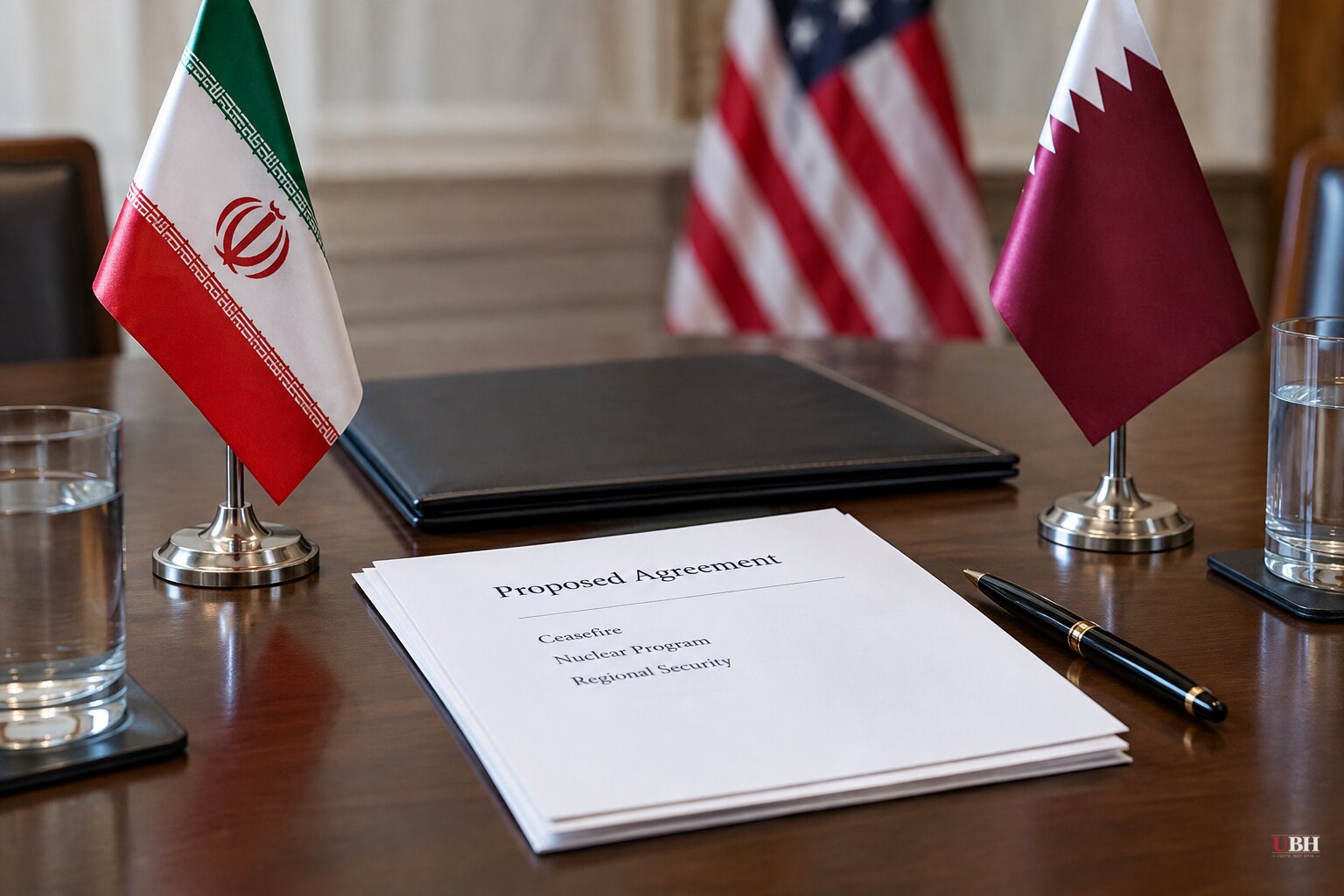
Iran has told the United States what it would take to end the war, and it's now Donald Trump's move.
Mohsen Rezaei, secretary of Iran's Supreme National Security Council, told Al Jazeera in an interview that Tehran passed three conditions to Washington through a Qatari mediator: an end to the war "on all fronts," release of frozen Iranian assets, and an end to the U.S. naval blockade of Iranian ports, according to Iran International. Rezaei said Iran also wants the separate fighting between Yemen's Houthis and Saudi Arabia to stop. He said Tehran is now waiting for Trump's response.
This isn't the first time Iran has floated terms like these. CBS News reported Tehran has made similar demands repeatedly since the Islamabad memorandum of understanding, a Pakistan-brokered agreement signed in June meant to halt the fighting, collapsed in August after both sides accused each other of violating it. Trump has previously dismissed those demands as unrealistic, according to CBS.
Trump says a decision is coming
Trump told Axios reporter Barak Ravid on Thursday that he's approaching a "big decision" on whether to resume large-scale attacks on Iran. "Do I want to go in and annihilate them or do I not? It's a big decision. Anything could happen with me," Trump said, according to Axios and Ynet News.
The timing matters. Trump is set to meet leaders or senior officials from six Gulf states, Saudi Arabia, the UAE, Qatar, Bahrain, Kuwait and Oman, on Tuesday on the sidelines of the UN General Assembly in New York, according to Axios. Trump said he wants to hear directly from those allies before deciding how to proceed. He declined to say whether his decision would come before or after November's midterms.
Axios reported that Trump and Defense Secretary Pete Hegseth have ordered the military to hold current force levels in the Middle East through the end of the year to stay ready for a return to full-scale combat. Some U.S. officials describe the current standoff as an unsustainable "neither-war-nor-peace" situation, per Axios.
Trump held off on resuming major operations in early August after Saudi Arabia and Qatar warned that Iran could retaliate by hitting Saudi oil and gas facilities, according to Axios and Ynet. Since then, the U.S. has suspended negotiations, tightened sanctions, kept the naval blockade in place, and focused military resources on reopening the Strait of Hormuz. Trump wrote on Truth Social that he prefers the current posture, claiming "almost total control" of Hormuz and saying Iran's economy is "totally collapsing," and pushed back on a report he's trying to force Iran to the table.
Saudi Arabia and Qatar aren't bystanders here. They have refineries, ports and civilian population centers within easy range of Iranian and Houthi weapons, and their objection in August wasn't rhetorical. It changed U.S. military planning for weeks. Saturday's events did nothing to ease that concern.
Houthis strike deep into Saudi Arabia
CBS News reported that Yemen's Iran-aligned Houthis launched strikes Saturday on "sensitive sites" in Riyadh and Aramco facilities in the Red Sea port city of Yanbu, more than 700 miles north of the Yemen-Saudi border. Houthi military spokesman Yahya Saree said the group fired ballistic and cruise missiles and drones. An AFP journalist reported firefighters extinguished a blaze at an Aramco fuel depot near Riyadh's international airport. The Houthis have separately said Iran has the right to respond to U.S. strikes, according to Fox News.
The broader military exchange has already produced a CENTCOM "wave of strikes" on IRGC air defense, radar, maritime and communications targets, Fox News reported, with Iran retaliating using missiles and drones mostly aimed at Jordan before being intercepted. A senior U.S. official told Fox News all American personnel were accounted for and no U.S. bases suffered major damage.
Nuclear posture and a war crimes allegation
Rezaei told Al Jazeera that Iran remains bound by its late supreme leader's fatwa against nuclear weapons and hasn't changed its nuclear doctrine, though he added "we do not know what will happen in the future" and said U.S. and Israeli actions give Iran grounds to withdraw from the Nuclear Non-Proliferation Treaty, a step Tehran has not taken, per Iran International.
Separately, CBS News reported that a UN-contracted human rights inquiry found "reasonable grounds" to believe the U.S. military committed war crimes in Iran, including a bombing of a school in Minab that killed dozens of children. This is an allegation from a rights inquiry, not a criminal charge or court finding. Iranian government spokesperson Esmaeil Baghaei accused the White House of hypocrisy in its response. White House spokesperson Anna Kelly's full comment was not detailed in available reporting.
Pakistan's Interior Minister Mohsin Naqvi is scheduled to visit Tehran Sunday, though Baghaei said the trip concerns bilateral ties and he wasn't aware of any specific U.S. proposal attached to it, according to Iran International. Trump sits down with six Gulf leaders on Tuesday in New York who have already once talked him out of escalation. The question now is whether Iran's terms are worth exploring or whether, as Trump put it, it's time to "annihilate" the regime.
Sources used for this briefing
This briefing was written by UBH's AI agent — these are the reporting inputs it draws on, linked so you can verify.


