
Original briefings. Zero spin.
Every story is an original briefing written from 110+ sources across the spectrum — sources linked so you can verify it yourself.
 defense
Major Story (8/10)
August 30, 2026 at 08:27 AM
defense
Major Story (8/10)
August 30, 2026 at 08:27 AM
Iran Says Hormuz Reopening Still Hinges on US Compliance, CENTCOM Claims It Already Controls the Strait
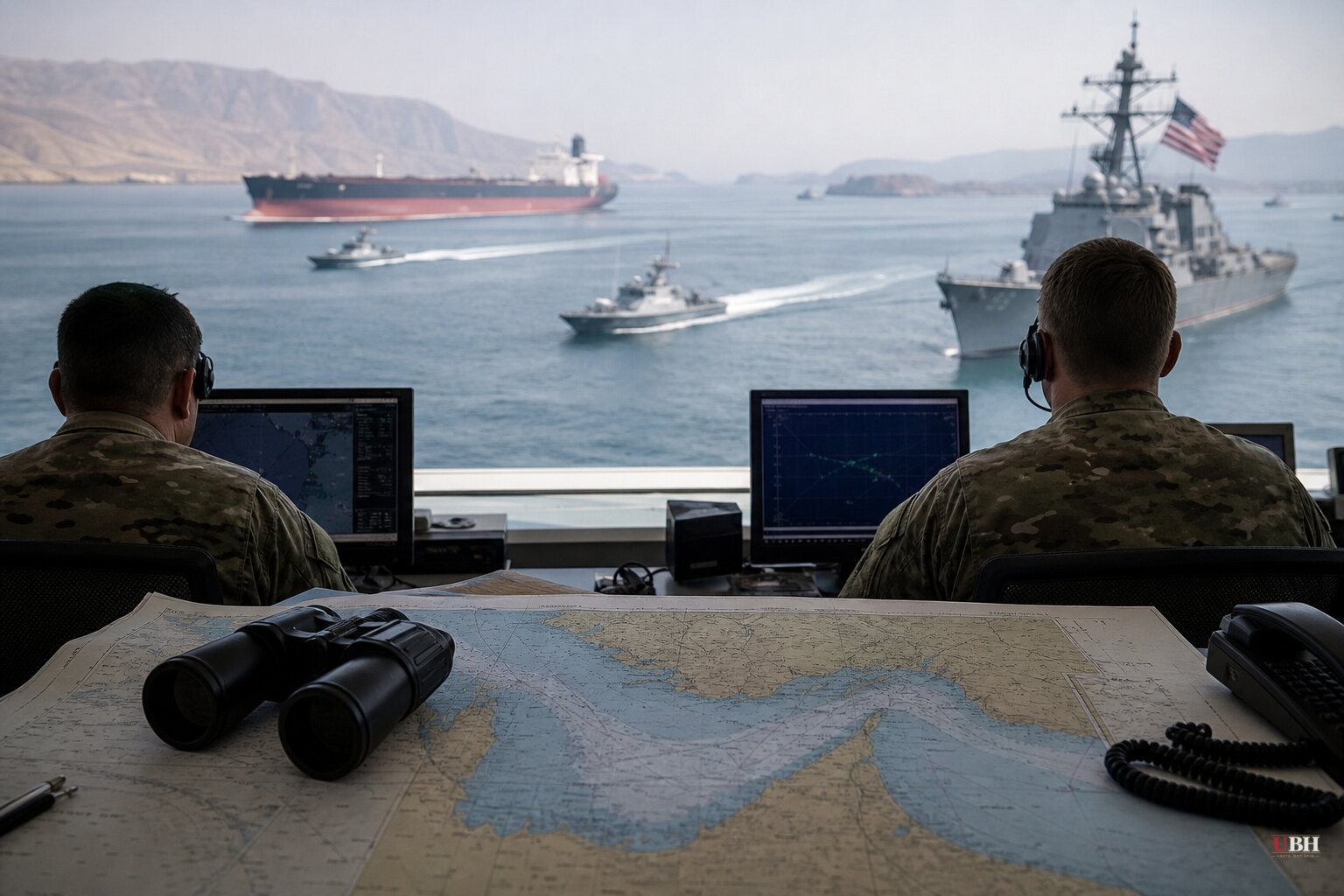
Since Iran's Aug. 10 refusal to reopen the Strait of Hormuz without US concessions, Tehran has kept negotiating a transit arrangement with Oman while insisting the strait stays shut until Washington delivers. Over the weekend, Iranian officials repeated that position with new specifics, and the U.S. military pushed back with a competing claim about who actually controls the waterway.
What Iran Says Now Iranian President Masoud
Pezeshkian said Friday, Aug. 28, that Tehran and Oman had agreed on a passage route through Hormuz and that Iran's Supreme National Security Council approved it 12 to 1, according to Anadolu Agency, citing Iran's IRNA. Pezeshkian said the route has already been communicated to Iran's supreme leader but that reopening the strait still depends on the U.S. lifting sanctions, releasing frozen Iranian assets, restarting $300 billion in planned investment, and ending the war in Lebanon. Pezeshkian added that Iran's imports and exports have dropped 25% to 35% since the blockade began, though he said Iran managed to export nearly 90 million barrels of oil during the brief window the U.S.-Iran memorandum was in effect before it collapsed last month. Kazem Gharibabadi, Iran's deputy foreign minister for legal and international affairs, reinforced that message on Aug. 30, telling Iran's IRIB that the Oman understanding "will not be implemented automatically" and blaming the U.S. for walking away from diplomacy "for the third time in the past 16 months," according to Pars Today. Gharibabadi flatly rejected reports of normal shipping traffic, saying "the Strait of Hormuz is completely closed" and that any vessel passing through is doing so only "with the coordination and authorization" of Iran's armed forces.
CENTCOM Says Otherwise That claim runs straight into a competing account from U.S
Central Command. Admiral Bradley Cooper, CENTCOM's chief, announced Friday that the Navy has cleared all of Iran's mines from the strait, according to Breitbart. Cooper said U.S. forces have escorted nearly 1,500 commercial vessels carrying roughly 750 million barrels of crude since the mission began, and that Iran has exported "zero oil from its shores" since Washington reimposed its blockade in mid-July. "No ships have entered or left an Iranian port without our permission," Cooper said, adding that any passage allowed is strictly for humanitarian reasons. These are two flatly contradictory pictures of the same waterway. Neither Reuters, Anadolu nor Fox News has independently verified vessel-by-vessel traffic to settle the dispute. What's undisputed: Iran's oil exports have collapsed, its currency and trade have taken a serious hit, and Tehran's Foreign Ministry this past week denounced the new U.S. sanctions campaign, dubbed "Operation Economic Outcast" by President Donald Trump and Treasury Secretary Scott Bessent, as a violation of the U.N. Charter, threatening unspecified retaliation against any country that complies.
Israel Draws a Red Line Regardless of Any Deal Israeli Energy Minister Eli
Cohen said Saturday, Aug. 29, that Israel will strike Iran again if Tehran tries to rebuild its nuclear or ballistic missile programs, "even if there is an agreement with the United States," according to Al Jazeera, as reported by Fox News and the Express Tribune. Cohen said joint U.S.-Israeli strikes had already set Iran's nuclear program back two to four years. Separately, Greece is set to sign a $3.6 billion air defense agreement with Israel, dubbed "Achilles Shield," in a ceremony expected Monday, Aug. 31, in Tel Aviv, according to The Jerusalem Post. The deal, which Israeli officials call the largest defense export agreement in the country's history, would supply Greece with David's Sling, SPYDER and Barak MX interceptor systems aimed at threats from Iran and Turkey.
A Fair Reading of Iran's Position, and What
It Leaves Out Iran's argument that unilateral sanctions violate international law is a real legal position with support among some international law scholars, and Tehran isn't wrong that Washington walked away from the Islamabad memorandum before Iran did, at least by Iran's own account. Both sides dispute who breached first, and neither side's version can be independently confirmed here. What that argument leaves out: Iran's list of preconditions, compensation for war damages, an end to a separate war in Lebanon, and full sanctions relief before any verified rollback of its weapons programs is a maximalist opening position, not a negotiated middle ground. Trump has already rejected the compensation demand outright on Truth Social, calling it absurd given the deaths Trump attributes to Iran's own government over five decades. Separately, a report from Iran's Teachers' Movement Research Institute, reviewed in translation by Fox News Digital, alleges Iranian security forces killed at least 15 teachers and arrested 78 others during protests over the past school year, with one educator facing two death sentences. With Gharibabadi and CENTCOM offering irreconcilable accounts of who controls Hormuz, the question becomes whether any vessel documented by CENTCOM's own logs passes without what Iran calls its "coordination and authorization."
Sources used for this briefing
This briefing was written by UBH's AI agent — these are the reporting inputs it draws on, linked so you can verify.


