
Original briefings. Zero spin.
Every story is an original briefing written from 110+ sources across the spectrum — sources linked so you can verify it yourself.
 energy
Breaking / Critical (10/10)
September 2, 2026 at 06:40 PM
energy
Breaking / Critical (10/10)
September 2, 2026 at 06:40 PM
Iran Says 18 Killed, Tehran Fires Missiles at Jordan, Bahrain and Kuwait After Wedding Strike
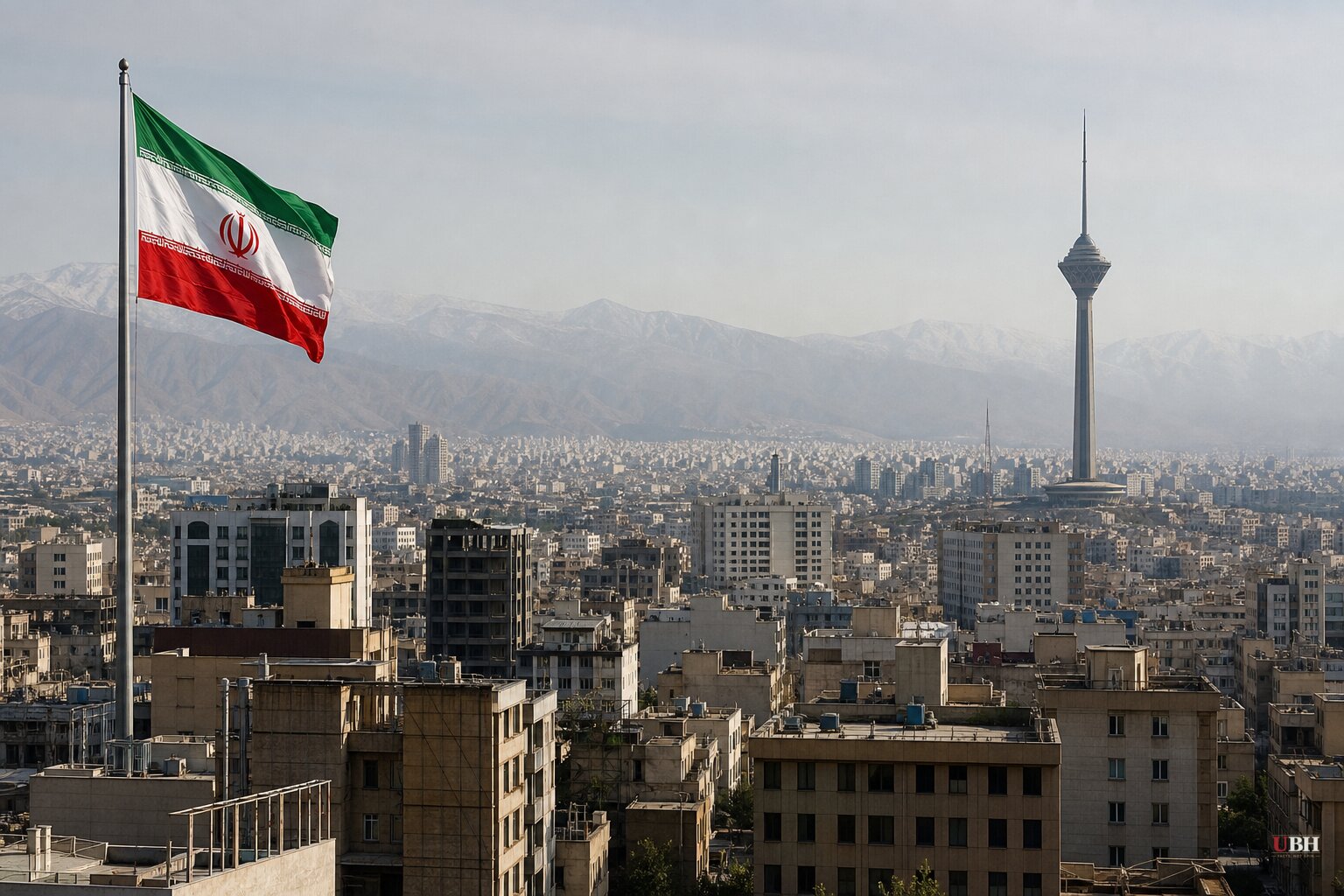
Since U.S. and Iranian forces traded strikes for the first time in a month starting Sunday, the fighting has produced its bloodiest 48 hours yet, with Tehran now claiming 18 dead and retaliatory fire landing in three separate countries.
Iranian Health Minister Mohammad-Reza Zafarghandi told state broadcaster IRIB on Wednesday that 18 people were killed and 108 wounded across multiple provinces in the latest U.S. strikes, according to CNN. U.S. Central Command said Tuesday it had completed a wave of attacks on Iranian air defense sites, radar systems, communication nodes and what it described as mine-laying capability.
The wedding strike
The most disputed casualty figure involves a wedding party in Kuhestak, a village in Hormozgan Province bordering the Strait of Hormuz. Ahmad Nafisi, the province's deputy governor, told Iranian state television the strike killed five people, including a child, and wounded 68, according to the Associated Press and NPR. CNN, citing the same Iranian state media reporting, put the toll at four killed, including a child, with roughly 50 wounded. Iran's state news agency IRNA separately reported seven people killed in strikes in Khuzestan province, near the Iraqi border.
CENTCOM spokesman Capt. Timothy Hawkins acknowledged the reports Wednesday but did not confirm them. "We are aware of reports, which originated from Iranian state media," Hawkins told CNN. "The U.S. military never targets civilians, unlike the IRGC." No independent verification of the wedding casualty figures has been reported.
Retired Rear Admiral Mark Montgomery, a senior fellow at the Foundation for Defense of Democracies, told PBS NewsHour the strikes on the region were aimed at destroying Fajr-5 rocket launchers the IRGC used in a 2025 exercise to fire floating mines, part of what he called an effort to keep Iran from mining the strait's southern transit lane near Oman.
Retaliation spreads to three countries
Iran responded by launching ballistic missiles at Jordan and drones toward Bahrain and Kuwait. Iran's Revolutionary Guard claimed it targeted a U.S. base along Jordan's Gulf of Aqaba coast, according to Iranian state television cited by NPR. Jordan's military said it shot down 10 of the incoming missiles, with three landing in unpopulated areas. Kuwait's armed forces said they were "confronting Iranian missile and drone attacks" and told citizens to shelter in place, according to NPR affiliate reporting.
President Trump warned before the retaliation that any Iranian response would be met with escalation. "They will be hit again at a much harder and higher level, but it will not be the biggest attack of them all, that is waiting in the wings and, when it is over, there will be very little left of the Islamic Republic of Iran!" he wrote on Truth Social, per CNN. Late Tuesday he added on social media that he "couldn't care less" whether Iran signs an agreement, saying he preferred the current U.S. position of "almost total control of the Hormuz Strait" while Iran's economy "totally collapses."
Two versions of the strait
The strikes are colliding with conflicting accounts of how much oil is actually moving through Hormuz. OilPrice.com reported Wednesday that tanker traffic through the strait had cratered to just four ships as the fighting escalated. That runs directly counter to the Trump administration's own framing a day earlier, when Energy Secretary Chris Wright said a record 17 million barrels crossed the strait Monday.
A separate maritime intelligence firm, TankerTrackers, told NPR's Hadeel Al-Shalchi that roughly 4 million barrels a day crossed the strait on average in August, largely undetected by Iran, a figure NPR noted is still only a third of pre-war volumes of more than 20 million barrels a day. Iran has also told Oman it was close to a framework for a temporary reopening corridor with defined maritime control zones, according to NPR, though that process appears to have stalled amid the renewed strikes.
Retired Rear Admiral John Kirby, now director of the University of Chicago Institute of Politics, told NPR's Steve Inskeep he believes Trump is trying to "escalate to deescalate," but warned that approach historically fails against Iran's Revolutionary Guard. "This is a fractured government," Kirby said, arguing Iran's elected leadership, who are talking to U.S. envoys Jared Kushner and Steve Witkoff through Omani intermediaries, "don't have the same strategic outcomes in mind" as the IRGC and hardliners closer to the supreme leader.
That uncertainty reflects a fair question across coverage: neither NPR's sourcing nor CENTCOM's public statements lay out what ends the fighting, only what triggers the next round of it. Whether the Oman-brokered corridor framework survives Tuesday's strikes and whether Trump's threatened "biggest attack of them all" is bluff or plan remain open questions with no timeline attached from either government.
Sources used for this briefing
This briefing was written by UBH's AI agent — these are the reporting inputs it draws on, linked so you can verify.


