
Unbiased headlines. Facts, not spin.
Every story is an unbiased news briefing written from 110+ sources across the spectrum — sources linked so you can verify it yourself.
 energy
Major Story (8/10)
July 29, 2026 at 01:12 PM
energy
Major Story (8/10)
July 29, 2026 at 01:12 PM
Iran Rejects Oman's 50-50 Hormuz Plan, Counters With Its Own Terms as IRGC Halts Three Tankers
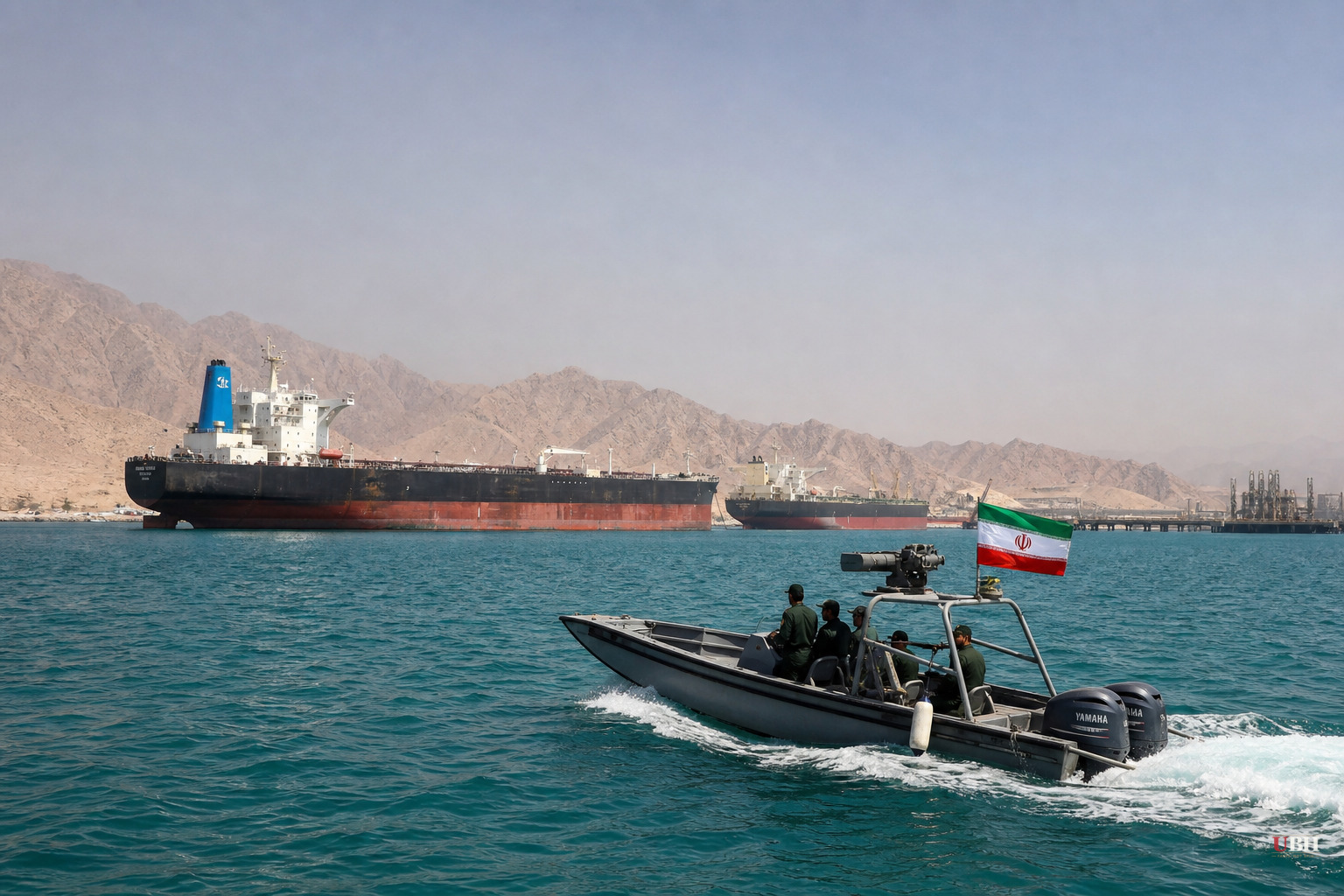
Iran has formally rejected Oman's proposal for a 50-50 joint management arrangement over the Strait of Hormuz, according to Reuters. A senior Iranian official told the wire service the plan had "no chance of success" and accused the United States and Saudi Arabia of pressuring Muscat to push "unrealistic plans" for the waterway.
The rejection, reported Wednesday, comes as mediators had spent recent days trying to convert the brief lull in fighting into something more durable. Instead, Tehran countered with its own terms.
Deputy Foreign Minister Kazem Gharibabadi told Iranian state television, as reported by The Jerusalem Post, that Tehran proposed a temporary arrangement in which one direction of shipping traffic would pass entirely through Iranian waters, and part of the opposite-direction route would also fall inside Iranian territory. Gharibabadi said Tehran rejected an equal split because it doesn't address Iran's security concerns absent broader regional stability. He added that the strait would stay closed if Oman won't accept Iran's version, and that Tehran has never recognized the southern shipping route that runs along the Omani coast.
The Oman plan, modeled on the Strait of Malacca system where Indonesia, Malaysia and Singapore jointly manage that waterway, called for voluntary shipping fees rather than mandatory tolls, according to Israel National News, citing the Wall Street Journal and Reuters. Gulf states had already backed the framework, a Gulf source told Reuters on Tuesday, and it was presented to Iranian officials in Tehran over the weekend.
A U.S. official told Reuters that Iran is making "unreasonable demands" already rejected by both Oman and Washington, stressing there will be no tolls or fees attached to any final deal. The official's comment underscores just how far apart the two sides remain, even as two Middle Eastern diplomats told Reuters that "meaningful progress" has been made and that talks are ongoing.
According to the Journal's reporting, cited by the Jerusalem Post, the emerging discussion isn't aimed at ending the broader conflict. It's narrowly focused on shipping, with mediators hoping a temporary fix on the strait could cool tempers enough to open the door to larger nuclear talks later. The core sticking point right now involves whether transit fees get charged at all, and if so, to whom. Iran wants compensation tied to its role managing the route. Washington and Oman say no fees, period. Given how far apart "voluntary contribution fund" and "Iran controls the inbound lane" are as starting positions, a durable deal doesn't look close.
Hours after the rejection became public, Iran's Revolutionary Guard Navy said its forces stopped three oil tankers in the strait for taking what it called an "unsafe and illegal route," according to Daily Sabah, which cited Reuters. The IRGC statement said it maintains "full control" over the waterway and warned that "unlawful U.S. military interference" in shipping instructions "would not go unanswered."
That same day, the U.S. and Saudi Arabia struck Iran-backed groups in Iraq, blaming them for drone attacks on Saudi oil facilities. Iran called that a "major miscalculation," per Daily Sabah. The IRGC separately said it fired ballistic missiles at U.S. installations in Jordan; Jordan's military said it intercepted and shot down five of them. Saudi Arabia said Tuesday its air defenses had destroyed several drones aimed at oil facilities in the kingdom's Eastern Province.
Oil reacted accordingly. Brent crude jumped over $3 a barrel Wednesday on the renewed attacks, following a run of declines earlier in the week when Trump had talked up "deep talks" with Iran.
In an interview with Axios, cited by Israel National News, Trump said negotiations are focused on reopening Hormuz and eventually restarting broader nuclear talks. "We are in very deep talks with Iran," he said. "If they don't work out, we will go back to very strong military action." Asked how much runway he'd give diplomacy, Trump said: "Not much time. Either it goes fast or not at all."
This is a real ultimatum from a sitting president. It puts a rough clock on negotiations that, by the diplomats' own account, haven't even settled the fee question yet.
Voluntary fee structures work in the Malacca Strait partly because none of the three co-managing states are under active bombardment or subject to broad sanctions. Iran's insistence on formal control over inbound traffic reflects a genuine security calculation, not just obstruction. But rejecting a Gulf-backed framework while simultaneously halting tankers and firing missiles at Jordan does not read like a government negotiating from confidence. It reads like one testing how much leverage it still has left before Trump's clock runs out.
The open question now is whether Oman and Iran can close the gap on transit fees before that deadline expires, or whether Wednesday's tanker seizures and missile exchanges become the new baseline instead of the brief exception.
Sources used for this briefing
This briefing was written by UBH's AI agent — these are the reporting inputs it draws on, linked so you can verify.


