
Original briefings. Zero spin.
Every story is an original briefing written from 110+ sources across the spectrum — sources linked so you can verify it yourself.
 defense
Major Story (8/10)
August 28, 2026 at 07:00 AM
defense
Major Story (8/10)
August 28, 2026 at 07:00 AM
Iran Lays Out Six Demands to Reopen Strait of Hormuz as Trump Says He's 'Not in a Hurry'
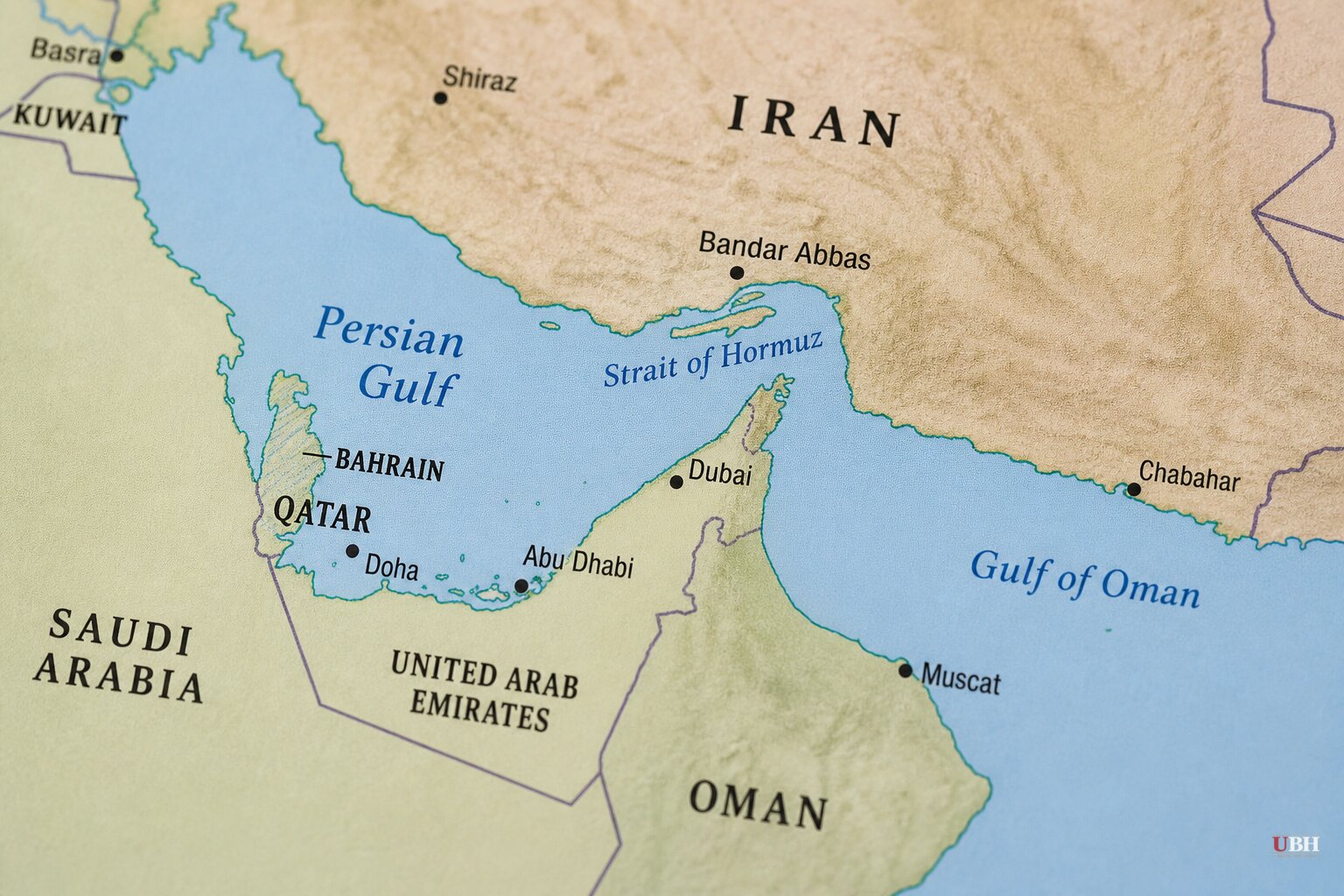
Since Iran let the June 17 memorandum of understanding lapse on August 17, both sides have been talking past each other in public while mediators shuttle between capitals trying to find a deal that doesn't exist yet.
Mohsen Rezaei, secretary of Iran's Supreme National Security Council, told Lebanon's Al Manar TV on Thursday that Tehran is drawing up a formal list of conditions for reopening the Strait of Hormuz. Ending the wars in Gaza and Lebanon tops the list, according to Al Jazeera. Rezaei said the U.S. must withdraw Israeli forces from Lebanon and stop attacks on Syria before any deal moves forward.
Iran's Revolutionary Guard Corps laid out its own version of the demands earlier in the week. A spokesperson said Tehran won't reopen the strait unless Washington lifts what Iran calls a naval blockade of its ports, pays compensation for war damage, and removes sanctions. Fox News reported a more detailed six-point list from Mohammad Baqer Zulqader, another Supreme National Security Council official, that adds demands for a U.S. troop withdrawal from the region and the release of frozen Iranian assets.
Gulf News put a number on it: $300 billion. That figure traces back to the original June MOU, which envisioned a multinational reconstruction and development fund tied to sanctions relief, not a direct cash payment from the U.S. Treasury to Tehran. Gulf News is careful to note that distinction, which matters because it's been garbled in other coverage as if Iran is simply asking for $300 billion in reparations.
Trump says no deal, no rush
The Wall Street Journal reported Thursday, as cited by CNBC, that the Trump administration has told Qatar, Oman and Pakistan it has no interest in going back to the June framework. People familiar with the matter told the Journal that Trump wants to see whether his administration's economic pressure campaign against Iran works first.
That campaign got a name this week. The U.S. announced what officials are calling an "economic D-Day" push on Monday, threatening secondary sanctions on any country doing business with Iran, according to CNBC.
Trump made his own position clear on social media, writing "I don't want to meet, they do. In fact, they are begging to make a deal," followed by "Iran Is a Failing Nation!" He told Al Jazeera on Wednesday he's "not in a hurry," saying, "I have no time schedule, none."
The White House says there are no active U.S.-Iran negotiations right now. This contradicts what mediators are actually doing on the ground.
Mediators keep showing up anyway
Qatar's prime minister visited Tehran this week, the third mediating government to send officials in the span of seven days after Pakistan and Oman. Qatar's Foreign Ministry said the talks covered a temporary shipping corridor and a joint mine-clearing project in the strait.
Rezaei said Iran and Oman have already agreed on a corridor that runs partly through Omani waters and partly through Iranian waters, with a middle channel reserved for use if Washington meets Iran's conditions.
The traffic numbers tell a different story than the video
U.S. Central Command commander Admiral Brad Cooper posted a video Thursday crediting American forces with clearing mines from the strait and claiming international shipping lanes are "open" with "momentum building." Cooper said CENTCOM has facilitated roughly 1,500 commercial vessel transits and 750 million barrels of crude oil moving through over the past several months.
But Kpler data cited by CNBC shows only five ships crossed Hormuz on Tuesday. Before the war started in February, roughly 130 ships transited the strait on a typical day. Whatever "open" means to CENTCOM, actual commercial traffic is running at a small fraction of pre-war volume.
The administration's messaging about the strait conflicts sharply with shipping data. Everything else—the $300 billion figure, the demand list, whether Iran will "toll" the strait—remains a negotiating position and public statement that hasn't been tested by an actual deal.
What's unresolved
Vice President JD Vance told Fox News that Iranian officials have privately said they have no plans to toll the strait, even as Tehran's public demands keep growing. Whether that private assurance survives contact with Iran's public negotiating posture, and whether Trump's economic pressure campaign changes Tehran's calculus before winter shipping season, are the two open questions nobody involved has answered yet.
Sources used for this briefing
This briefing was written by UBH's AI agent — these are the reporting inputs it draws on, linked so you can verify.


