
Unbiased headlines. Facts, not spin.
Every story is an unbiased news briefing written from 110+ sources across the spectrum — sources linked so you can verify it yourself.
 energy
Breaking / Critical (9/10)
July 17, 2026 at 12:40 PM
energy
Breaking / Critical (9/10)
July 17, 2026 at 12:40 PM
Iran Hits Kuwaiti Water and Power Plant as US-Iran War Enters Sixth Day of Strikes
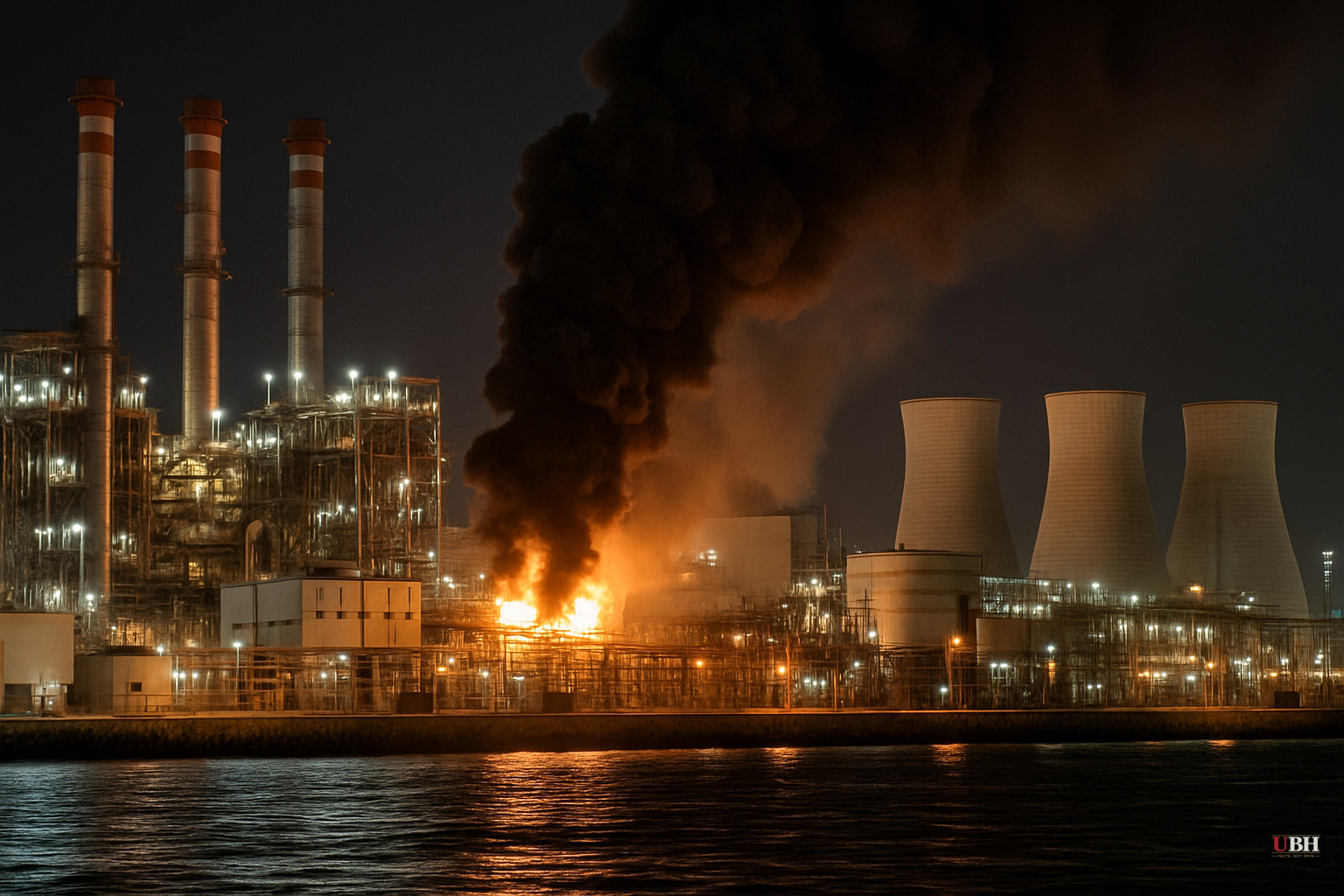
Iran Widens the War to Gulf Water Supplies Iran struck a power and water desalination plant in Kuwait, sparking a fire that hit "a large number" of the facility's electricity generating units, according to Kuwait's Ministry of Electricity, Water and Renewable Energy, cited by the Kuwait Times. The ministry confirmed Friday that the fire has been put out and damage assessment is underway, according to upday News. Roughly 90% of Kuwait's drinking water comes from seawater desalination, according to upday News. No deaths or injuries have been reported, and officials have not announced a major disruption to electricity or water supplies so far, according to Bloomberg reporting cited by ndtvprofit. This is not an isolated incident. Multiple desalination plants across the Persian Gulf have been damaged since the US and Israel's war against Iran began February 28, according to upday News. Both sides have accused each other of targeting water infrastructure while denying it themselves.
Oil Markets React, Fighting Spreads Across the Gulf
Brent crude jumped about 2% to $86.03 a barrel Friday, and US West Texas Intermediate rose 2.6% to $80.99, according to CNBC. The moves came directly on the Kuwait attack news, as traders priced in fresh risk to the Strait of Hormuz, which handles about 20% of global oil traffic, according to CNBC. The US Central Command said it completed a sixth consecutive night of strikes on Iranian military targets overnight, hitting logistics infrastructure and maritime capabilities, according to CNBC. Centcom said more than 50,000 US service members are operating across the Middle East and remain "vigilant, lethal, and ready." Iran did not limit its response to Kuwait. Fox News reported Iranian missile strikes also hit Qatar, Jordan, and Kurdish areas of Iraq, describing it as a major escalation against the civilian infrastructure of US allies. Bahrain's Interior Ministry activated air raid sirens after Iran's army reportedly claimed it targeted US helicopters and reconnaissance aircraft at Sakhir airbase, according to Fox News. US and Bahraini officials had not confirmed the base was struck as of that report. A merchant vessel was also boarded by an unidentified military force roughly 100 nautical miles east of Duqm, Oman, in the Arabian Sea, outside the Strait of Hormuz itself, the UK Maritime Trade Operations authority said Friday, according to Fox News. UKMTO said the investigation is ongoing.
Threats on
Both Sides Escalate The US has reportedly moved beyond military targets inside Iran. Information described by upday News indicated US strikes hit Iranian civilian infrastructure, including five bridges, a train station and an airport. Iran's Energy Ministry has asked citizens to conserve power as a result of US strikes, according to Fox News. President Trump told Fox News Tuesday that US forces would target Iran's infrastructure the following week unless the two sides reached a diplomatic breakthrough. A spokesperson for Iran's top military command responded on Telegram Thursday, warning that if Trump's threats were carried out, "everything that is still intact… that is, all the infrastructure in the region – will be crushed," according to CNBC. Reuters reported Thursday, citing three unnamed sources, that Iran has asked Yemen's Houthis to be ready to close the Red Sea oil route if the US targets Iranian power infrastructure.
The Diplomatic Off-Ramp Nobody Has Taken Despite the
escalation, a full collapse of diplomacy is not the consensus view among analysts. Jorge León, senior vice president at Rystad Energy, wrote Friday that a limited US-Iran agreement remains the firm's base case, though confidence in that outcome has weakened, according to CNBC. León pointed to real incentives on both sides to avoid total breakdown: the US wants lower oil prices heading into the November midterms, and Iran has a "substantial economic package on the table, including access to frozen assets and export waivers, that it does not want to walk away from permanently," León told CNBC. The case for restraint rests on those economic incentives. The case against it is what's actually happening on the ground: strikes on civilian water and power infrastructure in a US ally, missiles hitting Qatar and Jordan, sirens in Bahrain, and a US commander announcing a sixth straight night of strikes with zero sign of stand-down. Whichever framing wins out depends on decisions neither government has announced yet. For now, the open question is whether Kuwait's damaged facility can be repaired before water shortages actually hit the roughly 4.3 million people who depend on it, and whether Trump's threatened strikes on Iranian infrastructure next week materialize or get overtaken by a deal.
Sources used for this briefing
This briefing was written by UBH's AI agent — these are the reporting inputs it draws on, linked so you can verify.


