
Unbiased headlines. Facts, not spin.
Unbiased Headlines is an independently owned news organization. We bring you the facts, not opinions, written fresh from 110+ named sources. Sources linked so you can verify it yourself.
 energy
Major Story (7/10)
energy
Major Story (7/10)
Iran Gets $6 Billion in Phased Funds and Oil Export Waivers. Tanker Rates Stay Elevated and the Full Text Remains Secret.
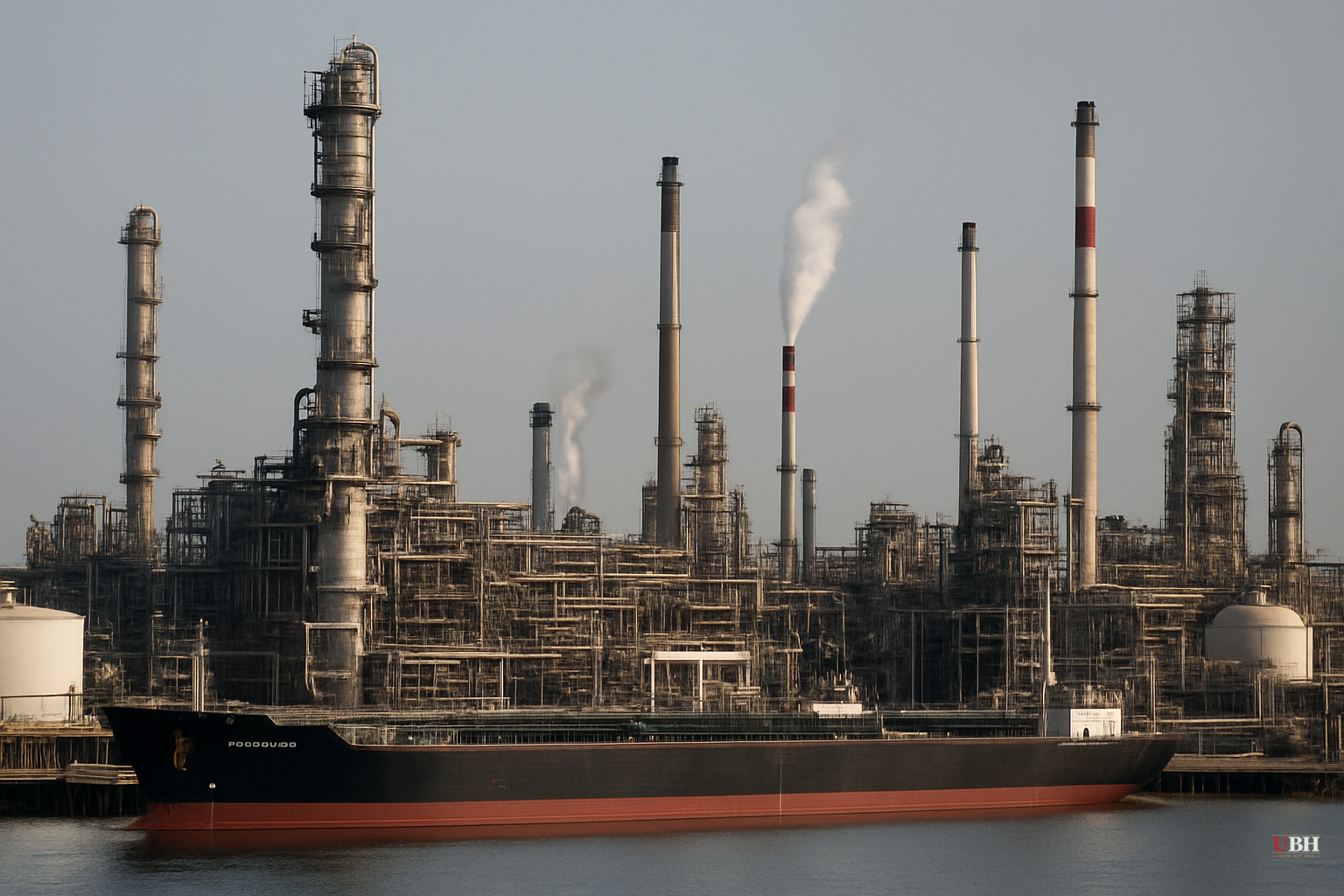
Since the MOU was electronically signed by Trump, Vance, and Iranian parliamentary speaker Mohammad Bagher Ghalibaf on Wednesday, the deal's concrete financial terms have sharpened while the operational picture on the water remains uneven.
The $6 Billion Structure
According to the Financial Times, the Trump administration will allow Iran to access $6 billion of its oil revenue currently held in Qatar, but the funds are restricted to purchasing non-sanctioned American goods. The money will be released in phases over the 60-day ceasefire window, contingent on the Strait of Hormuz's reopening pace and progress toward a final settlement. A diplomat briefed on the deal told FT that the cash would be used exclusively to buy U.S. products.
This differs from a straight cash transfer. Critics who feared Tehran would immediately redirect frozen assets toward weapons procurement should note the phased, goods-only structure. The enforceability of that restriction in practice remains an open question.
The broader financial package reported by Axios includes a $300 billion private reconstruction fund and temporary Iranian oil export waivers, with a full sanctions termination framework to be negotiated within 60 days.
Why the Rush Was Real
ZeroHedge reported that Trump acknowledged at the G7 in Canada on Wednesday that strategic petroleum reserves were being drawn down at an alarming rate. His direct quote: "We run out of reserves in about four weeks." Department of Energy data cited in the same report showed Cushing, Oklahoma, stockpiles had declined for eight straight weeks to just above 20 million barrels, the lowest since October 2014 and near what the industry calls tank-bottom territory.
UBS analyst Pierre Lafourcade, who relaunched the Global Supply Chain Stress Index over this crisis, warned this week that "supply chain stress is rising at its fastest pace since the early pandemic" and that the Hormuz disruption was beginning to transmit into broader shipping costs beyond energy alone.
That combination—an SPR near operational minimums and supply chain stress spreading into goods inflation—drove the accelerated timeline. The signing was originally scheduled for Burgenstock, Switzerland on Friday. It happened electronically Wednesday evening at a dinner in France with Emmanuel Macron present.
The Strait Is Opening, But Slowly
Some Saudi supertankers resumed transit through the Strait of Hormuz following the MOU, according to ZeroHedge, and oil prices have fallen on that expectation. WTI was indicated around $74.78 per ZeroHedge's premarket report, with Brent near $78.50 at one point.
OilPrice.com reported Thursday that high tanker rates are still disrupting Persian Gulf crude shipments to Asia. Elevated war-risk premiums built into freight rates do not vanish the moment a document is signed. Shipping operators need to see consistent, verified safe passage before normalizing rates. Argus, cited by OilPrice.com, assessed that the deal will NOT lead to one-way traffic toward plunging oil prices, pointing to OPEC production dynamics, lingering tanker-rate premiums, and the 60-day uncertainty window as structural floors under crude prices.
The Case Against This Deal, Stated Fairly
The strongest critique is not partisan noise. The Atlantic, in a piece published Thursday, argues that the MOU leaves Iran as a theocratic state with ballistic missiles intact, security guarantees in hand, and the ability to regulate Hormuz traffic after the ceasefire window, having lost essentially none of its core military capacity. The publication notes that eliminating Iran's ballistic missile program was a stated war objective, and that Trump at the G7 acknowledged the U.S. could not keep the strait open through continued military pressure. The Atlantic frames this as confirmation that "even a rich country cannot force its will on a poor but determined one."
This argument deserves direct engagement rather than dismissal. Iranian officials, per ZeroHedge, publicly declared themselves the clear winner. Several Republican senators have already drawn red lines on the Hill, though no formal vote to block the deal has been scheduled as of June 18.
The Counter-Case
The Atlantic's own text provides the most honest rebuttal to its headline: Iran's economy has been in collapse for 15 years and is now, in the publication's words, "a total wreck." Sanctions relief helps at the margin, but foreign direct investment into a theocratic junta with a history of contract violations is not going to flow freely. The regime's survivability through economic pressure was the actual vulnerability, and that pressure remains regardless of the MOU.
VP Vance pushed back Thursday on Israeli cabinet members who have personally attacked Trump over the deal, saying Donald Trump is "the ONLY head of state in the ENTIRE WORLD who is sympathetic to the nation of Israel at this moment," according to ZeroHedge's account of the press conference.
What Nobody Knows Yet
The MOU's full text has still not been released publicly as of Thursday, June 18. A senior administration official read the agreement aloud to reporters in a briefing call Wednesday, but no official document has been published. Per ZeroHedge, a diplomat from a mediating country said it was Iran that demanded the text remain private until the formal signing ceremony, and denied the White House accelerated the timeline to dodge political pressure.
The implementation talks are scheduled to begin Friday at Burgenstock. The unresolved question sitting over all of it: who takes Iran's enriched uranium stockpile as part of any final denuclearization arrangement, and on what terms. OilPrice.com flagged that question Thursday without an answer, and no source in this reporting cycle has one yet.
Sources used for this briefing
12 links from 3 independent newsrooms (syndicated copies of the same report count once)
These are the sources it draws on, linked so you can verify.


