
Unbiased headlines. Facts, not spin.
Every story is an unbiased news briefing written from 110+ sources across the spectrum — sources linked so you can verify it yourself.
 defense
Breaking / Critical (9/10)
July 8, 2026 at 04:33 PM
defense
Breaking / Critical (9/10)
July 8, 2026 at 04:33 PM
Iran Fires on Kuwait and Bahrain, U.S. Launches Expanded Strikes as Hormuz Ceasefire Collapses
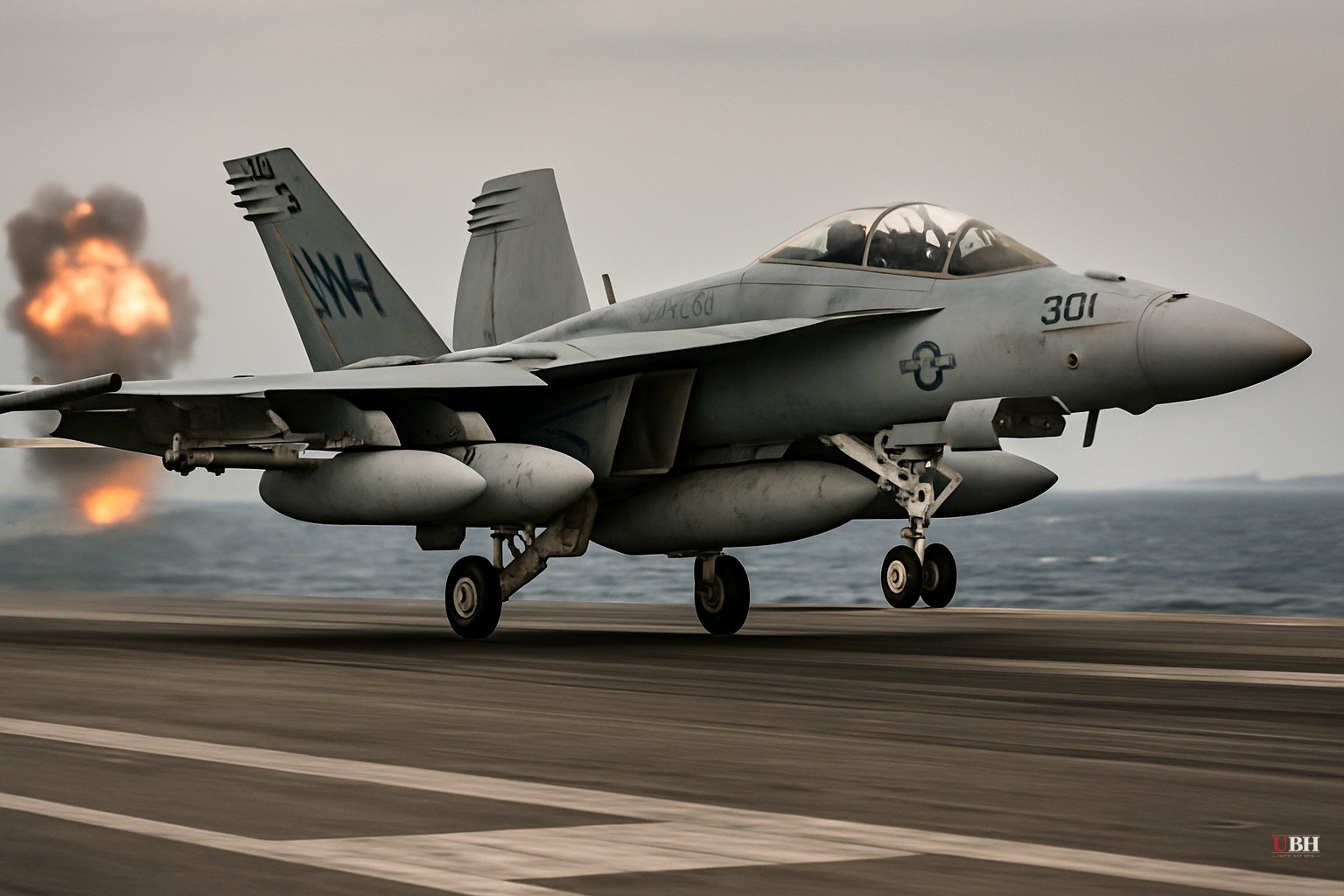
Since the 60-day U.S.-Iran memorandum of understanding was signed last month, the conflict has now passed its 129th day of active fighting under Operation Epic Fury, and the ceasefire arrangement built on that agreement has formally unraveled.
What Happened Overnight
U.S. Central Command launched a new round of airstrikes against Iran, citing Iranian attacks on three commercial vessels transiting the Strait of Hormuz, including a Qatari LNG tanker and a Saudi tanker. CENTCOM called the attacks "unwarranted, dangerous, and a clear violation of the cease-fire," according to OilPrice.com. A U.S. official told Axios the new operation is "four to five times larger" than strikes conducted ten days ago and was expected to continue for hours.
Iranian media reported explosions in southern Iran, including Qeshm Island, the city of Sirik, and near the port of Bandar Abbas. Iranian state broadcaster IRIB confirmed that President Masoud Pezeshkian cut short funeral observances for Supreme Leader Khamenei in Najaf, Iraq, to return to Tehran.
Iran did not absorb the strikes passively. The IRGC fired drones and ballistic missiles at U.S. military sites in Bahrain and Kuwait. Kuwait's military said it intercepted two ballistic missiles and 13 drones, according to OilPrice.com. Both countries reported air defense activations and temporary power disruptions before restoring normal service.
Trump's Words at the NATO Summit
Speaking in Ankara, Trump was direct. "To me, I think it's over. I don't want to deal with them anymore. They're scum," Trump told reporters, according to OilPrice.com. He left a narrow rhetorical door open, saying negotiations could technically continue, but added: "It's just a waste of time dealing with them. They're liars."
The U.S. Treasury simultaneously revoked the sanctions waiver covering Iranian oil sales that had been suspended under the MOU. A U.S. official told RFE/RL the move was consistent with the administration's stated position: "Iran will only reap benefits if they exhibit good behavior."
NATO Backs the Strikes
NATO Secretary-General Mark Rutte, also at the Ankara summit, called the U.S. strikes "absolutely necessary." "When you have a ceasefire and Iran is basically violating the ceasefire, I think it is totally crucial that the US forcefully react," Rutte told reporters, according to ZeroHedge. Most individual NATO members have not committed forces to the conflict, and Rutte's personal endorsement does not represent a collective alliance position.
Iran's Position
Iran's Parliament Speaker Mohammad Bagher Qalibaf wrote on X: "The era of bullying and extortion is over. It leads nowhere. We don't fold." Iran's state broadcaster Press TV cited an unnamed Iranian official warning that its forces stand ready to "strike at least twice the number of targets hit" in any further U.S. action. Iran also suspended final settlement talks with Washington, according to TASS, and threatened to reclose the Strait of Hormuz under its own fee-collection protocol based on the "Islamabad Memorandum of Understanding."
The strongest version of Iran's argument is that it views itself as managing a waterway that runs along its coastline, and that any economic blockade or U.S. military presence constitutes an act of aggression that justifies a kinetic response. The U.S. and its Gulf partners dispute this framing entirely, arguing that the Strait is an international waterway and that attacking civilian commercial shipping violates both the MOU and longstanding maritime law.
Markets React
The ceasefire collapse hit markets hard on Wednesday morning. S&P 500 futures slid 0.7% and Nasdaq futures dropped 1% in premarket trading, according to ZeroHedge. Memory and chip stocks led the decline: SK Hynix fell 6% in Seoul, Sandisk dropped 6%, and Micron was down 5% in premarket. All seven Mag 7 names were trading lower in premarket, with Meta off 1.8% and Nvidia down 1.6%.
Energy was the single outperformer. WTI crude surged past $75 per barrel, up more than 7%, while Brent crossed $80. Heating oil futures jumped more than 12%, according to OilPrice.com.
Polymarket showed traders pricing Strait of Hormuz traffic returning to normal by August 31 at just 19% odds, according to ZeroHedge.
Shipping Reacts on the Water
Oil and LNG tankers began making U-turns away from the Strait after the fresh escalation, according to OilPrice.com, even as some vessels continued transiting. The Hormuz threat level has been raised to "Severe," with three maritime incidents reported in the strait in the preceding 24 hours.
The Unresolved Question
The question that now shapes everything else is whether the U.S. is prepared to re-impose a full naval blockade of Iranian ports, which a U.S. official told Fox News the military stands ready to execute if ordered, and whether Iran will attempt a full closure of the strait rather than targeted shipping attacks. Those two decisions, made in Tehran and Washington, will determine whether this conflict expands or finds a new, grimmer stalemate.
Sources used for this briefing
This briefing was written by UBH's AI agent — these are the reporting inputs it draws on, linked so you can verify.


