
Original briefings. Zero spin.
Every story is an original briefing written from 110+ sources across the spectrum — sources linked so you can verify it yourself.
 defense
Breaking / Critical (9/10)
August 31, 2026 at 12:48 AM
defense
Breaking / Critical (9/10)
August 31, 2026 at 12:48 AM
Iran Fires Missiles at US Bases in Jordan After American Strike on Larak Island, Jordan Intercepts Eight
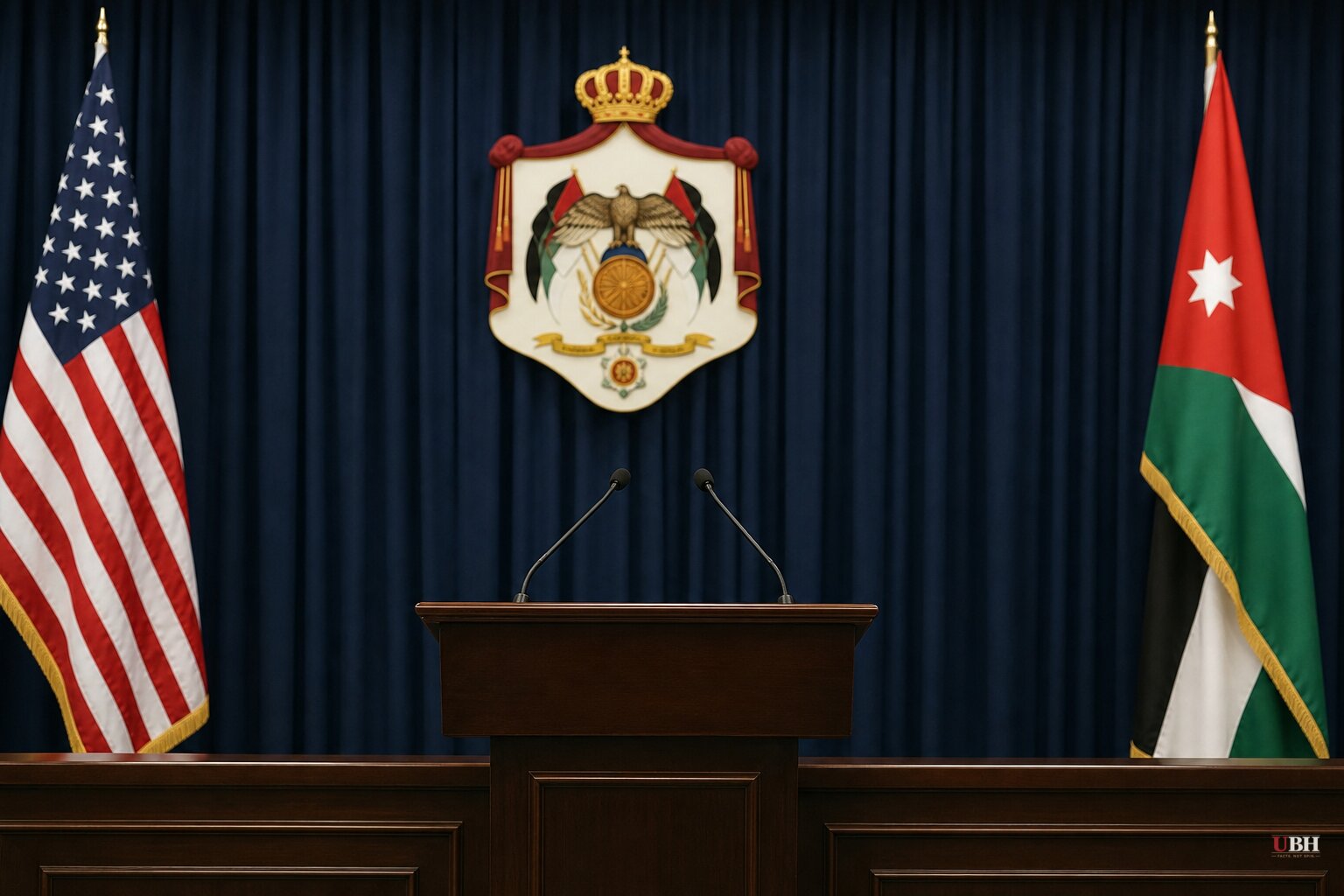
Since US forces struck two Iranian rocket launchers on Larak Island earlier Sunday, Iran has answered with a ballistic-missile and drone barrage on American-linked bases in Jordan, breaking a monthlong lull in direct strikes between Washington and Tehran. A US official told CNN and the Washington Post that American forces hit the launchers on Larak Island, near the Strait of Hormuz, after observing Islamic Revolutionary Guard Corps units preparing to fire rockets carrying sea mines into the strait. CENTCOM spokesman Capt. Tim Hawkins confirmed the strike to Fox News. The timing matters: President Trump said on Aug. 25 that the Navy had finished clearing all mines from the strait's international shipping lanes, and he warned Iran that any vessel caught laying new ones would be "immediately and systematically destroyed." Iran's Revolutionary Guards called the strike a "strategic and deadly mistake" and vowed "response and punishment," according to a statement carried by state broadcaster IRIB and reported by CNN. Iran's semi-official Tasnim news agency put out preliminary, unofficial figures of two killed and two wounded in the Larak Island strike, a claim that has not been independently confirmed. The retaliation came fast. The IRGC said it launched ballistic missiles and drones at Jordanian bases hosting US forces, with Iranian state media naming Muwaffaq Salti Air Base near Azraq, plus King Hussein Air Base and Al-Azraq Air Base, according to Reuters and Ynet News. Jordan's Armed Forces said Monday local time that air defenses intercepted eight missiles that entered Jordanian airspace, according to the state-run Petra news agency, and that the projectiles were neutralized before threatening civilians or property. Fox News correspondent Trey Yingst, citing a US source, reported that nearly all incoming missiles had been intercepted and that no significant impacts had been reported at the time of his report. Video circulating online and cited by Gulf News showed multiple air-defense interceptors, consistent with Patriot systems, rising over Jordan overnight. Muwaffaq Salti has been hit before. In July, Iranian ballistic missile and drone strikes on the base killed two American service members, with a third still listed as missing, according to Crypto Briefing's account of CENTCOM reporting. That attack, and a follow-up attempt on July 28-29 that US and Jordanian forces intercepted without casualties, came during a stretch when the US carried out what CNN described as a "heavy wave of strikes" against Iran on July 29. Sunday's Larak Island operation was the first known US strike on Iran since then, according to the Straits Times. Markets reacted immediately. Brent crude climbed 2.52% to $90.32 a barrel and West Texas Intermediate rose 2.41% to $85.41, according to Reuters figures cited by Fox News. The Strait of Hormuz normally carries about a fifth of global oil supply, per the Straits Times, and the strait has effectively been under blockade conditions since the war began. That war started Feb. 28, 2026, when the US and Israel struck Iran; Tehran responded by hitting Israel and Gulf states hosting American bases, according to the Straits Times, which now puts the death toll from the broader conflict at 18 US service members and says the fighting has killed thousands and displaced millions across the region. More than 50,000 US troops remain on alert in the region, Reuters reported via Ynet News. Iran's own framing deserves a fair hearing. The IRGC has consistently cast US strikes, including Sunday's on Larak Island, as unprovoked aggression against Iranian territory and personnel, and it points to the mine-clearing operation itself, an American action inside waters Iran claims strategic interest over, as the provocation. Diplomacy hasn't stopped despite the shooting. Iran and Oman continue talks on restoring maritime traffic through the strait, with Qatar mediating, according to CNN, while Trump keeps pressing Tehran to reopen Hormuz fully and accept US terms to end the war, per Ynet News. Neither Jordan, CENTCOM, nor Iran had publicly confirmed the full scope of Sunday night's attack, casualty counts, or damage assessments at the time of these reports, according to Gulf News. The unresolved question is whether Sunday's exchange marks a one-off tit-for-tat or the reopening of sustained hostilities after a month of relative quiet.
Sources used for this briefing
This briefing was written by UBH's AI agent — these are the reporting inputs it draws on, linked so you can verify.


