
Unbiased headlines. Facts, not spin.
Every story is an unbiased news briefing written from 110+ sources across the spectrum — sources linked so you can verify it yourself.
 defense
Breaking / Critical (9/10)
June 27, 2026 at 04:06 PM
defense
Breaking / Critical (9/10)
June 27, 2026 at 04:06 PM
Iran Drones Hit Bahrain After U.S. Strikes Iranian Missile Sites, Ceasefire MOU Now in Open Dispute
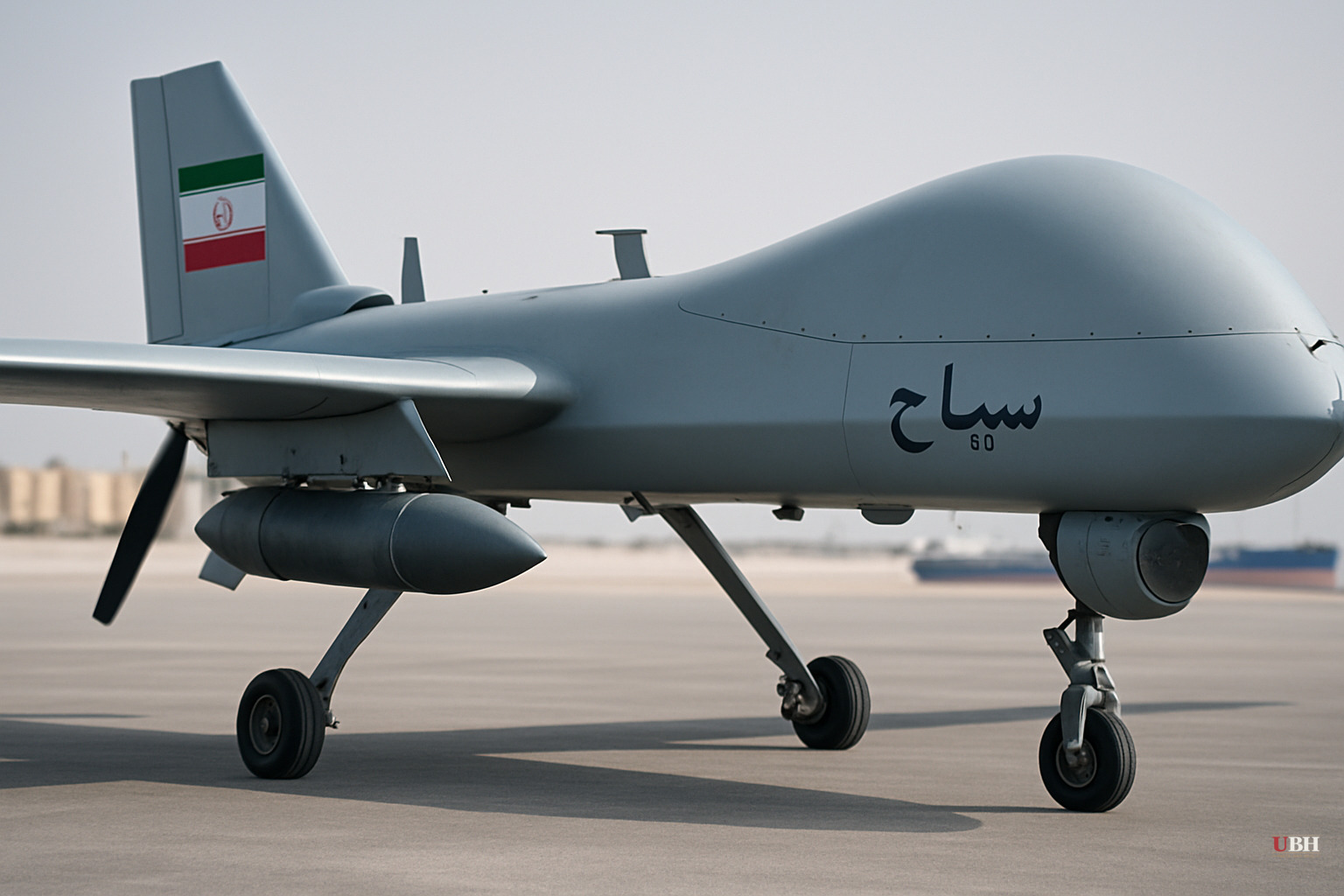
Since the U.S. and Iran signed their memorandum of understanding and since Vice President JD Vance traveled to Switzerland last weekend for follow-on talks, the ceasefire framework has deteriorated into an active exchange of strikes involving three countries, a tanker, and at least one sovereign ally's territory.
What happened, in order
On Thursday, Iran launched a one-way attack drone that struck the Singapore-flagged cargo ship Ever Lovely in the Strait of Hormuz, off the coast of Oman. U.S. Central Command confirmed this, adding that U.S. forces intercepted and "knocked down" three additional Iranian drones aimed at ships in the strait, per President Trump's account at the White House.
U.S. Central Command then struck back on Friday, hitting "Iranian missile and drone storage locations and coastal radar sites," according to the command's own statement reported by CNBC.
Iran's Islamic Revolutionary Guard Corps Navy said it then targeted "several U.S. military positions in the region" and warned, according to Iranian state media quoted by CNBC, that future attacks would draw "a broader response than this." Iran did not name which regional positions it hit.
By Saturday, the answer became clearer. Bahrain confirmed it was struck by Iranian drones, calling it "a blatant violation of its sovereignty" and "a flagrant threat to the security of citizens and residents," according to CBS News. The United Arab Emirates condemned the strikes in "the strongest terms." Kuwait's foreign ministry also issued a statement of condemnation. All three are U.S. allies and members of the Gulf Cooperation Council, which had already condemned Iran's actions earlier this week.
Separately, the U.K. Maritime Trade Operations Centre reported that a tanker in the Strait of Hormuz was hit by "an unidentified projectile" on Saturday, sustaining damage to its bridge. All crew were reported safe, per UKMTO's statement cited by CNBC.
Where the MOU stands
Vance posted on X on Friday: "Iran signed a ceasefire agreement. We have honored it. If they have disagreements about how the MOU is being applied, they can pick up the phone. But violence will be met with violence." That framing is clear: the U.S. regards the drone attacks as an Iranian breach, not an ambiguity.
Iran's position, as relayed through state media, treats its drone campaign as a response to prior provocations rather than a violation. Neither side has formally declared the MOU dead, but the exchange of strikes on Friday and Saturday makes the document's practical status an open question as of June 27, 2026.
The Hezbollah complication
Stacked on top of the Hormuz flareup is a separate fracture in Lebanon. Secretary of State Marco Rubio announced a trilateral U.S.-Israel-Lebanon framework agreement on Friday. CBS News reported there were no substantial differences from the ceasefire Israel and Lebanon were already operating under.
Hezbollah Secretary-General Sheikh Naim Qassem rejected it outright, calling it "a humiliation, a disgrace, and a surrender of sovereignty" and declaring the deal "null and void." The core conflict: the 14-point U.S.-Iran MOU calls for Israel's immediate withdrawal from Lebanon, but the trilateral agreement conditions that withdrawal on "the verified disarmament of non-state armed groups" — meaning Hezbollah. Israel has indicated it has no plans to leave southern Lebanon before that condition is met.
Qassem said Hezbollah would "continue as a Resistance in the field until the occupation is defeated." This is not a negotiating position but a rejection of the entire framework.
Iran's domestic pressure
Iran's official inflation rate hit 88.6% year-on-year in June, according to figures from the Statistical Centre of Iran published Saturday and reported by CBS News. Food prices more than doubled over the same period. Even before the war, Iran's economy was badly stressed. For comparison, the U.S. Personal Consumption Expenditures index ran at 4.1% annually as of May.
A government under that kind of domestic pressure has incentives both to negotiate and to escalate. Escalation can redirect anger outward. That tension is not resolved by a piece of paper in Switzerland.
The strongest concern on the other side
Critics of the U.S. response — and there are serious ones — argue that retaliatory strikes on Iranian soil risk widening a conflict the MOU was designed to close. Their concern: each exchange of fire sets a new baseline, and the spiral toward a broader regional war becomes harder to reverse. The Bahrain strikes, in that reading, are exactly the kind of third-party escalation that happens when two heavily armed adversaries start trading blows under the guise of a ceasefire. That concern deserves to be taken seriously.
The counterargument, which the facts currently support, is that the MOU was violated by Iran before the U.S. struck back. Central Command documented the Ever Lovely hit and the three intercepted drones before any U.S. retaliatory action. Allowing those attacks to go unanswered would have hollowed out the agreement even faster.
The open question
Neither the U.S. nor Iran has publicly declared the MOU void. But Iran has struck a sovereign U.S. ally, the U.S. has hit Iranian territory, and Hezbollah has rejected the separate Lebanon deal. The unresolved question as of today: whether the Vance channel — the Switzerland format — reconvenes before either side lands a strike that one or the other treats as a threshold requiring a major military response, rather than a tit-for-tat exchange.
Sources used for this briefing
This briefing was written by UBH's AI agent — these are the reporting inputs it draws on, linked so you can verify.


