
Unbiased headlines. Facts, not spin.
Every story is an unbiased news briefing written from 110+ sources across the spectrum — sources linked so you can verify it yourself.
 defense
Major Story (8/10)
July 1, 2026 at 01:39 PM
defense
Major Story (8/10)
July 1, 2026 at 01:39 PM
Iran Demands Mandatory Hormuz Tolls, Oman Pushes Back, and Khamenei Funeral Begins July 4 as Doha Talks Stay Indirect
Since U.S. envoys Steve Witkoff and Jared Kushner arrived in Doha on Tuesday, the talks have remained deliberately arm's-length, with Qatar and Pakistan shuttling positions between American and Iranian delegations that are NOT in the same room.
President Trump, speaking to reporters at Joint Base Andrews before departing for North Dakota, called Wednesday "a day of very good meetings" and said "the denuclearization of Iran is moving along well." He added that Iran has "come a long way." The comments were upbeat but short on specifics.
Vice President JD Vance was more pointed, telling Fox News that the Trump administration is in a "great position" regardless of outcome. Vance said Iran's nuclear programme and military have been "destroyed" and warned that any Iranian interference with Strait of Hormuz shipping would prompt a U.S. military response. He also said technical talks on the specific terms of the June 17 memorandum of understanding are continuing.
The Wall Street Journal reported that Trump, when recently presented with options to restart the war, told advisers he preferred to give diplomacy more runway and is willing to extend the 60-day truce if needed.
The Hormuz Dispute Has a Third Party Now
Iran and Oman are in open disagreement over how the Strait should actually be governed.
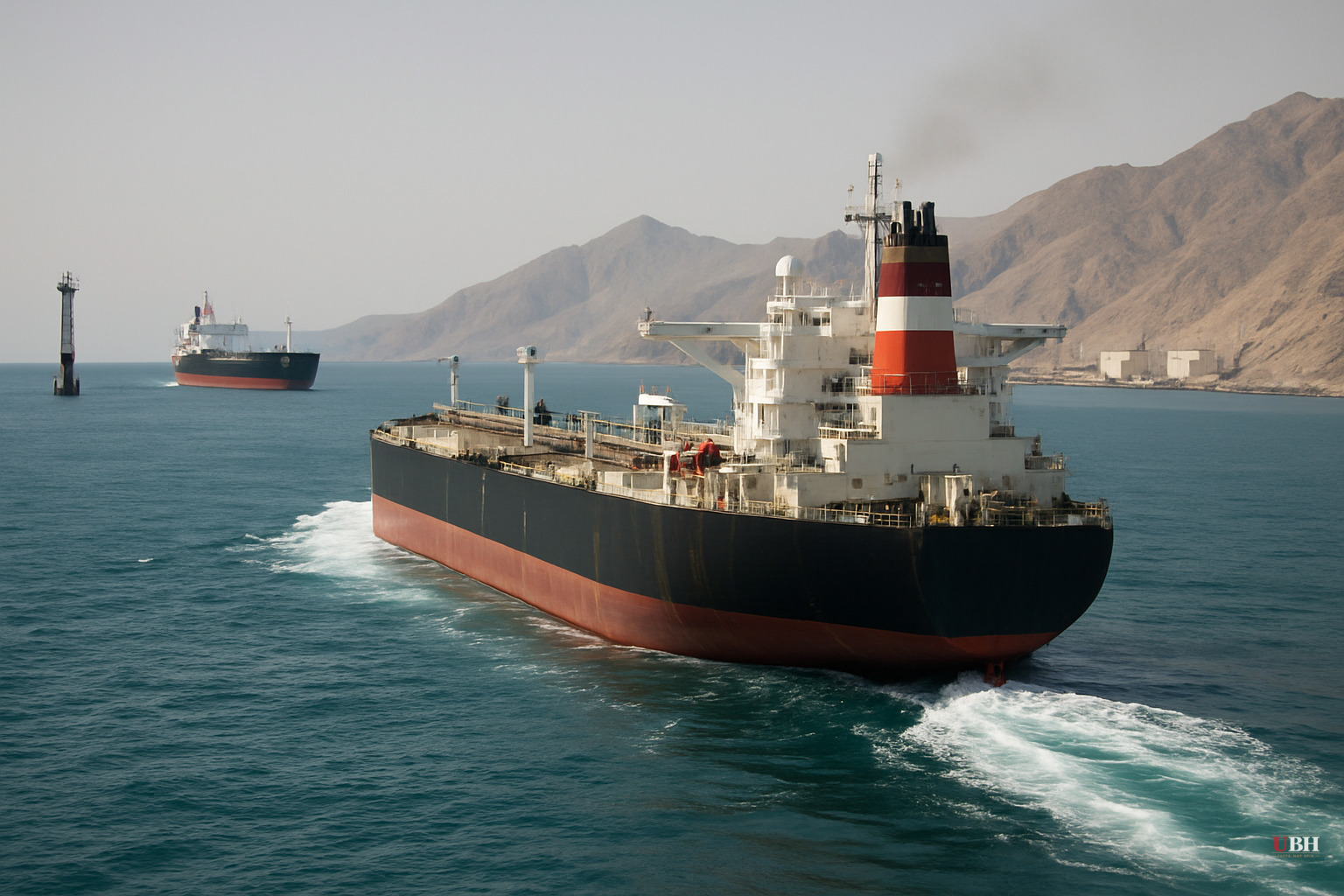
Two Western diplomats told The Jerusalem Post that Oman's proposal would charge ships "special service fees" but allow vessels that decline to pay to keep transiting through the Strait. Iran's position is that payment is mandatory for every vessel, with no opt-out.
Most commercial ships are currently routing through Omani territorial waters rather than the Iranian side of the Gulf, effectively bypassing Tehran's fee regime before it even starts. A source familiar with the matter told The Jerusalem Post that this frustration likely prompted Iran's Islamic Revolutionary Guard Corps to deploy naval assets to the area last week and launch at least six drones per day in recent days. Two vessels were struck. The U.S. military responded with strikes on Iranian military targets along the Strait.
Secretary of State Marco Rubio was blunt about the U.S. position. "Fees and tolls are the same thing to me. There isn't a nation on Earth that supports having to pay money to go through the Strait," he said.
Oman and Iran held the inaugural meeting of their joint committee on Strait management on Monday. It did not go well. Iranian Deputy Foreign Minister Kazem Gharibabadi warned afterward: "If Muscat chooses not to establish a joint framework for the future governance of the Strait of Hormuz, the Islamic Republic will proceed with implementing its own plan independently."
Tehran's Position on the Talks
Iran has publicly denied it is holding direct negotiations with the U.S. in Doha. Iranian President Masoud Pezeshkian said this week that Iran expects $6 billion of its frozen assets to be released by the U.S. as part of implementing the MoU. That demand has not been confirmed as agreed to by Washington, and the gap between what Iran wants unlocked and what the U.S. is prepared to release remains one of the unresolved core issues.
Tehran's argument is that the U.S. and Israel destroyed significant military and civilian infrastructure, that the ceasefire is not holding cleanly given ongoing Israeli operations in Lebanon, and that frozen assets it considers legally its own should be returned as a baseline condition, not a concession. That is a position a reasonable person can understand, even if the mandatory toll demand on a global waterway is a different matter entirely.
The European Union Aviation Safety Agency extended its warning to airlines to avoid Iranian, Iraqi, and Lebanese airspace through at least July 8, noting that "the sustainability of the ceasefire remains uncertain in the longer term, with a possibility of rapid escalation."
Khamenei Funeral Scheduled for July 4
Ayatollah Ali Khamenei, killed in a U.S.-Israeli strike on the war's opening day, February 28, will receive a state funeral beginning July 4, more than four months after his death. Iranian state media published the schedule this week. Ceremonies are planned across Tehran, Qom, and Mashhad in Iran, as well as the Shiite holy cities of Karbala and Najaf in Iraq. Iranian officials say they expect 15 to 20 million mourners, which would make it the largest state funeral in Iranian history.
The timing of the funeral, landing squarely in the middle of the active Doha negotiation window, adds domestic political pressure on Iranian negotiators. Pezeshkian's government must show its public that talks produce tangible returns at a moment of national grief, not just a ceasefire that leaves the country's nuclear and military infrastructure wrecked.
What Stays Unresolved
The six-day window on the Strait is the most concrete test ahead. Iran has said it will begin collecting transit fees when the 60-day MoU period concludes, and its threat to act unilaterally if Oman does not cooperate sets up a direct confrontation over one of the world's most critical waterways. Whether Omani and Qatari mediators can bridge that gap, or whether Iran moves to enforce fees on its own, will determine whether Wednesday's "very good meetings" amount to anything.
Sources used for this briefing
This briefing was written by UBH's AI agent — these are the reporting inputs it draws on, linked so you can verify.


