
Unbiased headlines. Facts, not spin.
Every story is an unbiased news briefing written from 110+ sources across the spectrum — sources linked so you can verify it yourself.
 defense
Breaking / Critical (9/10)
July 18, 2026 at 05:03 PM
defense
Breaking / Critical (9/10)
July 18, 2026 at 05:03 PM
Iran Declares US Deal Dead, Hits Kuwait Desalination Plant Two Days Running
Iran says the deal with the United States is over. Kazem Gharibabadi, Iran's deputy foreign minister and the head of its technical negotiating team, told the semi-official Fars News Agency that "the U.S. has violated and suspended all its commitments within the framework of the Islamabad MoU." He added Iran has done the same: "We have also suspended our commitments, we are not implementing them, and we are busy defending the country."
According to Al Jazeera's reporting on his remarks, this marks the first time an Iranian official has explicitly said the MoU is dead rather than merely threatening to walk away. Tasnim News Agency reported Saturday that Tehran will no longer fulfill its obligations under the agreement, which was reached last month and, per Benzinga, was already showing strain in recent weeks as both sides traded accusations of violations.
The collapse comes after seven straight days of renewed fighting. US Central Command carried out another wave of airstrikes Friday night, hitting surveillance sites, military logistics infrastructure, underground weapons storage and maritime targets, Benzinga reported. Centcom has also enforced a naval blockade against Iranian ports.
Kuwait Hit Two Days in a Row
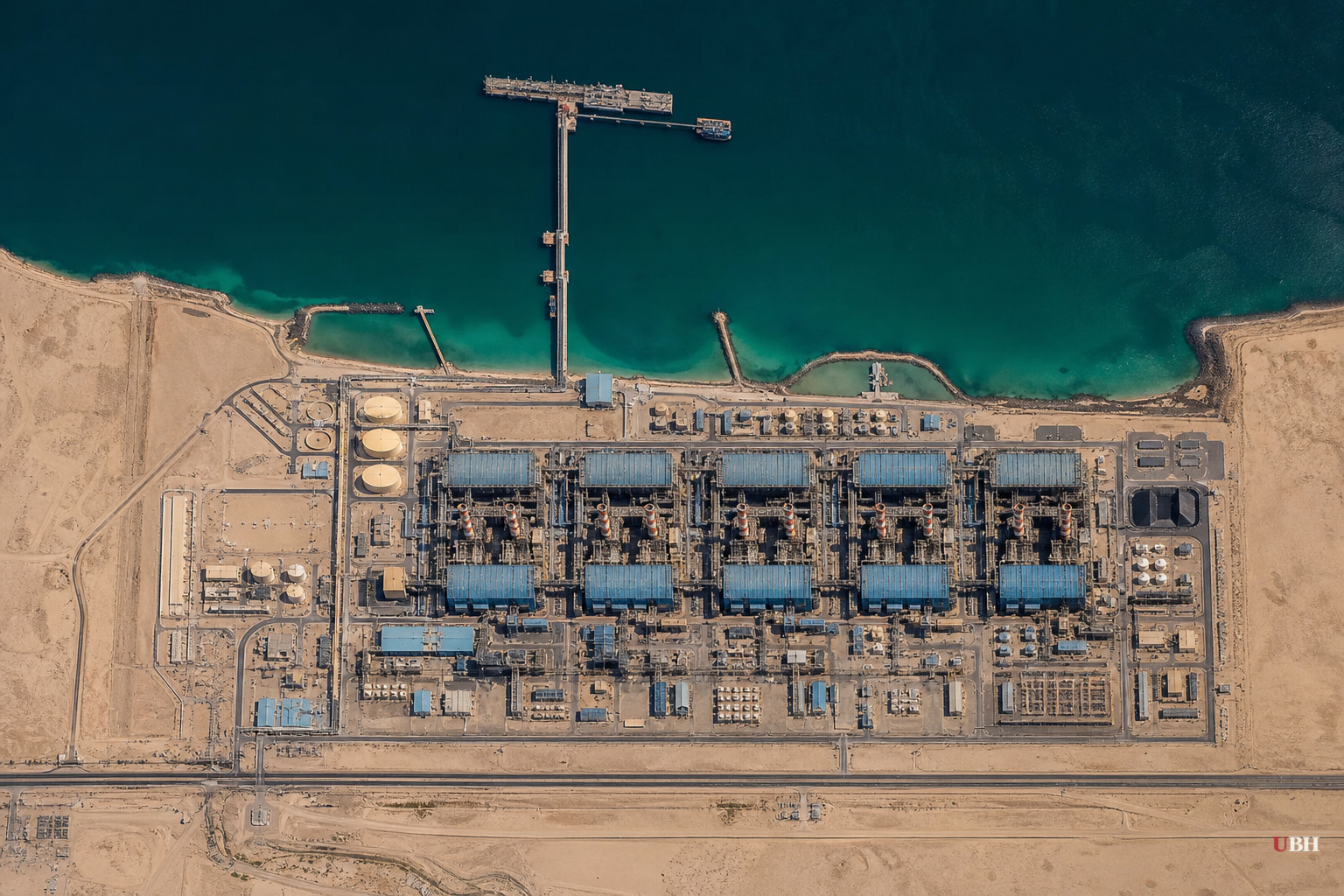
Kuwait's Ministry of Water and Electricity said Saturday that Iran struck a water desalination and power generation plant, sparking a fire, according to Business Standard. It was the second consecutive day Iran targeted desalination infrastructure in Kuwait. A different power and desalination plant was hit Friday, also causing fire damage.
Roughly 90% of Kuwait's drinking water comes from desalination, Business Standard reported. Kuwaiti authorities shut down several generating units as a precaution.
Tasnim News Agency reported that a seawater pumping station and a power transformer at the Bunji desalination plant in southern Iran were "completely destroyed" by US strikes, and Iran's national water company said roughly 10,000 people are without water after the overnight attacks, according to Benzinga. A two-way infrastructure war has emerged: US strikes hitting Iranian water and telecom systems, Iran hitting Gulf Arab water and energy systems in what it's calling a proportionate response.
Kuwait Petroleum Corporation separately said Iran repeatedly struck one of the country's "vital sites" in the oil sector, causing significant material damage and some injuries. Fox News published satellite imagery showing smoke over a Kuwaiti oil facility, and Reuters images showed flames and black smoke near a facility in Mangaf, Kuwait. Kuwait's military said it detected and intercepted hostile ballistic missiles and drones in its airspace since dawn Saturday.
The Saudi Base and the Escalation Ladder
ZeroHedge reported that Iran struck a US base in Saudi Arabia for the first time in four months, and that US strikes disrupted southern Iran's telecom network, knocking out 116 communication towers. Iran's Health Ministry says US attacks since July 6 have killed at least 50 people and wounded more than 500, per Benzinga.
The Islamic Revolutionary Guard Corps has warned that countries hosting US forces in the region "should be prepared for a proportionate response," Benzinga reported. Roxane Farmanfarmian, a professor of Middle East politics at Cambridge, told Al Jazeera there is "a hardening generally in feeling that Iran needs to hit hard, to sustain and show endurance," and that Kuwait is being used "as an example of what they can do in retaliation."
Not every regional player wants this to keep going. Pakistan's Foreign Minister Ishaq Dar has called on both Iran and the US to adhere to the MoU and avoid further escalation, according to Al Arabiya English. That is the strongest case for restraint on the table right now: a negotiated framework existed a month ago, and a regional mediator is actively asking both sides to return to it rather than let the fight spread to more Gulf states that had nothing to do with the original dispute.
Whether Washington shares that view is unclear. ZeroHedge reported that President Trump has ordered dozens more aerial refueling planes to the region, which points toward sustained or expanded operations rather than a pullback. A Polymarket contract cited by ZeroHedge on whether the US will announce a formal withdrawal from MoU negotiations by July 31 was pricing just a 14% chance of that happening, versus 86% expecting no such announcement, though prediction-market odds are not confirmed fact and reflect trader sentiment rather than any official US position.
No US government statement on the status of the MoU is cited in any of the reporting here. The open question is whether Washington responds to Iran's declaration with its own formal statement, and whether Kuwait or Saudi Arabia will demand a bigger role, or direct US protection, now that their own infrastructure is being hit.
Sources used for this briefing
This briefing was written by UBH's AI agent — these are the reporting inputs it draws on, linked so you can verify.


