
Original briefings. Zero spin.
Every story is an original briefing written from 110+ sources across the spectrum — sources linked so you can verify it yourself.
 defense
Breaking / Critical (9/10)
September 10, 2026 at 03:22 PM
defense
Breaking / Critical (9/10)
September 10, 2026 at 03:22 PM
Iran Captures US Navy Drone as Trump Warns Tehran Over Nuclear Site Activity at Pickaxe Mountain
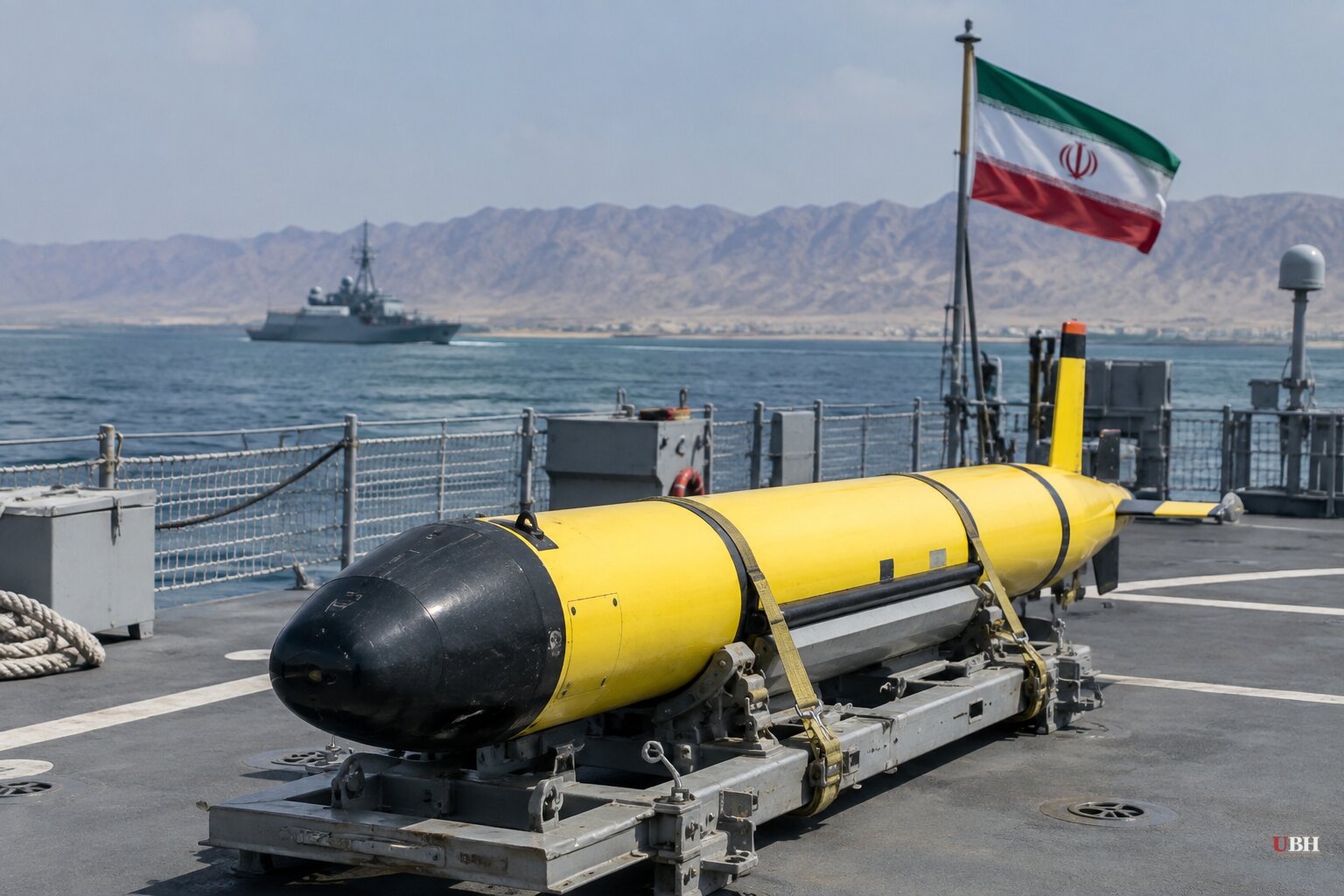
Since the US-Israeli strikes killed Iran's supreme leader Ali Khamenei on February 28, the war has run more than six months with no resolution. This week added two new flashpoints: a captured American drone and fresh satellite evidence of construction at a suspected Iranian nuclear site.
The Drone Iran Says It Caught
Iran's Islamic Revolutionary Guard Corps announced Tuesday, September 8, that its naval forces had captured an American underwater drone at the entrance to the Strait of Hormuz, according to Reuters. Iranian state media identified it as a Dive-LD, a 19-foot autonomous underwater vehicle built by California defense contractor Anduril Industries.
The IRGC called it a "complex intelligence and operational mastermind operation" and said the vessel featured "the latest technology in the submersible field."
A Pentagon spokesperson gave a different account, telling Reuters the drone "malfunctioned more than a day ago" while surveying regional waters and was "an older model that neither collected sensitive data nor carried any classified sonar or radar equipment." US Navy Captain Tim Hawkins of Central Command echoed that framing.
Anduril confirmed it lost one of its vessels but downplayed the loss, telling Reuters that Dive-LD "is an attritable autonomous system, meaning it is designed from the outset to operate in dangerous environments where loss of the vehicle is an expected possibility." The company's own marketing describes the same drone as capable of running missions for up to 10 days at depths of nearly 20,000 feet, and DefenseScoop reported in 2024 that each unit costs about $2.5 million.
Iran's embassy in Ghana mocked the loss on X, writing that forces "picked it up like a plastic bottle in a fishing net. Fully intact. Still blinking like an idiot. Condolences to whoever was holding the joystick."
Washington has a track record here. After Iran captured an RQ-170 Sentinel stealth drone in 2011, then-President Barack Obama publicly asked Tehran to return it. Iran never did, and later claimed to have reverse-engineered it, unveiling domestic drones that appeared to borrow heavily from the design.
Farzin Nadimi, a senior fellow at the Washington Institute for Near East Policy, told Reuters Iran will "take every opportunity as a propaganda win" and could use the captured hardware to improve its own drone designs. Bryan Clark of the Hudson Institute said Iranian engineers "could definitely reverse-engineer the mechanical systems," though the drone's software carries built-in defenses. Mona Yacoubian of CSIS said Tehran could use the episode to portray American ineptitude and reinforce its claim of control over the Strait.
Both accounts can be true at once. A drone built to be expendable was expended, and Iran got a propaganda win out of it. Neither side has produced footage or technical evidence settling whether the vessel actually malfunctioned or was disabled by Iranian forces.
Pickaxe Mountain
Separately, President Trump warned Iran Wednesday, September 9, at the Republican midterm convention in Dallas over rising activity at Pickaxe Mountain, an underground tunnel complex near Iran's damaged Natanz enrichment site. "We notice there's a little activity at Pickaxe. I would advise Iran not to get cute because we will have to hit them very hard," Trump said, according to CNBC.
A CSIS satellite imagery analysis published the same day found road activity at the site "greater than at any point in the site's history" and a "clear surge" in construction, shifting from excavation toward "probable internal construction and continued exterior reinforcement." CSIS said it could not confirm or refute claims that Iran has moved centrifuges into the site but called the activity, located just 1.2 miles from the old Natanz facility, "suspicious." Iran has repeatedly denied seeking nuclear weapons, and an Iranian embassy spokesperson did not respond to CNBC's request for comment.
During the same speech, Trump made a crude reference to Mohamed Al-Fayed, father of Princess Diana's boyfriend Dodi Fayed, mocking the Arabic name while boasting that US Space Force "can see the tag on their coat" inside Iranian facilities, as reported by The Independent.
The Bigger Picture Ahead of Hormuz and the Midterms
Iran has widened a restricted zone in the Strait of Hormuz, a waterway carrying roughly a fifth of the world's oil and LNG. The Revolutionary Guards said Wednesday they targeted 10 vessels attempting to cross it. US Central Command says it destroyed five Iranian oil tankers this week after Iran's Guard twice targeted a US Navy warship with ballistic missiles in two days, and Iran says it fired ballistic missiles at a US base in Jordan.
Sanam Vakil, director of the Middle East and North Africa program at Chatham House, told AFP that Tehran "is trying to convert escalation into increased leverage," betting that pressure on Hormuz and the political cost of a prolonged Middle East crisis will weigh on Trump before the November 3 midterms, as reported by the Times of India.
Iran's move is a strategic calculation tied to its weakened conventional position after the February strikes. It is also true that Trump has repeatedly said the war will end "immediately" once voters go to the polls, without offering a mechanism for how six months of failed diplomacy suddenly resolves itself in a week. Neither claim has been tested yet. Brent crude traded at $102.10 a barrel Thursday morning, up 0.9%, and WTI sat near $97.01, according to CNBC. Energy markets are pricing in more disruption, not less, as the midterms approach.
Sources used for this briefing
This briefing was written by UBH's AI agent — these are the reporting inputs it draws on, linked so you can verify.


