
Unbiased headlines. Facts, not spin.
Unbiased Headlines is an independently owned news organization. We bring you the facts, not opinions, written fresh from 110+ named sources. Sources linked so you can verify it yourself.
 economy
Major Story (7/10)
Event date: October 20, 2026 ·
Indiaspora Warns Against H-1B and OPT Fees Days Before Midterms as DOJ Is Criticized From the Opposite Side
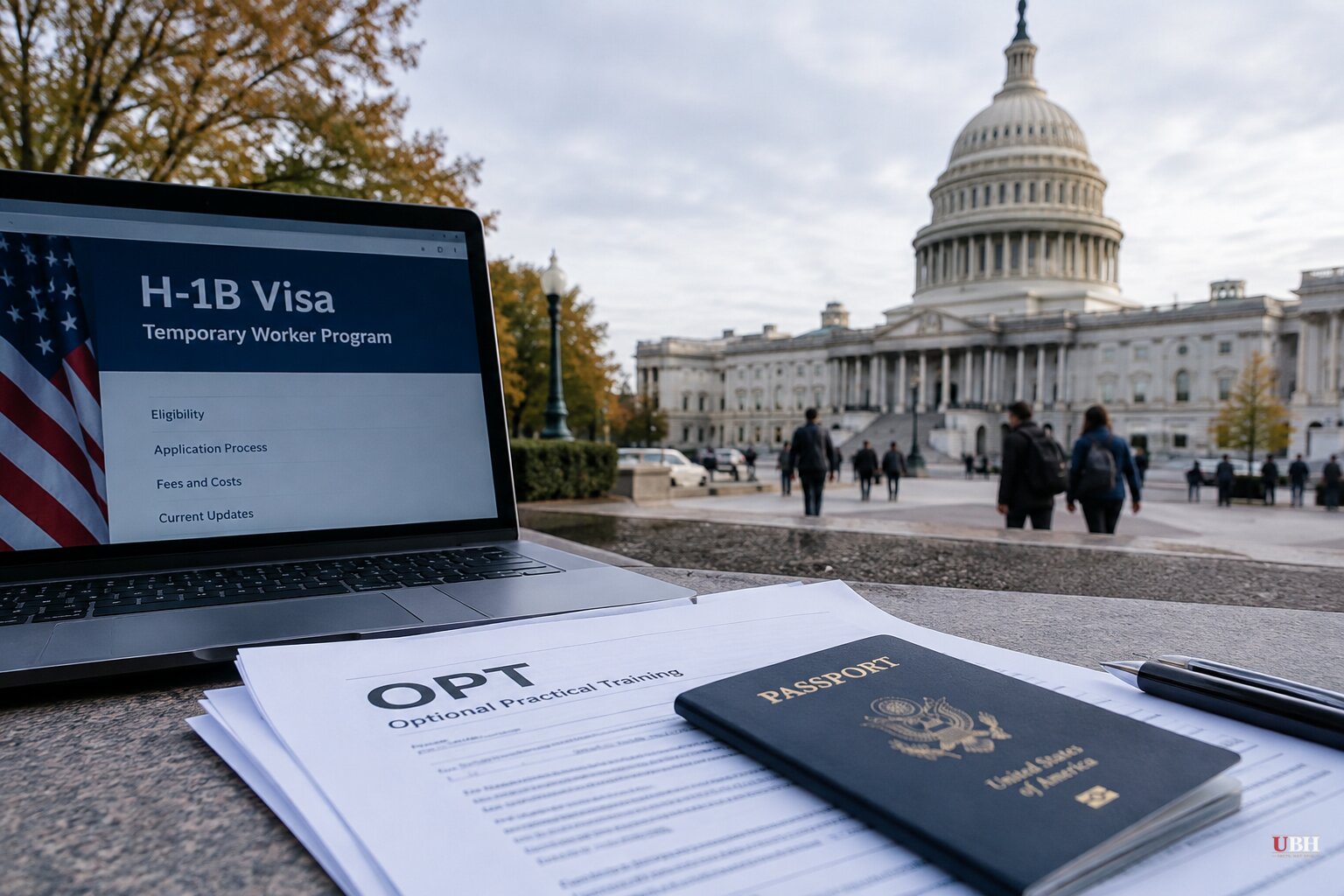
Since the Department of Homeland Security published its proposed rule on Oct. 8 to charge $70,000 per international student in the Optional Practical Training program, the fight over legal work visas has moved into the final stretch of the midterm campaign. The newest salvo came Oct. 30, when the diaspora group Indiaspora issued a statement warning of "severe economic risks."
The criticism is arriving from two opposite directions. Business and diaspora groups say the administration is going too far. Pro-American-worker advocates say the Justice Department is going too easy.
What Indiaspora is warning about
Indiaspora calls itself non-partisan. Its executive director, Sanjeev Joshipura, said: "H-1B workers from India have helped make America the world's innovation leader, generating billions for the American economy. Driving them away could have very serious consequences for communities nationwide, from major cities to small towns."
The group listed measures it opposes:
- Petition fees above $100,000 for high-tech and healthcare employers.
- Replacing the random H-1B lottery with a wage-weighted system that Indiaspora says would disadvantage early-career graduates.
- Scrapping the 60-day grace period for laid-off foreign workers.
- Freezing H-4 spousal work permits.
- Fees of up to $70,000 on OPT and STEM extensions.
Indiaspora said rural physicians and teachers in places like the Mississippi Delta fill gaps that domestic hiring cannot immediately close. It urged leaders of both parties to stop scapegoating foreign talent "for short-term political gains."
What DHS has actually proposed
The OPT fee is a proposed rule, not a final one. DHS said in the Oct. 8 filing that making universities pay $70,000 per student in the program was necessary to "place the United States' interests first and protect American workers."
The administration gave a similar rationale for a separate proposed rule that would impose a filing fee above $100,000 on companies hiring H-1B workers and suspend certain tech companies from the program entirely. It has also cited fraud and abuse in justifying higher fees for international students and workers.
In July, DHS issued a rule requiring student visas to be issued for a fixed four-year period.
Critics inside the academic and policy world are blunt. Fanta Aw, CEO of the international-education group NAFSA, said: "We've never, until now, seen this deluge of policies that have been direct attacks on international students to this level." Tara Watson, a senior fellow at the Brookings Institution, said: "The goal seems to be to shrink the foreign-born population in the U.S."
NAFSA's preliminary August analysis estimated international enrollment would fall by 111,000 in 2026, costing universities up to $3.4 billion in revenue. That is an advocacy group's estimate, not a government count. Several of the administration's student and worker policies have been halted by courts.
The approach also sits awkwardly with Trump's campaign promise to grant permanent residency to foreign graduates of U.S. colleges.
The other complaint: DOJ and job ads
While business groups say the crackdown is too harsh, a different set of critics says enforcement has gone soft where it counts.
In early August, an administrative law judge at the Justice Department's Office of the Chief Administrative Hearing Officer ruled that "discriminatory advertising does not represent a discrete cause of [legal] action under the INA." The decision says ad evidence can be used only as part of a case alleging nonselection, recruitment or termination.
Attorney General Todd Blanche had 60 days to take the ruling up for review. He did not, despite appeals from 13 House members and pro-American-worker groups, according to Breitbart News.
John Miano, a lawyer who has filed many suits over job ads aimed at H-1B workers, said the ruling "makes it very difficult for ordinary Americans to sue for job discrimination." He said, "The whole 25 years of prosecuting companies for H 1B [-related anti-American job discrimination] is set back 25 years by this." Miano said Congress will not act and the only remaining route is an expensive lawsuit at the Sixth Circuit Court of Appeals.
The Justice Department rejects that reading. It said it "thoroughly reviewed the ALJ's decision and stakeholder concerns" and found the outcome consistent with OCAHO precedent. "We have not loosened discrimination rules or weakened protections for American workers," the department said. It pointed to multimillion-dollar settlements under its Protecting U.S. Workers Initiative with companies including Apple and OpenAI, plus staffing and agricultural firms.
The political backdrop
The H-1B fight is feeding into midterm math. A Daily Wire opinion column argues that the H-1B controversy and a racist tweet from a Trump-backing Texas candidate became flashpoints for Indian Americans, contributing to a decline in Asian-voter support. About 40% of Asian voters backed Trump in 2024, according to the column.
The column cites a CBS News/YouGov poll taken Sept. 30 to Oct. 2 in which 60% of likely Hispanic voters said they planned to back congressional Democrats. Those numbers reflect a broader slide in the 2024 coalition, not just a reaction to visa policy.
The administration's stated aim is protecting American workers. The two sides disagree sharply on whether its tools do that: the Oct. 8 OPT proposal and the six-figure H-1B fee are aimed at the legal pipeline, while the DOJ job-ad ruling is what restrictionist lawyers say leaves U.S. applicants exposed.
Voters go to the polls Tuesday, Nov. 3. The OPT and H-1B fee rules remain proposals, and the courts have already blocked several of the administration's related policies. Miano's Sixth Circuit suit, if anyone files it, would be the next test of the job-ad ruling.
Sources used for this briefing
6 links from 6 independent newsrooms (syndicated copies of the same report count once)
These are the sources it draws on, linked so you can verify.


